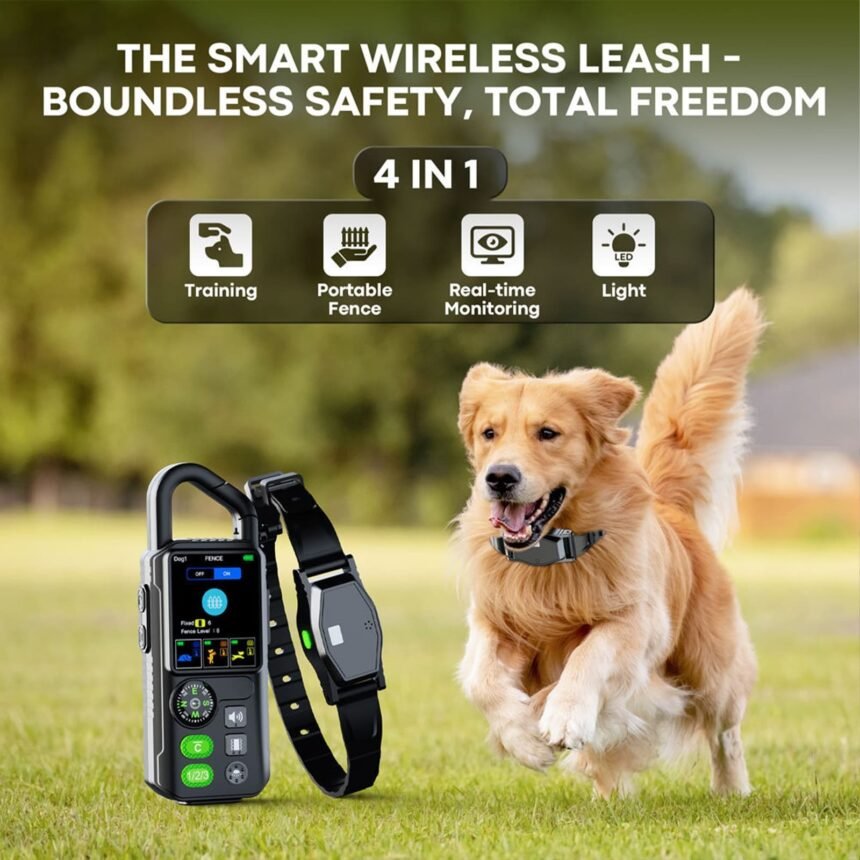
For decades, pet owners relied on visible fences or buried wires to keep their dogs safely contained. Traditional physical barriers shaped the way we thought about pet safety—clear boundaries, fixed lines, and permanent installations. But today’s dog owners are rethinking everything. The shift toward mobile lifestyles, expanding urban spaces, improved GPS technology, and a growing emphasis on humane training tools have paved the way for a new era of containment: GPS dog fences.
Once considered futuristic, GPS-based boundaries are now becoming the standard for modern pet owners. And for good reason. Solutions like the gps dog collar fence allow dogs more freedom while giving owners a level of control, flexibility, and peace of mind that wired fences simply can’t match.
This article explores why dog owners everywhere are ditching wires for virtual boundaries—and how this technology is reshaping the future of pet care.
Changing Lifestyles Demand More Flexible Solutions
The lifestyles of today’s dog owners look very different from those of previous generations. Many people live in rentals, move frequently, or travel often with their pets. Physical fences—especially wired ones—were never designed for this level of mobility. Installing underground wires requires time, tools, and digging, not to mention the hassle of repairs when wires inevitably break.
A GPS dog collar fence, on the other hand, works anywhere and moves with you. Camping for the weekend? Staying at a friend’s house? Taking your dog to an open field or lakefront? Virtual boundaries can be set up in minutes—no installation, no hardware, and no yard required.
It’s this unmatched adaptability that positions GPS solutions as the go-to containment system for a generation that values flexibility and convenience.
The Rise of Tech-Savvy Pet Ownership
Pet tech has exploded over the past few years. Smart feeders, treat-dispensing cameras, health-monitoring collars, and AI-guided trainers have become mainstream. As consumers grow more comfortable with tech-enabled solutions, switching from a static fence to an intelligent, app-managed system feels like a natural evolution.
Modern GPS fences—such as those available at SoveLivee—combine satellite positioning, real-time tracking, long battery life, and smart alerts into a single device. This technology makes containment not just safer, but smarter.
With a virtual boundary system, owners can:
- Monitor their dog’s exact location at all times
- Receive alerts if a dog leaves the designated zone
- Track activity levels and movement patterns
- Set up or adjust boundaries right from a smartphone
The result? A pet containment system built for the digital age.
No More Accidental Breaks or Costly Repairs
Anyone who has used a wired (invisible) fence knows the frustration of malfunctioning wires. Whether caused by weather, lawn equipment, or simple wear and tear, wire breaks can render the entire system useless until repaired. Repairs require digging, tools, and sometimes expensive service calls.
GPS boundaries eliminate that vulnerability entirely.
There are no wires to bury, no transmitters to manage, and no physical components that degrade over time. The containment system exists in the digital space, which means fewer points of failure. For busy dog owners, this is a major relief—not to mention a cost-saving advantage.
Larger and More Customizable Boundary Zones
Physical fences, whether visible or wired, limit the space you can give your dog. Underground wired fences typically max out at a few acres, and expanding them involves more installation and costs.
In comparison, GPS dog fences often support boundary zones that span dozens—even hundreds—of acres. With just a few taps in an app, owners can shape custom zones, redesign the layout, and even create multiple safe areas depending on the activity or environment.
For dogs who thrive on outdoor freedom—breeds like Huskies, Labs, German Shepherds, and sporting breeds—this extra space can dramatically improve their quality of life.
Gentle, Humane Training Reinvented
One of the strongest criticisms of older containment systems was the inconsistency in correction. If the wire moved, malfunctioned, or lost signal, the dog could receive confusing or unintended feedback.
GPS systems offer more accurate and humane training through:
- Stable satellite positioning
- Progressive warnings
- Clear, predictable boundaries
- Customizable correction settings
- Optional sound or vibration cues
Most modern GPS fences emphasize behaviour guidance, not punishment. This aligns with today’s more ethical, science-backed approach to training dogs gently and effectively.
A Safer Alternative to Physical Fences
Even a traditional fenced yard isn’t foolproof. Dogs can dig under fences, jump over them, squeeze through gaps, or push through brittle materials. Some breeds, particularly athletic or escape-prone ones, see fences as a challenge rather than a barrier.
GPS containment offers safety without creating a physical structure that a dog can exploit. Because the boundary is invisible and not tied to physical height, it works regardless of a dog’s size, strength, or determination.
Plus, GPS systems don’t obstruct:
- Visibility
- Landscaping
- Yard aesthetics
For homeowners who value both security and curb appeal, this is an ideal solution.
Perfect for Both Urban and Rural Environments
GPS dog fences are not just for homeowners with large lots. They’re surprisingly ideal for:
Urban owners
Apartment dwellers or renters can use portable virtual zones for parks, open fields, or travel outings without relying on fenced dog runs.
Suburban owners
GPS systems provide double-layer security—keeping dogs inside the yard even if a physical fence gate is accidentally left open.
Rural owners
Large properties that would be far too expensive or impractical to fence can now be fully covered with a digital perimeter.
This universal adaptability is a major reason virtual boundaries are gaining traction with all types of dog owners.
Travel-Friendly for Adventurous Owners
Whether you’re heading to a beach, mountain cabin, RV site, or a wide-open farm property, a gps dog collar fence gives you precise control no matter where you are. As long as there’s open sky for satellite communication, your dog can enjoy safe freedom without physical restrictions.
This is a game-changer for:
- RV travelers
- Van-lifers
- Campers and hikers
- Snowbirds
- Seasonal workers
- Families who road-trip with pets
Instead of relying on leashes or small portable pens, dogs get real space—even in unfamiliar environments.
Cost-Effective Over the Long Term
While a GPS dog collar fence might seem like an upfront investment, it eliminates many long-term costs associated with physical fencing:
- No installation fees
- No materials
- No repairs
- No maintenance
Over time, owners often pay far less for a digital containment system than they would for a traditional one.
And with multi-dog support, owners with multiple pets can save even more.
The Future of Dog Containment Is Smart, Portable, and Wireless
Across nearly every industry, mobility and smart connectivity are replacing fixed, outdated infrastructure. Dog containment is no exception.
As GPS accuracy continues to improve, and as smart collars gain new features—such as health monitoring, geofencing alerts, and AI-based behaviour detection—wireless virtual boundaries are becoming the new safety standard.
Companies like SoveLivee are at the forefront of this shift, offering highly advanced GPS boundary systems designed for modern dogs and modern lifestyles. What used to require yards of wire, complex installation, and constant upkeep can now be controlled from a pocket-sized device.
Conclusion: Why More Dog Owners Are Making the Switch
The move away from wired containment toward GPS-based solutions reflects a broader trend in pet care—one that values mobility, safety, customization, and smart technology. For owners seeking a reliable, humane, and future-proof way to protect their pets, a gps dog collar fence offers benefits that traditional methods simply can’t match.
By combining advanced tracking, portable boundaries, and easy management through mobile apps, GPS dog fences are reshaping how we think about canine freedom and security.
As more owners embrace this shift, one thing becomes clear: the future of dog containment isn’t built in the ground—it’s built in the cloud.