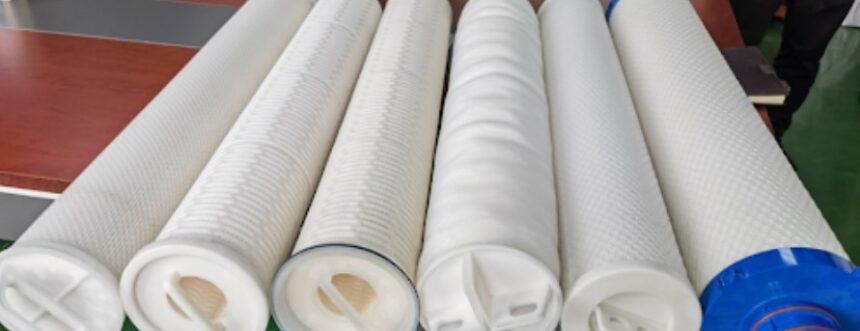
Introduction: Why High Flow Filter Cartridge Purchasing Decisions Matter
High flow filter cartridges have become a core component in modern industrial filtration systems. Widely used in water treatment, power generation, chemical processing, oil & gas, and large-scale industrial utilities, these cartridges are designed to handle high flow rates with fewer elements, reducing housing size, installation time, and maintenance frequency.
However, despite their technical advantages, high flow filter cartridges also represent a significant and recurring operational cost. For many industrial users, replacement cycles are measured in months, not years. Over time, filter cartridge procurement can account for a substantial portion of a plant’s consumable filtration budget.
This is where the decision between OEM high flow filter cartridges and replacement (compatible) high flow filter cartridges becomes critically important.
Buyers today are no longer asking only “Does this filter cartridge work?”
They are asking:
Can we reduce cost without increasing operational risk?
Is OEM branding always necessary?
Are high-quality replacement filter cartridges a viable long-term strategy?
This article provides a buyer-focused, cost-and-risk-oriented guide to help procurement managers, engineers, and decision-makers understand what truly matters when sourcing OEM or replacement high flow filter cartridges.
Why High Flow Filter Cartridges Are a Major Operating Cost
High Consumption + Frequent Replacement Cycles
Unlike capital equipment, high flow filter cartridges are consumables. Even the most efficient high flow cartridge must eventually be replaced due to:
Particle loading
Pressure drop increase
Media saturation
Process contamination requirements
In high-flow applications, a single housing may contain one to six large-diameter filter cartridges, each handling flow rates that traditionally required dozens of standard cartridges. While this design improves efficiency, each filter cartridge itself is significantly more expensive than a conventional filter element.
Over a year, costs accumulate from:
High flow filter cartridge unit price
Replacement frequency
Labor and downtime during change-outs
Disposal and logistics costs
For large water treatment plants or industrial systems, annual spending on high flow cartridge filters can easily reach tens or hundreds of thousands of dollars.
OEM Pricing Premiums
OEM high flow filter cartridges are typically sold under well-known international brands. These products often carry a significant price premium, driven by:
Brand positioning
Global distribution costs
Marketing and channel margins
Fixed product configurations
In many cases, buyers are paying not only for the high flow filter cartridge itself, but also for the brand assurance and perceived risk reduction associated with OEM suppliers.
While this may be justified in certain critical applications, it raises an important question:
Is the OEM premium always necessary for every filtration point?
OEM High Flow Filter Cartridges: Advantages and Limitations
Advantages of OEM High Flow Cartridge filters
OEM filter cartridges remain the default choice for many industrial users, especially in regulated or conservative industries. Their main advantages include:
1. Proven Track Record
OEM high flow filter cartridges are typically:
Field-proven
Widely referenced
Supported by historical performance data
For buyers who prioritize certainty, this track record provides confidence.
2. Guaranteed System Compatibility
OEM cartridges are designed specifically for their own housings, ensuring:
Perfect dimensional fit
Proper sealing
Minimal risk of bypass or leakage
This reduces installation errors and operational uncertainty.
3. Documentation and Certifications
Many OEM suppliers provide:
Detailed technical datasheets
Test reports
Industry certifications (where applicable)
This documentation can be important for audits, tenders, or regulatory compliance.
Limitations of OEM High Flow Filter Cartridges
Despite these strengths, OEM high flow filter cartridges also have clear limitations that buyers increasingly recognize.
1. High and Inflexible Pricing
OEM pricing structures are often:
Fixed
Regionally controlled
Less negotiable for small or mid-sized buyers
As volumes increase, cost pressure becomes more difficult to absorb.
2. Long Lead Times
OEM pleated high flow filter cartridges may involve:
Centralized manufacturing
Regional distribution delays
Limited customization flexibility
This can be problematic for plants that require fast turnaround or emergency replacements.
3. Limited Customization Options
OEM suppliers usually offer standardized models only, leaving little room for:
Media optimization
Flow or micron customization
Private labeling or packaging adjustments
For buyers with specific process requirements, this lack of flexibility can be a drawback.
Replacement High Flow Filter Cartridges: Opportunities and Risks
Why Buyers Are Considering Replacement High Flow Filter Cartridges
Replacement (or compatible) high flow filter cartridges are designed to:
Match OEM dimensions
Fit existing housings
Deliver equivalent filtration performance
They are increasingly sourced from specialized manufacturers, particularly from regions with strong industrial manufacturing capabilities.
The key drivers behind this shift include:
1. Significant Cost Reduction
Replacement pleated high flow filter cartridges often offer 20–50% cost savings compared to OEM products, depending on:
Volume
Media selection
Order frequency
Over time, this translates into substantial operational savings.
2. Improved Supply Flexibility
Replacement manufacturers typically provide:
Shorter lead times
Flexible MOQs
Custom specifications
This allows buyers to better manage inventory and reduce downtime risk.
3. Growing Technical Maturity
Modern replacement high flow filter cartridge manufacturers have made major advances in:
Media technology
Pleating consistency
Quality control systems
As a result, the performance gap between OEM and high-quality replacement filter cartridges has narrowed significantly.
Risks Associated with Replacement High Flow Filter Cartridges
Despite their advantages, replacement high flow filter cartridges are not without risk—especially when sourced incorrectly.
1. Quality Variability in the Market
Not all replacement high flow filter cartridges are equal. The market includes:
High-quality industrial manufacturers
Low-cost suppliers with minimal testing
Choosing purely based on price can lead to:
Shorter service life
Higher pressure drop
Unexpected system issues
2. Inconsistent Performance
Poorly designed replacement high flow pleated filter cartridges may suffer from:
Uneven pleating
Media migration
Structural weakness under high flow
These issues can compromise filtration efficiency and system safety.
3. Lack of Technical Support
Some suppliers focus only on sales, offering limited:
Application guidance
Troubleshooting support
Documentation
For industrial users, this lack of support increases operational risk.
The Real Cost of Poor Replacement Choices
While replacement filter cartridges can reduce purchase price, poor supplier selection can increase total cost of ownership.
Hidden costs may include:
More frequent replacements
Unplanned downtime
System contamination
Increased labor and maintenance effort
In extreme cases, filtration failure can impact:
Product quality
Environmental compliance
Equipment lifespan
This is why smart buyers do not ask only “Is this high flow filter cartridge cheaper?”
They ask:
“Can this replacement high flow pleated filter cartridge deliver stable performance over its full service life?”
Cost vs Risk: The Buyer’s Balancing Act
The decision between OEM and replacement high flow filter cartridges is not binary. Many industrial users adopt a hybrid strategy, such as:
OEM high flow filter cartridges for critical process points
High-quality replacements for pre-filtration or non-critical stages
This approach allows buyers to:
Control risk
Optimize cost
Maintain operational stability
However, success depends on proper evaluation, testing, and supplier selection
Part 2: Risk Reduction, Evaluation Methods, and Smart Buying Strategies
How to Reduce Risk When Switching to Replacement High Flow Filter Cartridges
Switching from OEM to replacement high flow filter cartridges does not have to be a high-risk decision. In fact, many industrial users successfully implement replacement solutions by following a structured evaluation and validation process.
The key is to treat replacement high flow pleated filter cartridges not as “cheaper alternatives,” but as engineered components that must meet defined performance criteria.
Start with Non-Critical Filtration Points
One of the most effective risk-reduction strategies is to begin testing replacement high flow filter cartridges in non-critical applications, such as:
Pre-filtration stages
Utility water systems
Cooling water or process protection filters
These positions allow buyers to:
Observe performance under real operating conditions
Compare service life and pressure drop trends
Gain internal confidence before wider adoption
Once proven, replacement filter cartridges can gradually be introduced into more demanding applications.
Conduct Side-by-Side Performance Comparisons
A structured comparison between OEM and replacement high flow filter cartridges should include:
1. Pressure Drop Behavior
Initial pressure drop at rated flow
Pressure increase over time
Differential pressure at end of service life
Stable pressure drop behavior is a strong indicator of media quality and pleating consistency.
2. Service Life Evaluation
Track:
Operating hours
Volume processed
Replacement frequency
A high-quality replacement high flow filter cartridge should deliver comparable service life, not just acceptable initial performance.
3. Filtration Efficiency Consistency
If possible, verify:
Particle retention performance
Downstream cleanliness
Absence of media shedding or fiber migration
These factors are especially important in water treatment and industrial process applications.
Supplier Evaluation: What Smart Buyers Look For
The performance of a replacement high flow filter cartridge is inseparable from the capabilities of its manufacturer. Buyers should evaluate suppliers using both technical and operational criteria.
Manufacturing Capabilities and Quality Control
Reliable replacement manufacturers typically demonstrate:
In-house media pleating and bonding processes
Controlled production environments
Consistent raw material sourcing
Key quality control measures may include:
Dimensional inspection
Flow rate and pressure drop testing
Visual inspection of pleat integrity
Batch traceability systems
Suppliers that can clearly explain their quality control process are generally more trustworthy than those who rely only on price competitiveness.
Technical Documentation and Transparency
Professional suppliers should be able to provide:
Detailed technical datasheets
Material specifications
Operating limits (temperature, pressure, chemical compatibility)
Transparency in technical communication is often a strong indicator of long-term reliability.
Application Support and Engineering Communication
High flow filtration is application-specific. Strong suppliers offer:
Pre-sales technical consultation
Guidance on micron rating and media selection
Troubleshooting support during trials
This level of support reduces risk and shortens the learning curve for buyers transitioning away from OEM-only sourcing.
Testing and Validation: Building Internal Confidence
For many organizations, internal acceptance is as important as technical performance.
Pilot Testing Programs
A common and effective approach is to:
Purchase a limited batch of replacement high flow filter cartridges
Install them alongside OEM high flow filter cartridges
Monitor performance over a defined period
This real-world data provides objective evidence to support procurement decisions.
Documentation for Internal Approval
To gain approval from engineering, operations, or quality teams, buyers should document:
Test conditions
Performance metrics
Cost savings achieved
Any observed issues or corrective actions
This documentation helps shift the conversation from perceived risk to measured performance.
Long-Term Supply and Price Stability
Beyond performance, smart buyers consider long-term sourcing strategy.
Risks of OEM Dependency
Exclusive reliance on OEM high flow filter cartridges can expose buyers to:
Sudden price increases
Limited negotiation power
Extended lead times during supply disruptions
Diversifying suppliers improves resilience.
Benefits of Strategic Replacement Partnerships
Working with a reliable replacement manufacturer allows buyers to:
Lock in pricing agreements
Secure consistent lead times
Request customized solutions as systems evolve
Long-term partnerships often result in better technical alignment and continuous improvement.
Inventory and Logistics Optimization
Replacement suppliers often provide:
Flexible order quantities
Private labeling or customized packaging
Regional logistics coordination
These capabilities can help reduce inventory carrying costs and simplify supply chain management.
Smart Buying Recommendations for Industrial Users
To balance cost savings with operational security, buyers should consider the following best practices:
1. Avoid Price-Only Decisions
Lowest price does not equal lowest cost. Evaluate:
Performance
Service life
Support quality
2. Define Clear Technical Requirements
Specify:
Micron rating
Flow rate
Operating conditions
Compatibility requirements
Clear specifications reduce misunderstandings and performance issues.
3. Use a Phased Adoption Strategy
Start small, validate performance, then scale up.
4. Build Technical Relationships, Not Just Transactions
Suppliers who understand your application become partners, not just vendors.
5. Regularly Review Total Cost of Ownership
Include:
High flow filter cartridge price
Replacement frequency
Downtime and maintenance impact
Final Thoughts: Making Informed, Confident Filtration Decisions
The choice between OEM and replacement high flow filter cartridges is no longer a simple matter of brand loyalty. Today’s industrial buyers operate in a landscape defined by:
Cost pressure
Supply chain uncertainty
Higher expectations for performance transparency
High-quality replacement high flow filter cartridges offer a practical path to cost optimization, provided that buyers take a structured, data-driven approach to evaluation and supplier selection.
The most successful organizations are those that:
Understand their filtration requirements in detail
Test before scaling
Build long-term relationships with capable manufacturers
About Econe Filtration
Econe Filtration specializes in the design and manufacturing of high flow filter cartridges and industrial filtration solutions for water treatment and industrial applications.
With a focus on:
Stable performance
Consistent quality control
Application-oriented engineering support
Econe Filtration works with global customers seeking reliable OEM and replacement high flow filter cartridge solutions that balance performance, cost, and long-term supply stability.
Conclusion
By approaching OEM and replacement high flow filter cartridges with a risk-aware and performance-focused mindset, buyers can confidently reduce operating costs without compromising system reliability.
In high flow filtration, informed decisions deliver lasting value.