


When children spend time coloring, they are not just filling in shapes with crayons. They are learning, practicing, and growing in more ways than most adults notice. This becomes even more meaningful when the pages include characters they love, like Bluey. Giving kids bluey coloring pages is more than a fun activity. It supports emotional development, motor skills, creativity, focus, memory, and early learning skills. Whether at home, school, or daycare, these pages offer children a simple and enjoyable way to express themselves. In this full guide, we will explore exactly how Bluey coloring pages help kids learn and grow, step by step, in ways that are both natural and powerful.
This article is written in a simple and clear way so parents and teachers can understand the value of coloring time and use it to support young learners in meaningful ways.
Why Bluey Coloring Pages Support Learning
Before we explore the details, it helps to understand why Bluey pages work so well for children. Kids learn more easily when the activity feels fun instead of forced. Bluey is already a character that children trust. The show teaches lessons about imagination, family, emotions, and problem-solving. When kids color Bluey, they connect to those same lessons but in their own creative way.
Simple Designs Build Confidence
Many coloring pages have very thin lines or too many details. Bluey pages are designed with thick outlines and simple shapes. Children can color them easily without feeling frustrated. When kids succeed at small tasks, they build confidence that encourages learning.
Familiar Characters Encourage Expression
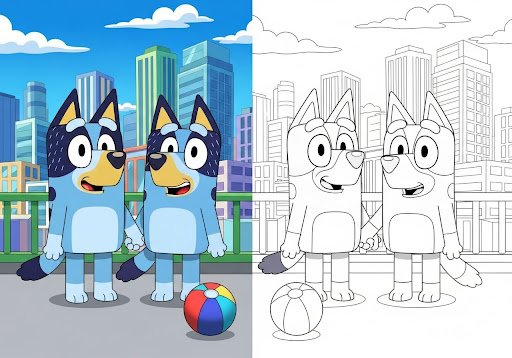
Bluey, Bingo, Bandit, and Chilli feel like part of a child’s world. Kids relate to the Heeler family because they act like real families. When coloring the characters, children express thoughts, ideas, and emotions more openly. Including themed options like thanksigiving coloring pages can spark conversation about holidays, gratitude, and family traditions
How Coloring Helps Kids Grow Emotionally
One of the most important benefits of coloring is emotional development. Children often struggle to explain how they feel. Coloring allows them to express emotions in quiet, safe ways.
Coloring Helps Reduce Stress
Coloring helps kids calm down. It lowers stress by giving them something simple and enjoyable to focus on. When children feel overwhelmed, anxious, or overstimulated, a few minutes of coloring can bring balance.
Coloring Helps Kids Understand Emotions
Bluey episodes teach emotional lessons like patience, kindness, bravery, and honesty. When kids color Bluey, they remember those lessons. Teachers or parents can ask simple questions like:
How does Bluey feel in this picture?
Why do you think she feels that way?
This helps children learn emotional words and understand feelings better.
Coloring Helps Express Emotions Safely
Some kids use bright colors when happy. Some use darker colors when sad or tired. Coloring gives adults insight into a child’s emotional state. It creates a safe space for kids to express feelings without needing perfect words.
How Bluey Coloring Pages Improve Motor Skills
Coloring is one of the best activities for developing fine motor skills. Fine motor skills control the small muscles in the hands and fingers. Kids need these skills for writing, cutting, tying shoelaces, buttoning clothes, and playing instruments.
Strengthens Hand Muscles
While coloring, kids hold crayons, twist them, and push them against the paper. All these actions strengthen hand muscles.
Improves Pencil Grip
The more children color, the more naturally they learn how to hold writing tools correctly.
Builds Hand Control
Kids learn to control their hand movements so they can:
Stay inside the lines
create smooth strokes
apply the right pressure
Bluey pages are perfect because the shapes are simple and the lines are bold.
Prepares Kids for Writing
Coloring is a pre-writing activity. Before kids can write letters, they must learn to control pencils. Coloring helps build that skill.
How Coloring Helps Build Focus and Concentration
Young children have short attention spans. Coloring encourages them to practice staying focused for longer periods.
Improves Attention Span
Even five minutes of coloring helps kids learn how to stay with one task. Over time, they can color longer and focus better on school subjects.
Helps Kids Practice Quiet Time
Classrooms and homes can be noisy. Coloring teaches children how to sit, relax, and concentrate without distractions.
Encourages Patience
Kids often want fast results. Coloring teaches them to take their time, finish their work, and be patient.
How Bluey Coloring Pages Teach Creativity
Creativity is one of the most important skills for children. It helps them solve problems, think differently, explore ideas, and build confidence. Coloring naturally boosts creativity.
Encourages Color Choices
Should Bluey be blue? What if she is green today? Children decide. Even small choices build creative thinking.
Let’s Kids Change the Scene
Children may add:
trees
houses
flowers
pets
toys
around Bluey. They imagine new worlds and explore ideas freely.
Supports Imaginative Play
After coloring, kids often create stories about the scene. This connects drawing to storytelling and pretend play.
How Bluey Coloring Pages Help With Learning Speech and Language
Coloring opens the door for conversation. When kids talk about their pictures, they practice:
new words
describing things
sharing ideas
explaining thoughts
Vocabulary Building
Teachers and parents can ask:
What color are you using?
What is Bluey doing?
Who is in the picture?
Kids learn new words without feeling pressured.
Storytelling Practice
After coloring, ask children:
Tell me a story about your picture.
This builds sentence structure, imagination, and communication skills.
Encourages Conversation
Kids feel comfortable talking while coloring. They open up more easily.
How Coloring Helps With Early Math Skills
Coloring supports math without using worksheets or numbers. It teaches:
Counting
Count:
crayons
characters
colors used
shapes on the page
Sorting and Grouping
Sort crayons by:
warm colors
cool colors
bright colors
Patterns
Kids can create:
AB patterns
rainbow patterns
shape patterns
Bluey’s simple shapes help children practice these skills naturally.
How Coloring Builds Social Skills
Coloring also teaches children how to interact with others.
Sharing Supplies
Kids learn to share crayons, markers, and paper.
Working Together
Group coloring teaches cooperation. Children learn to wait, take turns, and help each other.
Confidence Building
Kids love showing their finished pages. Sharing builds pride and social confidence.
How Bluey Coloring Pages Support Classroom Learning
Teachers can use Bluey pages to improve lessons in many subjects.
English Lessons
Use coloring pages for:
story starters
character descriptions
creative writing
vocabulary building
Science Lessons
Color pages showing:
animals
plants
weather themes
Teachers can link them to science topics.
Social Studies Lessons
Use pages about family, friends, and community to support social learning.
Art Lessons
Teach shading, color mixing, texture, patterns, and backgrounds.
How Coloring Helps Build Memory and Recall
Kids remember better when they interact with visuals.
Recognizing Characters
Kids remember Bluey, Bingo, Bandit, and Chilli’s:
shapes
colors
expressions
Connecting to Episodes
Coloring scenes reminds them of lessons from episodes.
Learning Through Repetition
Coloring the same character multiple times strengthens memory.
How Bluey Coloring Pages Help With Problem-Solving
Coloring helps kids learn how to make choices. They need to decide:
which colors to use
How to fill spaces
What details to add
These decisions teach problem-solving naturally.
Making Decisions
Kids choose tools, colors, and patterns.
Checking Mistakes
If they color outside the lines, they learn how to adjust.
Completing Tasks
Finishing a picture teaches consistency and responsibility.

How Coloring Helps Kids Build Independence
Teachers and parents do not need to explain much. Kids can color on their own. This teaches independence.
Self-Guided Activity
Kids can choose pages and tools by themselves.
Builds Responsibility
They learn to clean their coloring area and put supplies away.
Encourages Decision-Making
Coloring lets kids make small choices that build confidence.
Tips for Parents to Make Coloring More Helpful
A few small steps can make coloring even more valuable.
Let Kids Choose Their Colors
Do not correct them. Creativity grows when kids feel free.
Sit With Them Sometimes
A few minutes of shared coloring creates bonding.
Ask Simple Questions
What do you like about this picture?
What happened in this scene?
Display Their Work
Pin the colored pages on the walls. It boosts confidence.
Tips for Teachers to Use Coloring in Classrooms
Teachers can get even more learning value from Bluey coloring pages.
Use Them During Transitions
Coloring helps calm the class after high-energy moments.
Use Them as Early Finisher Activities
Students who finish tasks early can color quietly.
Combine Coloring With Writing
Students can write sentences or stories after coloring.
Celebrate Student Work
Display Bluey pages on classroom boards.
Final Thoughts:
Bluey coloring pages are much more than fun pictures. They help children learn, grow, and develop in emotional, academic, creative, and social ways. Coloring lets kids express feelings, build motor skills, practice patience, improve focus, and explore imagination without pressure. Whether at home or at school, these pages support learning naturally and enjoyably. If you want even more printable designs that bring creativity and smiles to your child’s daily routine, you can explore Sketchy Tones for new pages that make coloring time even more exciting.