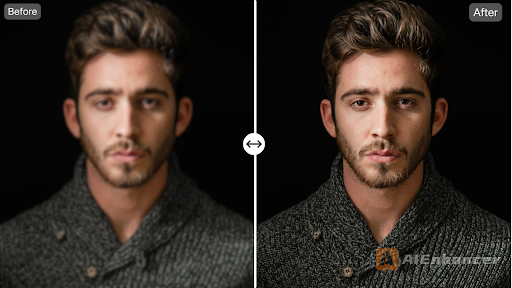
Images no longer wait patiently at the bottom of a page. They speak first, and often louder than text. A single glance can signal care, precision, and relevance, or the opposite. As visual standards keep climbing, creators and businesses are forced to rethink how images are prepared and maintained. This shift is not about artistic ambition, but about meeting expectations that have quietly become universal.
Why Image Quality Is Now a Strategic Concern
Visual judgment happens before intent is understood
People rarely pause to analyze why an image feels right or wrong. The reaction comes instantly. Sharp edges, balanced light, and natural color suggest effort and credibility, while blurry or compressed visuals raise doubts that are hard to undo later. This reaction shapes engagement long before the content itself has a chance to speak.
That reality is why an AI photo enhancer has become less of a niche tool and more of a practical requirement. It helps images reach a level of clarity that audiences already assume will be there.
The growing gap between output and resources
Content production has accelerated, but editing time has not magically expanded to match it. Teams publish more images across more platforms, often sourced from different cameras, contributors, or archives. Manual correction still works, but repeating the same fixes day after day drains attention.
An AI photo enhancer closes that gap by handling predictable issues automatically, freeing people to focus on judgment rather than repair.
How AIEnhancer Thinks About Enhancement
Resolution improvement without exaggeration
Upscaling images is easy to promise and difficult to deliver well. Many tools sharpen aggressively, producing brittle edges and unnatural textures. AIEnhancer takes a more restrained path, rebuilding resolution with awareness of surfaces and structure. Details return, but they do not shout.
This balance is why AIEnhancer earns trust as a dependable AI photo enhancer. The output feels like a better version of the original, not a heavily processed imitation.
Color, contrast, and clarity as a system
Color correction often fails when adjustments are treated in isolation. Boosting saturation without respecting light, or sharpening without considering noise, creates imbalance. AIEnhancer adjusts these elements together, allowing improvements to reinforce each other.
Over time, users come to rely on this consistency. An AI photo enhancer that behaves predictably becomes part of the workflow rather than a risky last step.
Blur recovery with realistic boundaries
Blur is one of the most frustrating image flaws because it usually arrives uninvited. A moving subject, low light, a moment missed by a fraction. AIEnhancer’s ability to unblur image focuses on realistic recovery rather than spectacle. Structure is restored where possible, softness is reduced where it helps, and artifacts are kept under control.
Within a broader AI photo enhancer process, this feature feels like a second chance, not a gamble.
Where AIEnhancer Makes a Tangible Difference
Product imagery that supports confidence
In e-commerce, images do more than display products. They answer silent questions about quality and reliability. Inconsistent sharpness or dull colors disrupt that conversation. AIEnhancer helps normalize image quality across product catalogs, even when assets originate from different shoots or suppliers.
Here, the AI photo enhancer plays a quiet but decisive role. It removes visual friction, making decisions easier rather than pushing harder.
Content publishing that keeps momentum
Blogs, landing pages, and social channels operate on tight cycles. Images often arrive imperfect, and manual polishing would slow everything down. AIEnhancer allows teams to raise image quality quickly without stalling production.
That ability to protect both speed and standards is why an AI photo enhancer often becomes part of daily operations instead of a tool reserved for special cases.
Restoring older and imperfect assets
Not all valuable images are new. Old photographs, scanned prints, and legacy branding materials often hold meaning despite visible damage. AIEnhancer’s restoration capabilities bring these visuals back into use, improving clarity while preserving character.
In these moments, the AI photo enhancer behaves less like an editor and more like a careful restorer, respecting the original while making it usable again.
Workflow, Performance, and Accessibility
Designed for browser-based use
AIEnhancer runs entirely online, which subtly reshapes who can use it and how often. There is no installation barrier, no hardware threshold, and no steep learning curve. This makes the AI photo enhancer accessible to small teams, freelancers, and non-designers who still care deeply about visual quality.
Ease of access encourages consistency, and consistency often matters more than perfect control.
Adapting to different visual formats
A logo demands crisp edges, a portrait demands restraint, and a background image demands balance. AIEnhancer recognizes these differences instead of flattening them with uniform processing. Logos remain sharp, faces remain natural, and backgrounds avoid unnecessary noise.
This adaptability builds confidence in the AI photo enhancer, especially for users managing diverse image libraries.
Compression that respects perception
Fast-loading pages are essential, but aggressive compression can undermine credibility. AIEnhancer’s intelligent compression reduces file size while preserving perceived detail. Images load quickly without looking damaged.
For teams thinking about SEO and user experience together, this function of an AI photo enhancer supports both goals quietly.
The Philosophy Behind AIEnhancer
Automation that supports human judgment
AIEnhancer automates improvements that are largely objective, such as resolution, clarity, and balance, without imposing stylistic decisions. Creative intent remains intact. The tool assists rather than replaces judgment.
This restraint keeps the AI photo enhancer useful across different contexts instead of locking users into a single aesthetic.
Avoiding the recognizable “AI look”
Overprocessed images share familiar flaws: harsh edges, exaggerated contrast, artificial sheen. AIEnhancer deliberately avoids leaving a visual fingerprint. Enhancements are meant to be subtle, sometimes almost invisible.
That subtlety is often what convinces professionals to integrate an AI photo enhancer into serious workflows.
Visual Standards Are Quietly Shifting
When enhancement becomes expected
As AI-enhanced visuals become common, expectations adjust. Viewers stop noticing good quality and start noticing poor quality. This raises the baseline rather than the ceiling. Images that fail to meet it feel outdated, regardless of content.
Using an AI photo enhancer early aligns creators with this shift instead of forcing them to react later.
Image quality as structural support
Visuals influence engagement, trust, and discoverability. Treating image enhancement as an afterthought underestimates its impact. AIEnhancer fits into a more integrated approach where visuals are optimized alongside copy, layout, and performance.
In that role, the AI photo enhancer becomes part of the foundation, not decoration.
Closing perspective
The best tools rarely demand attention. They work quietly, improving outcomes without reshaping identity. AIEnhancer operates in that space. As an AI photo enhancer, it focuses on clarity, balance, and reliability, helping images meet modern expectations without drawing focus away from the message itself. In a digital world where judgment happens in seconds, that quiet reliability matters more than ever.