
How AudioConvert redefines an audio to text converter for subtitle-first creators

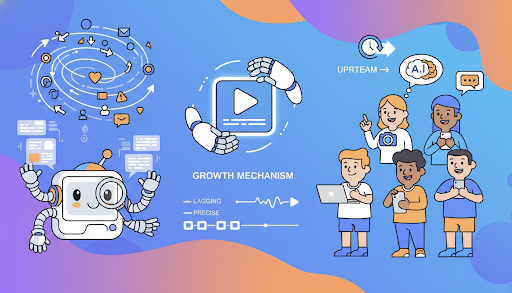
Subtitles used to be a courtesy. Something added after publishing, mainly for accessibility or international audiences. Today, they are closer to a growth mechanism. For many creators, subtitles quietly decide whether a video is understood by algorithms, skimmed by viewers, or ignored entirely. That shift changes what creators should expect from an audio to text converter.
Subtitles moved upstream in the creator workflow
The moment subtitles stopped being optional
Creators rarely wake up deciding to “optimize subtitles.” The change usually happens after noticing patterns. Videos with captions retain viewers longer. Short clips with burned-in subtitles perform better on social platforms. Comments reference exact phrasing rather than vague moments.
Subtitles stop being a technical add-on and start shaping how content travels. At that point, the quality and speed of subtitle generation matter more than most creators initially expect.
Algorithms read before audiences do
Platforms analyze text long before humans engage. Spoken words alone are not reliably parsed. Subtitles provide clean, structured language that platforms can index, classify, and recommend.
This is where an audio to text converter shifts from a convenience tool to a strategic one. The output is no longer just for viewers. It is also for systems deciding distribution.
Subtitle quality affects reach more than creators assume
Accuracy is table stakes, alignment is leverage
Most subtitle tools advertise accuracy. Fewer address timing precision. When captions lag behind speech or jump unpredictably, engagement drops, even if the words are correct.
Creators notice this especially in fast-paced videos. Poorly aligned subtitles distract instead of supporting comprehension. Precision down to the second is what makes subtitles feel native to the content rather than pasted on.
Using an audio to text converter that produces second-level timestamps changes how subtitles behave. They align naturally with speech rhythm, which preserves pacing and viewer attention.
Speaker identification keeps meaning intact
In interviews, podcasts, and collaborative videos, speaker context matters. Without speaker recognition, subtitles flatten conversations into blocks of text, stripping nuance.
When speakers are identified correctly, subtitles preserve intent. Viewers can follow arguments, disagreements, and transitions without guessing who is speaking. This is especially important for educational and discussion-driven channels.
Subtitle-first creation changes how videos are planned
Writing for speech that will be read
Once creators internalize that subtitles will be read as much as heard, scripting changes. Sentences become tighter. Fillers drop. Structure improves.
This feedback loop only works when subtitles are easy to generate and review. AudioConvert enables creators to quickly inspect how spoken content translates into readable text, without waiting for a separate post-production step.
Editing decisions guided by text
Text reveals weaknesses audio hides. Rambling sections stand out. Repetitions become obvious. Transcripts make it easier to trim content with intention rather than intuition.
Creators increasingly use transcripts as editing references. Subtitles are no longer just output; they become a diagnostic tool.
Subtitles as a bridge between long-form and short-form
Extracting moments that travel
Short-form content thrives on clarity. Pulling strong moments from long videos is easier when the language is visible.
With a clean transcript, creators can scan for phrases that work as hooks, captions, or overlays. This reduces dependence on memory or rewatching footage.
Subtitle-driven extraction speeds up repurposing. One long video can feed multiple platforms without rewriting content from scratch.
Consistency across platforms
Different platforms handle captions differently. Some rely on uploaded SRT files, others favor burned-in text. Starting with accurate subtitles gives creators flexibility.
AudioConvert’s export formats allow creators to adapt subtitles to different platforms without regenerating text. The same linguistic core supports multiple distribution strategies.
AI summaries as navigation, not shortcuts
Why creators still need the full transcript
Summaries are tempting, especially for long videos. But creators rarely trust summaries alone. They want to know where insights come from.
AudioConvert’s AI summaries work best as navigation layers. They highlight key segments while keeping the full transcript accessible. This supports quick decision-making without erasing context.
Creators use summaries to plan clips, identify chapter markers, or decide which sections deserve promotion.
Faster collaboration with teams
In collaborative environments, summaries help align editors, marketers, and creators. Not everyone needs the full transcript immediately. Summaries reduce friction without reducing transparency.
This makes subtitle generation useful beyond the creator alone. It becomes a shared reference point.
Subtitle workflows expose adjacent bottlenecks
When text moves faster than video
Efficient subtitle generation often reveals a new problem. Video files become the slowest part of the pipeline. Uploading, sharing, and exporting take longer than text processing.
Creators managing frequent uploads notice this quickly. Pairing subtitle workflows with a simple video compressor helps keep distribution aligned with production speed, without complicating the stack.
The key is the separation of concerns. Transcription handles language. Compression handles logistics.
Keeping the tool stack minimal
Creators resist bloated workflows. Tools that overlap create confusion. Subtitle tools should not also try to be editors, translators, and media managers.
AudioConvert stays narrow by design. It focuses on accurate transcription, subtitles, and summaries. That restraint makes it easier to integrate with existing workflows.
Free access changes creative behavior
Experimentation without hesitation
When subtitle generation is free, creators experiment more. They subtitle older videos, test different caption styles, and explore multilingual options without worrying about cost.
This experimentation often leads to unexpected gains. Videos thought to be “finished” find new life through improved accessibility and discoverability.
Scaling without retooling
As channels grow, workflows often break. Tools that worked for occasional uploads fail under volume. AudioConvert’s consistency allows creators to scale output without changing processes.
This stability matters. Creators spend less time re-evaluating tools and more time creating.
A different way to think about subtitles
Subtitles are no longer a finishing touch. They are a layer through which content is interpreted by both humans and machines. Tools that treat subtitles as a checkbox miss this shift.
An audio to text converter that understands subtitles as growth infrastructure changes how creators work. AudioConvert fits this role not by adding complexity, but by removing friction where it matters most.
For creators who see subtitles as part of a distribution strategy rather than post-production cleanup, the choice of transcription tool quietly shapes everything downstream.