
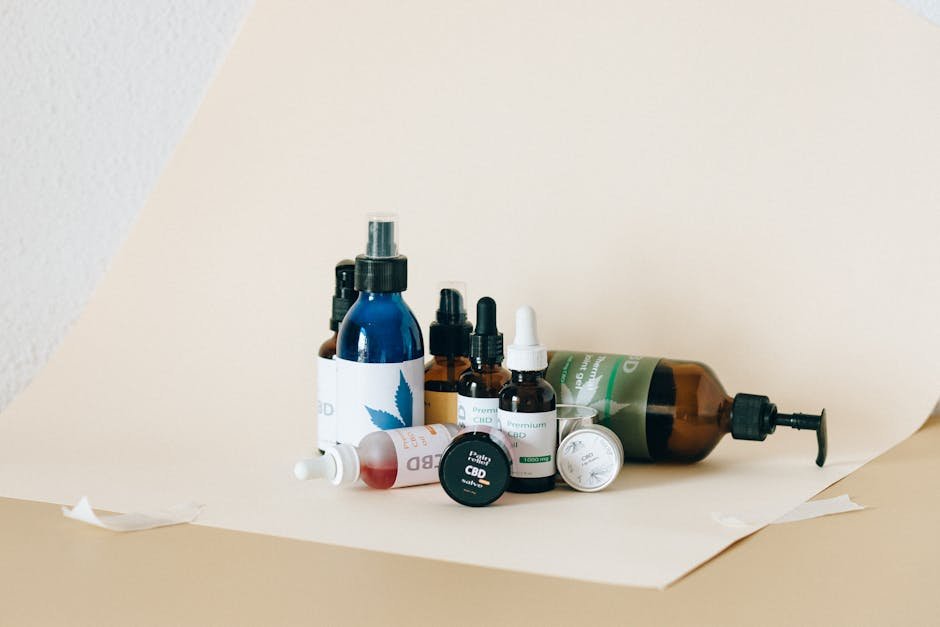
From oils and gummies for anxiety management in humans to treats and chews for improving mobility in animals, the CBD industry has come a long way. You can buy products as wild as CBD-infused bears or clothes at various online and offline outlets.
The demand is so high that by 2030, this industry is all set to touch a $22 billion valuation. The most effective way to bank on this trend is through a private-label CBD business. It simply means selling high-quality CBD products under your brand banner, but the manufacturing is handled by a professional contract manufacturer like Arvanna.
This allows you to better allocate your resources towards branding, sales, and marketing efforts. If applied in a calculated manner, this strategy can make even small players earn a significant share.
The market may seem a bit saturated, but there’s always demand for unique offerings. This is a step-by-step guide that will help you figure out the correct way of starting your own private label CBD business effectively without any major hurdles.

Step 1: Try to look for gaps in the CBD market.
It’s important to take a look at the current state of the CBD industry and look for gaps. Try to figure out where there’s a disconnect in consumer demand and what existing brands are offering. Simply launching a gummy or oil lineup won’t take you places; you’ll have to bring some extra assurance or uniqueness.
The demand will keep on growing, so there’s no rush. People are gradually shifting from traditional pain, anxiety, and stress medications to clean, green, and natural alternatives like CBD.
You may target different segments with sub-brands, such as one for skincare, one for pet health, and one for sports recovery, or maybe target them all under one banner. Try to study the competition and offer something more than what they are doing.
It could be a unique combo of aphrodisiacs and cannabinoids, better absorption formulations, flavor mixes, a better delivery experience, or a somewhat different loyalty program. Possibilities are endless.
Step 2: Get a gist of the regulatory and legal landscape.
The regulatory landscape is quite tricky for the BD industry. It came as a massive boom after the 2018 farm bill, but since then, a lot has changed. The new farm bill is just around the corner, and everyone is anxious about what kind of changes it will bring.
States like Texas have already started cracking down on some cannabinoids derived from hemp plants that fall in a legally grey area. At times like this, it’s better not to experiment with too many compounds and stick with basics like CBD, CBG, and CBN products.
Also, read up on the latest FDA guidelines regarding advertising, labeling, or what kind of claims you can make. Don’t go overboard till new regulations are announced, and make sure that your products don’t cross the 0.3% THC threshold.
Step 3: Select the right private label CBD manufacturer.
You need a good-quality manufacturer that has all the necessary certifications like GMP, USDA Hemp, FDA, & ISO. Make sure that they use only organic ingredients and provide a lab test report for every product.
The manufacturer must be flexible with scaling or dialing down production as per seasonal demands. Be clear about minimum order quantity, turnaround time, and overall costs so that there are no last-minute problems.
If it’s a full-service firm like Arvanna, then it’s even better because they’ll take care of packaging as well on your behalf. Also, the contract for private label products should be exclusive and backed by proper legal documents; you wouldn’t want your competition to steal your thunder.
Step 4: Build an Online Presence for Your Brand
We live in a chronically digital age where most interactions happen on the web, so your brand must be thoroughly visible. Make multiple social handles like Instagram, Pinterest, Discord, and Facebook.
Put out both promotional and educational content consistently. Collaborate with influencers in food, health, sports, and lifestyle niches. You can post special smoothie and dessert recipes where your gummies can be used as toppings.
Your product website should be clean, easy to navigate, and full of educational resources to help newcomers make proper buying decisions. Keep it raw and authentic, and have a secure payment gateway. Use SEO-friendly content to rank on exclusive keywords.
Step 5: Develop Good Logistics & Customer Support
Your logistics and support game must be on point once orders start rolling in. If possible, sign up with third-party fulfillment services; they are more experienced. As for the support, keep it in-house.
In the age of AI bots, if you could provide human customer support, it could be a game-changer. Train your team to answer every query with enthusiasm. Keep regular checks on stocks and the warehousing situation; there should be no delays in shipping, especially during the peak festive season.
Push high-performing products to the top of the page, offer bundles, and run an exclusive email campaign to drive up sales.
Step 6: Scale Up Gradually & Stay Compliant
Keep up with the latest regulations, and make sure to upload all lab test reports promptly. As the demand for your products grows, start expanding into different states. Take the help of local consultation agencies to tackle state-specific compliance issues.
Don’t overwhelm the customers by launching too many products. Start slowly with max 2-3 types of flavors and formulation variations, take regular surveys, and based on feedback, venture into newer options.
Also, apart from online channels, consider wholesale deals with local stores to expand the reach. Deploy an advanced marketing tool once you start getting good cash flow, and always keep the products transparent, consistent, and safe.
The End Note
Starting a private label CBD business can be both an exciting and overwhelming task. Try to build things slowly and use this guide as a basic guideline. Once you step into the game, things will start unfolding, and with the right people and approach, you can definitely build a sustainable, high-quality CBD brand.
For a manufacturing partner, try to go with well-known, gold-standard manufacturing companies like Arvanna that are known for accommodating the demands of both newbies and established players looking to diversify.