
Enhancing Australian Governance with Risk Register Software and Compliance and Risk Software

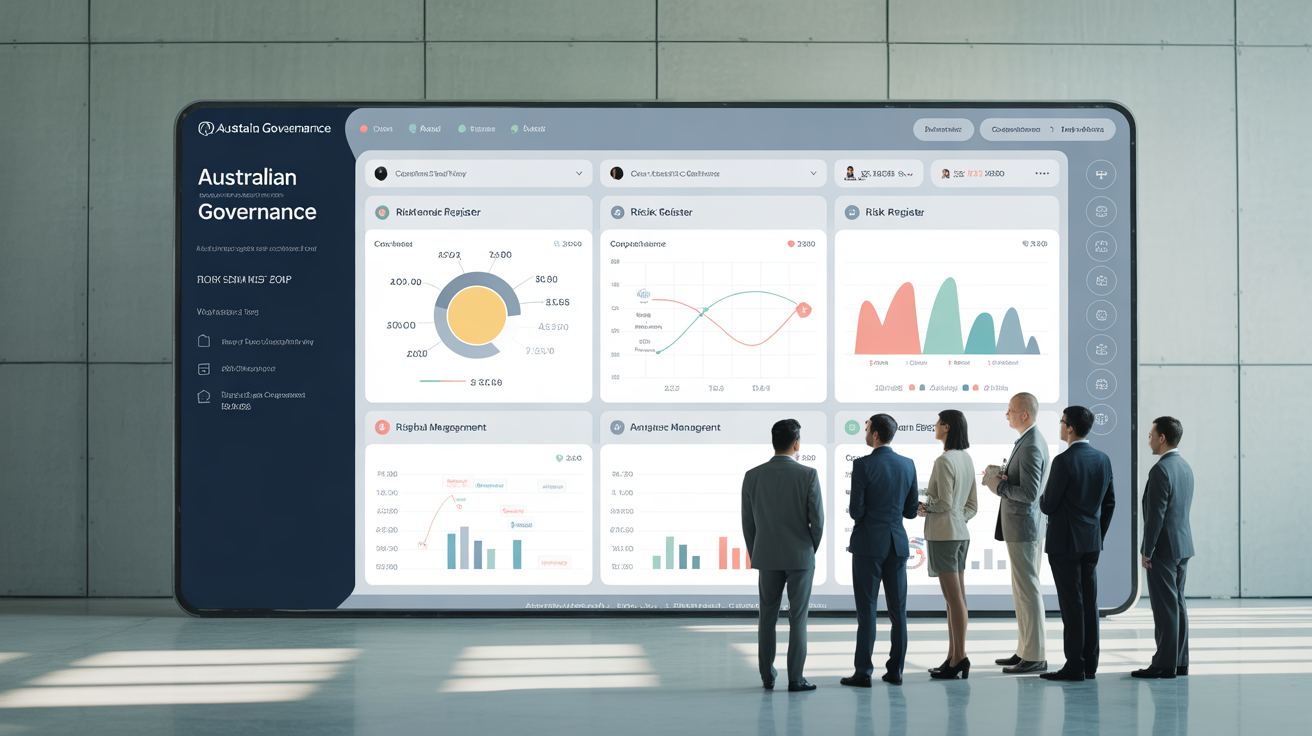
Australian organisations are entering a new era of governance. This new governance paradigm is not about governance policies documented on paper, but rather about accountability on the basis of data. The administrative aids of the past are becoming strategic infrastructures. At the forefront of this development is Lahebo risk Register Software. When it is combined with compliance and risk software, it transforms how organisations perceive, control, and report risk.
It is not about substituting spreadsheets with software applications. It is about a new paradigm—informed risk data flows through the organisation quicker, smarter, and in a more integrated and cohesive manner.
Reducing risk in record-keeping
In the past, risk registers were simply lists of potential problems to be addressed. Risk “registers” were static documents built for auditors and were set aside once board meetings were over. This approach is problematic especially with the speed at which risks reviews occur.
Modern Risk Register software eliminates this outdated cycle, replacing it with real-time, continuous systems of insights. It is integrated with operational and compliance systems, as well as incident management tools. When there is a new regulation, a supplier delays, or internal control fails, the risk register closes the feedback loop and updates in real-time.
The Australian context involves the tracking of multiple changes across the national and state WHS, environmental, and cybersceurity and privacy compliance regimes A complex compliance framework requires an ability to track changes dynamically and an inclusive and integrated WHS management system assists with this.
The integration of compliance and risk
There has been an increase in Australian practioners with the relaxing of rules within the compliance domain particularly within the WHS sphere. Compliance practitioners have, in some cases, been forced to become more integrated with the risk functions within the business. This is what the compliance and risk software is for.
When integrated with the Risk Register software, compliance aids the risk framework by feeding in legislative obligations, audit outcomes, and breaches of policies, all of which formative data to the risk matrix. Compliance is no longer a box-ticking exercise, it provides insight into the operational health of the business.
This integrated system provides:
Assurance: Confidence to the leadership that the business is operational within the legal and ISO standards.
Efficiency: The risk framework automatically updates to include the compliance data, this reduces time invested into reporting and decreases the probabilities of errors.
The update is instant and provides the compliance and risk functions the means to manage accountability and exposure to risk in the business. The system assumes a constant state of compliance and fills exposure gaps on the risk profiles.
It’s a boardroom tool, not a back-office task
Today’s board members want clarity over piles of technical detail. With Risk Register software, they get clarity through visual dashboards that turn complex information into heat maps, exposure trends, and scores on control effectiveness.
This visualisation aids members of the board in the highly regulated Australian sectors of energy, healthcare, education, and construction. Those boards need to show regulation proactive oversight. With real-time dashboards, directors can respond to regulators, who are asking, “How do you know the organisation’s controls are working?”
The integrated software also gives the boards insight into value compliance through to operational risk. This establishes a single, dependable source of truth.
Predictive compliance: the next frontier
The future of compliance in Australia won’t be through the rearview but instead be a predictive model. Risk Register and compliance softwarecontinue to harness the potential of artificial intelligence and analytics to identify signs of looming compliance breaches.
For control failures, systemic issues and expired timelines within systems can be identified and escalated before they become larger issues. For example:
– A training gap may be the source of repeated, lower-level safety incidents.
– A compliance breach could be likely due to repeated near-misses and a lack of oversight.
– Financial or ESG risk exposure may be the reason for a spike in supplier non-conformance.Rather than waiting until the next audit cycle, these systems proactively warn managers of developing vulnerabilities. Therefore, predictive compliance acts as a new type of continuous assurance.
The ESG connection: where risk meets responsibility
Business in Australia is being transformed by new Environmental, Social, and Governance (ESG) expectations. There is demand for transparency from investors, regulators, and consumers. Here too, integrated software solutions are also helpful.
ESG metrics integrated into Risk Register software allows organisations to monitor and control the carbon performance, diversity, and social impact of risks alongside financial and operational risk. Combined with compliance and risk software, these data streams automated reporting aligned with global standards, including GRI and SASB.
This is auditable, measurable sustainability—not just a promise in the Annual Report.
Why culture still matters
The accountability void that even the finest software cannot fill is culture. How these tools shift the culture are the real value. Risk and responsibility visibility are a part of every employee’s job, from site supervisors to executives. This transforms general awareness from compliance fatigue to proactive participation.
The cultural impact of digitally registered systems is evident in Australian organisations. When risk is visible and traceable it stops being someone else’s job and becomes everybody’s business.
What is next for organisations in Australia
- Consolidate your systems: Building bridges between risk, compliance, and audit, and ensuring they ‘talk’ to one another, is the critical first step in merging systems into one digital ecosystem.
- Automated Over-sight:Implementing new Risk Register systems that automatically capture live data from incidents, audits, and regulatory changes will be a game changer.
- Predict the Future: Shift your focus and reporting on the past to predicting future trends.
- Incorporate Risk ESG: Incorporating the risk of ESG metrics will assure the integrity of your ESG data, streamlining enterprise reporting.
- Train your staff: Prepare your staff to analyze risk data and support mitigation decisions rather than simply gathering data.
The new generation of Risk Register systems is poised to shift oversight from siloed documentation to integrated systems. When added to compliance and risk systems, it will become the new foundation to responsible growth. This goes beyond digital transformation for Australian organisations. It’s a new cultural approach to integrated systems and automated governance that will provide competitive advantage.