
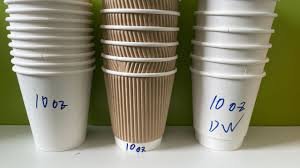
Paper cups are the perfect choice for serving hot drinks in coffee shops and fast food outlets. Their light weight and low environmental impact make them an essential part of disposable tableware.
There are several types of paper cups:
- Single-wall cups
- Double-wall cups
- Rippled cups
Rippled paper cups https://univest-pack.com/shop/paper-cups/double-wall-cup/black-ripple-cups/ have become popular due to their insulating properties, lightweight construction and durability. Despite their textured and layered surface, these cups can be effectively customised, although this requires careful selection of printing techniques and materials to accommodate the corrugated structure of the cup. There are several challenges for manufacturers with this type of cup:
Dealing with irregular surface
Unlike smooth paper or laminated cups, the ridges and grooves can interfere with direct printing, potentially causing distorted graphics, uneven ink coverage or illegible fine details.
- To overcome this, manufacturers and designers often use specialised printing methods. For example, flexographic printing, commonly used in packaging, applies ink under controlled pressure, enabling the design to conform to the textured surface. Similarly, offset printing with pre-press adaptation can produce sharp, accurate graphics despite surface irregularities.
- Another common solution is to use printable sleeves. These sleeves, typically made from smooth paperboard, are slipped over the corrugated cup. This approach enables the application of full-colour designs, logos or messages without distortion from the cup’s ripples. They also provide the additional benefit of improving insulation for the user’s hand, making them both functional and visually appealing.
- Embossing and hot-stamping can also be used on rippled cups. While fine details may present a challenge, larger logos or brand marks can be impressed or foiled to create striking visual and tactile effects. These methods add a premium feel and reinforce brand recognition, offering an alternative to traditional printing methods.
Adding functional elements
As well as improving the appearance, customisation can include functional elements such as QR codes, promotional messages or recycling information. As long as they are designed with sufficient size and contrast to remain readable on the textured surface, the corrugated structure does not impede these additions.
Colour choices and ink types are also important. Water-based inks and high-opacity pigments help to maintain vibrant, consistent colours on corrugated surfaces, while UV-cured inks provide durability against moisture and handling.
In summary, although the texture imposes limitations on fine details, creative approaches enable brands to maintain visual impact, functionality and promotional value. With careful planning, these cups can provide both thermal insulation and marketing versatility, making them a practical and customisable choice for cafés, events and retail beverages.