

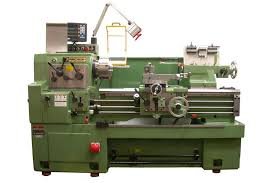
Just having the right machine is not enough to turn a virtual design into a real and accurate workpiece – you also need the right process and a smart partner.
This article presents a pragmatic guide for engineers, designers, and project managers. We will present in detail how to use CNC lathe services as effectively as possible for your project. This technique employs a computer-controlled machine tool to achieve very high precision in machining round parts.
Main Utilizations and Benefits
Initially, you have to decide if CNC turning is suitable for your project. This method is most suitable for cylindrical parts or parts with circular features.
The strengths of CNC turning primarily revolve around its simplicity and versatility.
- Precision & Tight Tolerances: This method is perfect for highly precision-required parts. CNC turning is able to hold tolerances as close as ±0.001 inches (0.025 mm). In some cases, the results may be even tighter.
- Material Versatility: This process can use a huge range of materials. It can be based on metals or plastics.
- Excellent Surface Finishes: Besides being very simple, turning can provide a good surface finish right from the machine. Thus, only a little polishing may be required.
- Scalability: It is good for different quantities, from single prototypes to small and large production runs, and so on.
With these strengths in mind, it is no wonder that CNC turning is found in many common parts. For example:
- Shafts, Axles, and Rods
- Fasteners, Bushings, and Spacers
- Nozzles and Connectors
- Custom Housings and Cases for round parts
The selection table below will help you make a decision based on what kind of process is suited for your part. It shows and compares the primary manufacturing methods.
| Feature | CNC Turning | CNC Milling | 3D Printing (FDM/SLA) |
| Best For | Round/Cone-shaped Parts | Square/Complex Shapes | Quick Prototypes, Complex Shapes |
| Core Action | Spins Workpiece | Spins Cutting Tool | Adds Material Layer-by-Layer |
| Speed | Very Fast for simple shapes | Varies by complexity | Slower for production |
| Material Strength | Excellent (keeps stock properties) | Excellent | Good (can have layer weaknesses) |
Basic-Plus Service
CNC lathe services are a wide umbrella that covers many different tasks. Knowing these levels will help you when looking for the right supplier for your part.
Basic services are good for simple parts. Advanced services require complex equipment but can machine intricate parts in one setup.
Standard 2-Axis Turning is the workhorse of the industry. This process is for round parts only. It is capable of making straight lines, angles, and basic curves on the exterior of a rotating part. It is mostly used for pins, simple shafts, and ring construction.
Multi-Axis & Live Tooling expands the possibilities considerably. “Live tooling” means the lathe has rotating tools like small drill bits or end mills mounted on its tool holder. It is this ability to create off-center features, holes, slots, and flat surfaces on the part. The key advantage is that it can avoid operating a milling machine which is, therefore, a time-saver; cost-cuts and better precision.
Swiss-Style Machining is a kind of CNC turning. It is made for very small, long, and complex parts. Examples are medical implants or connectors for electronics. The central point is that the material shifts through a guide bushing. This supports the part precisely when it is being cut, so it doesn’t bend. This helps to maintain a very high quality of bearing.
Automation Integration is a cornerstone for sending more volume. Advanced CNC shaping services include automation for loading and unloading parts. These providers may use complex robotic cells that run machines 24/7. High-quality standards are kept along with making the production cost-effective.
Getting Started Right
From what we have seen successful projects begin with good communication. Full disclosure of the information to your manufacturing partner will ensure accurate quotes and good quality parts.
The following is a checklist of the information your CNC lathe services provider will need to kick off the project.
- Finalize Your CAD Model The essential and correct 3D model is the building block of your project. Standard file formats such as STEP or IGES should be used. These formats are widely supported.
The part should always be modeled at a 1:1 scale. Make sure that the file holds only the final part you want to be produced. Other parts, clamps, or fixtures should be removed from the model at the starting point
- Define Critical Tolerances Tolerances are the acceptable limits of a dimension. While CNC machines are accurate, tighter tolerances come at an increased cost. A common mistake is to over-dimension everything.
Only the features that genuinely need them should be given strict tolerances. Present these dimensions on a 2D drawing (in PDF format). This drawing is the optimal way to express the surface finish needs and other details not in the 3D model.
- Select the Right Material Be specific when you mention your material. Rather than just calling it “Aluminum,” specify it as “Aluminum 6061-T6.” The particular alloy and temper will have an effect on the material’s strength, cost and, machining.
Concerning the end-use of the part distinguish if it should be strong, light, rust, or heat resistant. The choice of material will significantly impact the part’s performance.
- Specify Surface Finish and Post-Processing In case your item requires a particular roughness you can call it out on the drawing by an Ra (Roughness average) value. You can also include a list of secondary steps that are needed after machining. Many partners provide different forms of on-demand surface finishing such as anodizing, plating, and heat treating.
7 Critical Questions for Your Provider
Picking the right partner is equally important as having an excellent design. The success of your project in a CNC lathe service provider will depend on your questioning strategy.
Here are seven important questions to ask upfront before a project starts.
- What is your typical lead time for a project of this scope and quantity?
- What are your quality control and inspection processes? Do you provide inspection reports?
- Can you share examples of similar parts you have made in the past?
- Do you offer Design for Manufacturability (DFM) feedback to help improve my design and reduce cost?
- What are your abilities for sourcing and tracking materials?
- What is your preferred method for project communication and updates?
- What are your machine abilities, such as maximum part size, and do you have live tooling?
Your Partner in Precision
Having CNC lathe services be successful highly depends on understanding a few main things. You have to understand the process, prepare the design files, and find a partner(Mekalite) that fits your project best.
With the help of this guide, you are now geared up to express your needs in a clear manner. Additionally, you can convert your vision into a high-quality manufactured product.
Frequently Asked Questions
How is a CNC lathe different from a CNC mill?
CNC lathes involve the spinning of the workpiece while a fixed cutting tool eliminates the workpiece’s material. This differs from CNC milling where the work tool rotates while the workpiece is still. Mills are more suitable for thick, tall, or flat shapes as opposed to lathes.
How affordable are CNC lathe services?
Pricing is determined by a range of issues. These can comprise of the part’s intricacy, material selection, quantity of pieces, and tolerances. Any final operations will ascribe a cost also. To have a real figure, it is advisable where you submit a CAD file for a formal quote.
Which material is the one that most gets used in CNC turning?
Often CNC turning employs aluminum 6061-T6. This alloy has a surprisingly good ratio of strength to weight, is easy to machine, and is cost-effective. Among the other frequently used materials are brass, stainless steel, carbon steel, as well as plastic materials like Delrin and PEEK.
Can I make just one prototype using a CNC lathe?
Definitely! A majority of the CNC lathe services are perfect for the production of a single prototype or even a few batches. Of course, the cost of each part will be somewhat higher than that of a mass production run. Yet, it allows you to exercise your design right with the precision, quality, and grade of the production materials.
Which CAD file formats are the best for getting a CNC lathe quote?
For this purpose a 3D .stp (or .step) CAD file is the optimum selection since it contains the entire geometry of the part. It is also very good to include a 2D PDF drawing that specifies critical tolerances, threads, surface finishes, and other important notes.