Real estate has long been framed through two dominant lenses: shelter and investment. Either it is a place to live, or a vehicle to grow wealth. For a growing class of global professionals, however, this binary is no longer sufficient. Property is increasingly understood as something more foundational: infrastructure that enables personal freedom.
Just as roads enable mobility and digital networks enable communication, real estate now functions as a system that determines how freely individuals can allocate time, move across geographies, and adapt to changing life priorities. In this framework, the question is no longer “Where should I buy property?” but “What kind of freedom should my property enable?”
Freedom Through Optionality, Not Permanence
Traditional homeownership emphasized permanence. Buying a home signaled settlement, predictability, and long-term geographic commitment. While this model suited stable career paths and localized economies, it conflicts with the realities of modern professional life, which is increasingly global, nonlinear, and mobile.
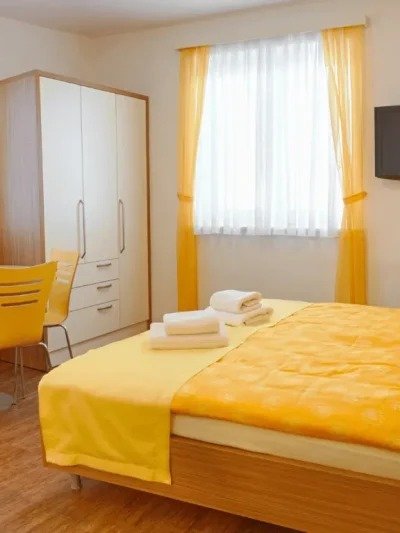
As a result, many professionals decouple freedom from ownership. Renting becomes the preferred mode in high-efficiency cities where opportunity density is high but lifestyle flexibility is constrained. Securing a room for rent in Singapore, for example, allows individuals to operate within one of Asia’s most sophisticated economic systems without sacrificing mobility or absorbing the long-term risks of a tightly priced property market.
Here, freedom is achieved not by owning more, but by committing less. Renting functions as soft infrastructure, providing access without obligation, presence without permanence.
Ownership, in contrast, is repositioned. Rather than anchoring capital where professional demands are highest, individuals increasingly own property where personal autonomy compounds over time. Ownership is no longer about locking oneself into a single place, but about building strategic bases that expand future choices.
Property as a Platform, Not a Destination
When viewed as infrastructure, real estate becomes a platform rather than a destination. Its value lies in what it allows the owner to do, not merely where it is located. This perspective shifts evaluation criteria away from short-term yield alone toward functional versatility.
Properties that support multiple roles such as residence, rental, retreat, or eventual relocation offer higher freedom density. They can adapt as careers evolve, family structures change, or geographic preferences shift. This adaptability is especially important in a world where long-term certainty is increasingly rare.
Nature-adjacent markets illustrate this principle well. Acquiring a villa for sale in Bali, for instance, is rarely about immediate occupation alone. Such properties often function simultaneously as lifestyle assets, income-generating rentals, and long-term exit options from high-intensity urban environments. Their strategic value lies in keeping doors open rather than closing them.
In this sense, real estate behaves like resilient infrastructure: it supports multiple scenarios without requiring constant redesign.
Freedom as a Designed Outcome
Understanding real estate as infrastructure reframes freedom as something designed, not discovered. Freedom does not emerge automatically from higher income or asset accumulation. It emerges from alignment between where one lives, how one works, and what one intends to prioritize over time.
Global professionals increasingly design this alignment deliberately. Cities are treated as operational zones optimized for earning and network access. Ownership is allocated toward environments that support recovery, identity, and continuity. The two are connected, but not conflated.
This model challenges legacy assumptions. Owning in a global city is no longer seen as the ultimate marker of success. Instead, success is measured by the ability to choose: where to be, when to move, and how to rebalance life without structural friction.
Importantly, this does not reject ambition or urban engagement. It reframes them. Cities remain critical engines of opportunity. But they are no longer expected to satisfy every dimension of human need. Real estate infrastructure absorbs that complexity by distributing it across locations and asset types.
In practice, this means fewer irreversible decisions and more modular ones. Renting preserves agility. Ownership provides leverage. Together, they form a system that supports autonomy rather than constrains it.
As careers extend across borders and life stages blur traditional timelines, real estate’s role continues to evolve. No longer just a backdrop to personal freedom, it increasingly defines its boundaries. Those who recognize property as infrastructure gain not just assets, but agency.
In the modern global economy, freedom is rarely accidental. It is built quietly, deliberately, and often through the spaces we choose to control.