New businesses rarely fail because the idea was weak. More often, they fail because planning stayed theoretical and execution lacked discipline.
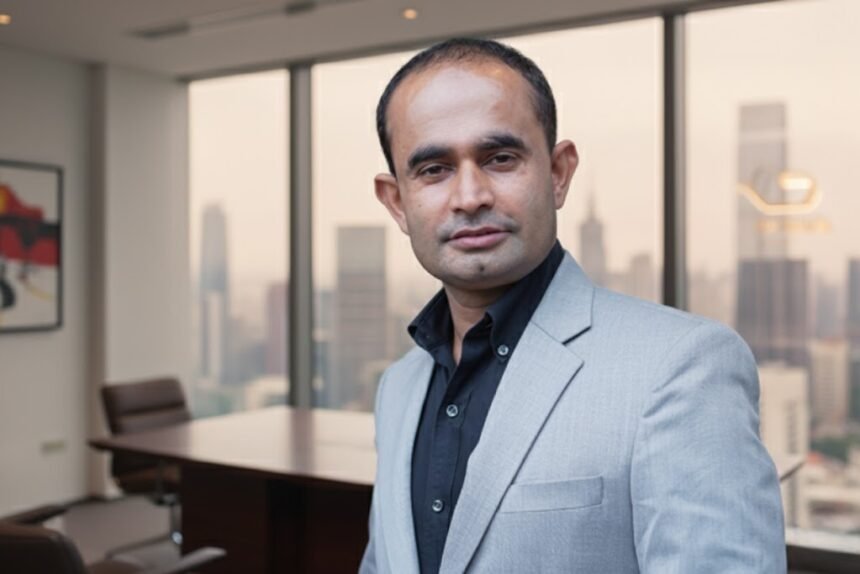
Sabeer Nelli, CEO of Zil Money, has spent two decades watching this pattern repeat – and helping companies avoid it. From building Tyler Petroleum into a multi-million-dollar operation in Texas to leading Zil Money, a platform now serving over one million businesses and processing billions in transactions annually, Sabeer has observed how companies across retail, logistics, SaaS, healthcare, and public sector organizations succeed – or stall.
His lessons are not limited to fintech planning or SMB payments. They are operational principles drawn from real-world exposure to businesses across industries.
From Manjeri to Texas: Planning Before Prestige
Sabeer Nelli’s entrepreneurial mindset began in Manjeri, Kerala, where he learned early how small businesses survive on practical judgment, not theory. After pivoting from aviation ambitions due to health reasons, he moved to Texas and founded Tyler Petroleum in 2005. Growing that company past $60 million in revenue required navigating regulatory complexity, logistics management, and volatile markets.
Along the way, he encountered recurring operational bottlenecks – particularly the inefficiencies of juggling multiple platforms for payments, vendors, and financial tracking – which ultimately led him to create Zil Money as a unified solution built directly from those real-world pain points.
When later asked about formal preparation, he responded candidly: “My MBA is from the Tyler Street. It took me 10 years.”
That experience shaped his belief that planning must begin with operational reality, not prestige or trend-driven ambition.
Tip 1: Solve the Real Problem First
Across the million-plus businesses interacting with Zil Money’s ecosystem, Sabeer has noticed that founders often chase expansion before stabilizing fundamentals. His advice is consistent: “Find the problem and solve it.”
Whether it is a restaurant struggling with kitchen coordination, a SaaS company facing onboarding confusion, or a construction firm mismanaging scheduling, growth begins when leaders identify the friction that repeats daily. Planning becomes powerful when it focuses on removing persistent operational strain rather than adding new initiatives prematurely. Businesses that win long-term are usually those that address one painful inefficiency deeply before scaling outward.
Tip 2: Build From Practical Knowledge, Not Theory
When discussing how he launched his fintech venture, Sabeer emphasized that it was born from lived operational challenges rather than academic case studies.
That philosophy applies beyond payments. Many SMBs overconsume strategic content yet underobserve their own workflows. Sabeer’s approach encourages founders to spend time in the trenches of their own operations – listening to customer complaints, observing team bottlenecks, and testing solutions internally before broadcasting big announcements. Execution improves dramatically when it is rooted in first-hand experience rather than borrowed frameworks.
Tip 3: Develop Emotional Discipline for Volatility
Every industry experiences instability – market shifts, staffing turnover, supply disruptions, or regulatory surprises. Sabeer views resilience not as a personality trait but as a management skill. “It’s not about stress. It’s how you manage and tolerate it,” he explained.
Planning without mental preparedness often leads to reactive decisions during downturns. Execution, in contrast, requires steadiness. Founders who treat volatility as expected rather than exceptional tend to respond with calculated adjustments instead of panic-driven pivots.
Tip 4: Hire for Roots, Not Leaves
Leadership sustainability depends on people, not processes alone. Sabeer uses a simple analogy: in any organization, most hires are temporary “leaves,” some are steady “branches,” but only a few become “roots” who anchor long-term growth.
Across industries, businesses that scale effectively identify and invest in these root-level contributors – those who take ownership, build others, and think beyond job descriptions. Planning for growth therefore includes planning for leadership depth. Execution becomes stronger when responsibility spreads through empowered teams rather than resting solely on the founder.
Tip 5: Build Systems That Outlive the Founder
Trust, in Sabeer’s view, is structural. Larger organizations evaluating partnerships often ask whether a company can survive beyond its founder.
This question applies to every small business. If daily decisions depend entirely on one individual, growth eventually slows. Planning must include documented processes, delegated authority, and clear succession logic. Execution becomes scalable only when systems function independently of constant founder intervention.
Tip 6: Adapt Early to Technological Shifts
Observing trends across diverse industries, Sabeer believes technological adaptation separates resilient businesses from stagnant ones.
Companies that adopt modern tools – whether automation software, analytics platforms, or AI-assisted workflows – gain execution speed and strategic clarity. Resistance to new methods compounds inefficiency over time. Planning therefore includes continuous learning, and execution includes deliberate experimentation with emerging tools before competitors normalize them.
A Broader View From One Million Businesses
Through serving over one million businesses, Sabeer Nelli has witnessed patterns that transcend industry categories. Companies that succeed consistently plan around real operational friction, execute with discipline, build leadership depth, tolerate volatility, and evolve with technology. Whether the business sells fuel, software, retail goods, or professional services, the fundamentals remain unchanged.
For SMB owners seeking sustainable growth, Sabeer’s blueprint is clear: observe honestly, plan realistically, execute steadily, and build structures that endure. Industries may differ, but disciplined planning and resilient execution remain universal drivers of small business success.