
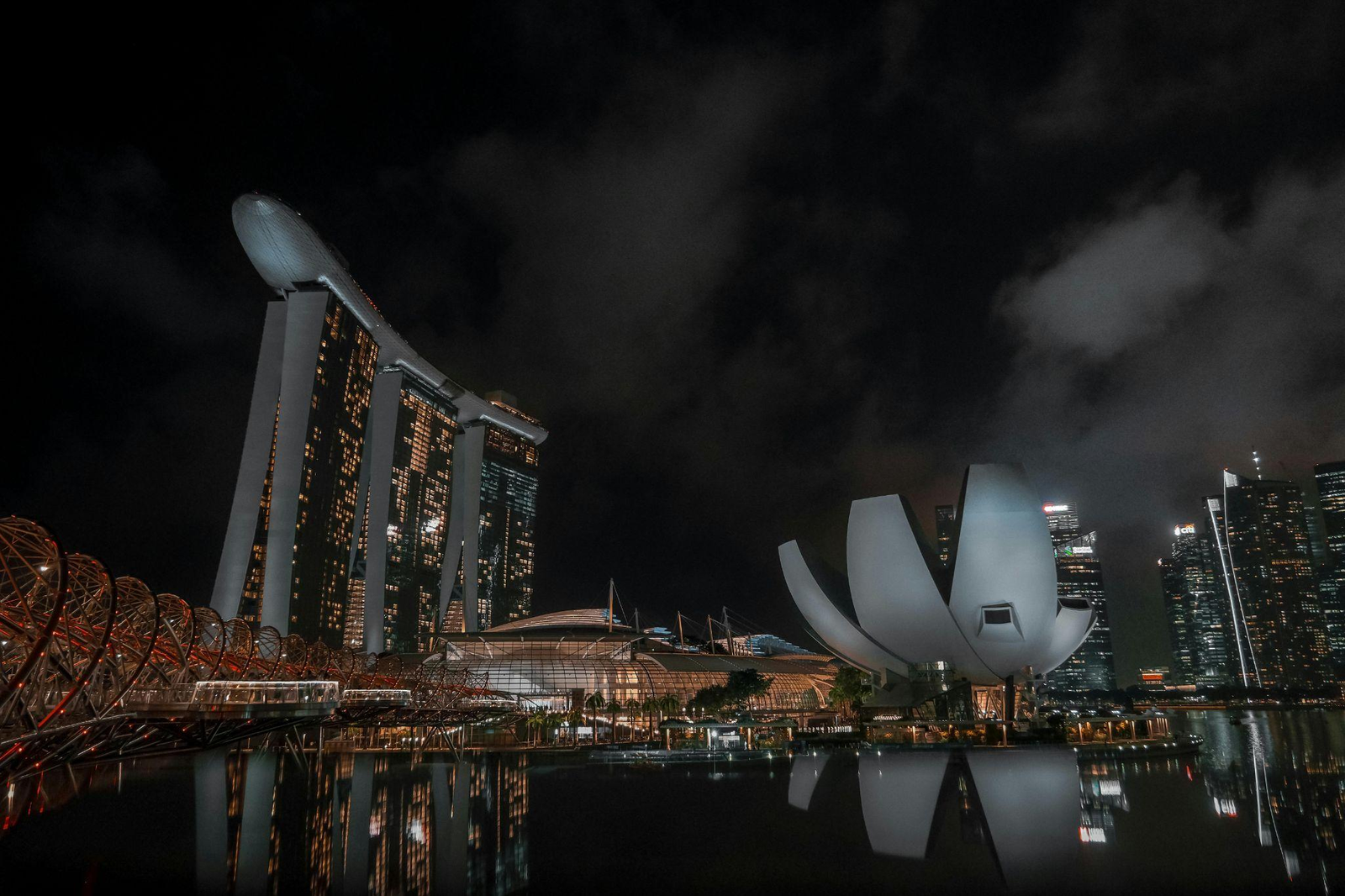
Singapore Art Week 2026 wasn’t simply another festival on the calendar. Running from 22–31 January 2026, the city-state staged a sprawling, city-wide celebration of visual arts that tied together local practice, regional ambition and global art-world attention.
Organised by the National Arts Council and backed by the Singapore Tourism Board, this year’s edition offered more than exhibitions — it revealed how a small city can make art both public infrastructure and world conversation.
From the colossal ART SG fair at Marina Bay Sands to experimental installations in heritage venues and neighbourhood precincts, SAW 2026 delivered a narrative about place, possibility, and power that was arguably more than the sum of its parts.
Four Pillars: Markets, Shows, Streets, and Stories
Singapore Art Week’s programming can feel overwhelming because it doesn’t happen in only one place or one register. The week’s architecture rested on four pillars that defined its cultural impact: market formation, curatorial ambition, public integration, and city storytelling.
These weren’t polite categories. They guided exactly how audiences experienced art in Singapore — and why this particular edition mattered.
Anchor: ART SG and S.E.A. Focus as Market Engine
At the heart of the festival was ART SG 2026, Southeast Asia’s global contemporary art fair returning to Sands Expo & Convention Centre from 23–25 January with a VIP preview on 22 January. It was the fair’s fourth edition and the first time S.E.A. Focus was co-presented inside its halls, uniting contemporary art in this exhibition in Singapore from across Southeast Asia with international gallery networks.
What made this matter was not just scale — nearly 100 international and regional galleries — but scope. ART SG shifted beyond blue-chip names to balance curatorial depth and regional resonance, broadening the conversation about contemporary art in Asia while consolidating Singapore’s role as a nexus between East and West.
Market developments had real culture effects, too. This year saw the introduction of the ART SG Futures Prize, presented by UBS, designed to spotlight emerging artists and accelerate careers rather than simply sell works.
Curatorial Ambition: Key Exhibitions and Installations
Beyond the fair halls, SAW 2026’s curatorial footprint was notable for its intentional storytelling.
One headline project was “Wan Hai Hotel: Singapore Strait”, a Shanghai–Singapore collaboration reimagined at The Warehouse Hotel, overlaying immersive, maritime-inflected installations across multiple sites.
Meanwhile, exhibitions curated under S.E.A. Focus’s theme “The Humane Agency” brought works grounded in empathy and regional narratives to the forefront.
Elsewhere, editor-led picks highlighted exhibitions that expanded sense and scale. A selection at the Singapore Art Museum, for example, presented works by Elia Nurvista and Bagus Pandega in “Nafasan Bumi ~ An Endless Harvest”, tying environmentally grounded practice to deeper cultural reflection.
Curators and national institutions also flexed their collections: from solo shows by regional masters to responsive programming at National Gallery Singapore, SAW forced a kind of interregnum between historical inheritance and contemporary exploration.
Public Integration: Art Beyond White Cubes
Perhaps the most Singaporean impulse in SAW 2026 was how art left traditional venues and entered everyday life.
Public art installations and community-oriented events pushed past gallery walls and onto plazas, parks, and transit hubs. Over 200 programmes spread across the island included Light To Night 2026, a long-running interactive festival weaving installations and projections throughout the Civic District and beyond.
Innovative approaches like chapalang, an exhibition fusing Southeast Asian narrative with technology and sound, made art accessible across neighbourhoods such as Bras Basah & Bugis, Tanjong Pagar Distripark, and Marina Bay, while SAW’s curated shuttle bus routes ensured that no district was left behind.
This democratization of space mattered precisely because it loosened the idea that art lives only in galleries. Overwhelmingly free and public programmes remapped the city as a canvas, making a case that identity isn’t contained; it’s lived.
Stories and Conversations: Critical and Local
Finally, SAW 2026 placed emphasis on discourse as site, not footnote.
Panels and forums drew international curators, critics, and artists into sustained conversation. Figures like critic Claire Bishop and former Venice Biennale artistic director Adriano Pedrosa headlined discussions that were less about marketing hype and more about big questions of practice, power, and pedagogy.
Local collectives and foundations flexed their curatorial muscle, too. At Tanjong Pagar Distripark (TPD) — a precinct that has quickly become a new gravitational centre for Singapore’s visual arts ecology — exhibitions ranged from experimental tech art to solo explorations of material and perception.
What Made SAW 2026 Feel Different
If you look past the lighting effects and glossy installations, four qualitative shifts cemented SAW 2026 as a marker in the city’s cultural calendar:
- A Broader, More Inclusive Geography
Art spilled into historically under-invited precincts and into public space — from heritage sites to everyday transit corridors — reframing Singapore not as a series of isolated venues but as a city-wide gallery. - Regional and Global Coherence
The fusion of ART SG and S.E.A. Focus underlined a strategic curatorial alignment — strengthening Southeast Asian art voices while maintaining global dialogue. - Networks Before Objects
The prominence of discussions, panels, and collaborative platforms pushed relations over products, shaping how galleries, collectors, and institutions see investment in art as connective and generative. - New Media and Technology in Context
Projects blending sound, interactivity, and tech — such as digital art shows and performance programmes — weren’t novelties, but integral parts of how audiences engage with art today.
What It All Means
Singapore Art Week 2026 was more than a festival. It was a terrain — one where markets, museums, public spaces, and conversations layered together. It offered a vision of cultural agency that invited participation, not observation.
For the global arts community, it was an index of how cities outside Europe and North America can shape the terms of contemporary discourse. For Singapore, it fortified a claim: that art is not ornament, but civic infrastructure. And for audiences, it was proof that what matters in art week is not just what you see — it’s where you find it, how you move through it, and who you meet along the way.