Okay, so let’s start with something a little obvious but also kind of under-discussed: medicine is changing fast. Like, ridiculously fast. And, if you’re a practitioner—whether you’re a young resident still figuring out your way around an injection or a seasoned dermatologist trying to keep up—you’ve probably felt the pressure.
There’s always a new technique, a new device, a new “best practice” being published every week. And honestly? Sitting in a lecture hall with a projector and some slides just isn’t cutting it anymore. That’s where injection training videos and other video-based medical education tools come in.
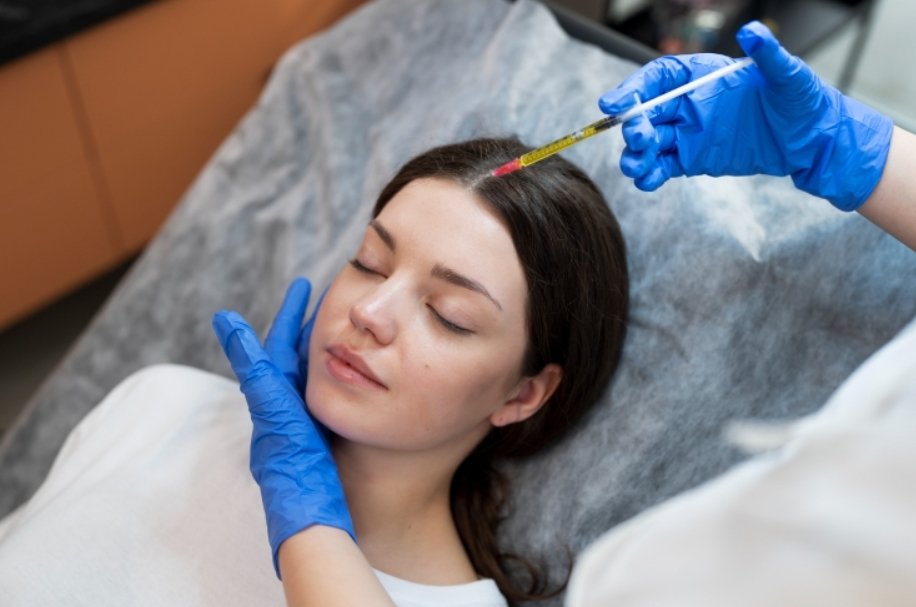
I remember the first time I stumbled across a proper video demo of a filler injection. I mean, I thought it looked fake at first. The clarity, the angles, the way the tiny movements of the hand were captured… It was like a mini surgical theater on my laptop. And suddenly, a whole new world opened up.
Why Video Makes Such a Difference
You’ve probably heard the old line: “See one, do one, teach one.” Yeah… great in theory. But in practice? Not so much. You can watch a slide about injecting hyaluronic acid, and maybe it makes sense—but seeing it in action? That’s a different story.
Research supports this. A 2022 study published in Medical Education found that medical students who used video demonstrations for procedural skills performed 30% better in practical assessments compared to those who only read textbooks or attended traditional lectures (Smith et al., 2022). That’s huge. And, honestly, it makes sense. Video engages more senses—visual, auditory, sometimes even tactile if combined with practice kits—and that helps memory stick.
Another study from The Journal of Aesthetic Nursing (2021) found that practitioners reported higher confidence levels after watching short procedural videos, particularly when the videos included multiple angles and real-time commentary (Jones & Patel, 2021). Confidence is key, right? Because hesitating mid-procedure isn’t just awkward—it can be risky.
Plus, let’s be real, videos are kind of… convenient. You don’t have to fight rush-hour traffic to attend a 2-hour workshop. You can watch on your phone, on your tablet, in a clinic break room, maybe even while your coffee is cooling down.
Practical Benefits of Video Learning
So what actually makes these video-based resources so, I don’t know, practically essential? Well, a few things stand out:
- Repetition is easy – You can replay tricky parts. I can’t tell you how many times I rewound a segment showing cannula insertion just to make sure my hand positioning was right.
- Diverse perspectives – Different instructors, different patient types, even complications. Seeing a rare bruise reaction or a tricky vein helps prepare you mentally before it happens.
- Standardization – Everyone learns the “right way” instead of relying on whatever random habit a mentor picked up years ago.
Pro Tip: If you’re just starting with aesthetic injections, try to find videos that are 5–10 minutes long. Long enough to be detailed but short enough to watch in a lunch break. Anything over 20 minutes? You might start zoning out.
Also, a subtle but important thing: videos often include commentary about mistakes and pitfalls. Honestly, that part can be more valuable than the perfect execution. Learning what not to do is underrated.
The Role of Simulation
Some of the best video-based programs now integrate simulation. So you’re not just watching—you’re doing. Imagine a split-screen: top half shows the instructor’s hands, bottom half shows a simulation pad or a digital interface. You mimic the motion, maybe even get haptic feedback.
The International Journal of Medical Education published research in 2020 showing that trainees who paired video demonstrations with simulation exercises retained procedural skills better than those who used videos alone (Miller et al., 2020). That makes sense if you think about it: watching is passive, but doing—even in a simulated environment—cements muscle memory.
And, honestly, this approach feels safer. You can practice repeatedly without worrying about patient safety. I remember a colleague joking, “Finally, a place where stabbing the wrong spot won’t get you sued.” And yeah, that’s the truth.
Challenges and Drawbacks
Okay, full disclosure: video-based learning isn’t perfect.
- Quality varies – Not all videos are created equal. Some are shaky, badly lit, or worse—completely inaccurate. You’ve got to vet them. Peer-reviewed or expert-endorsed content is the way to go.
- Limited tactile feedback – Watching is one thing, feeling resistance in tissue is another. Videos help a lot, but nothing replaces hands-on experience.
- Overreliance risk – Some people get too comfy watching videos and avoid real practice. I’ve seen it. You can’t just watch your way to competence.
Pro Tip: Treat videos as your first step, not the final step. Watch, then practice on models, then supervised sessions, then the real deal. That sequence makes a huge difference.
How Practitioners Are Adapting
It’s interesting to watch how different specialties are embracing this. Dermatologists, plastic surgeons, and even nursing teams are creating video libraries for ongoing education. Hospitals are increasingly mandating video-based modules for procedural skills.
And it’s not just clinical technique. Some videos tackle communication, patient prep, and post-procedure care. For example, I watched a short series on patient consent discussions—it honestly made me rethink how I approach explaining risks. A little nuance, a little empathy… captured perfectly in 7 minutes of video.
Experts are taking notice too. Dr. Clara Liu, a leading aesthetic medicine educator, said in a recent webinar: “Video education is no longer optional; it’s essential. We can’t assume all practitioners have equal access to hands-on mentorship, but virtually, we can level the field.”
Quick Table: Video-Based vs. Traditional Learning
| Feature | Video-Based Learning | Traditional Learning |
| Accessibility | Anytime, anywhere | Scheduled, location-bound |
| Repetition | Easy to rewatch | Limited |
| Visual learning | High (multiple angles) | Moderate |
| Hands-on experience | Simulation possible, but limited | Direct, real-life |
| Learning pace | Self-paced | Fixed |
| Exposure to rare cases | High (recorded complications) | Low |
See? Pretty compelling.
The Takeaway
Honestly, video-based medical education, particularly injection training videos, feels like a natural evolution of learning. It’s not about replacing mentorship or textbooks—it’s about enhancing them. It’s about giving you tools to learn efficiently, safely, and in a way that sticks.
Reflecting on it, the first time I felt confident in my injection technique wasn’t after a lecture—it was after rewatching a series of short, clear videos over a week, then practicing on a model. That combination of observation, repetition, and reflection changed everything.
And maybe that’s the broader lesson: medicine isn’t just about knowledge—it’s about experience. Video-based education accelerates experience when real-life opportunities are limited. It complements your practice, fills gaps, and—arguably—makes you a safer, more confident clinician.
So if you haven’t dipped into it yet… maybe start today. Even ten minutes. A little clip here, a short demonstration there. Over time, it adds up. And, who knows, you might look back and realize video-based learning has reshaped the way you approach procedures entirely.
In the end… it’s messy, it’s human, and it’s real. And maybe, just maybe, that’s exactly what modern medical education needed all along.