
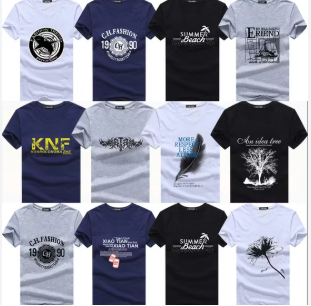
Transforming an excellent t-shirt design into a quality product is indeed a crucial step. A partner plays a vital role in realizing your vision. The first thing to do is define your needs.
You have three major options to choose from. Print-on-demand is suitable when you want to test your ideas without storing any inventory. Local print shops are ideal for urgent small orders. Mass-producing manufacturers are a choice for building and selling your brand with a lot of shirts.
This pamphlet mainly concentrates on the third path. We are going to tell you how to search and check out a verified custom t-shirt manufacturer for your small business.
Step 1: Set Your Standards Prior to Your Search
Before you look for the partner, you must figure out what your needs are. Answering crucial questions at first will save you a good deal of time. This will help you escape from the trouble of talking to those partners who won’t show compatibility for your project.
Key Questions that Require Answering:
- Quantity: How many shirts are you planning to order? Is it 50, 500, or more than 5,000? Always remember that this number must meet the factory’s Minimum Order Quantity (MOQ).
- Quality & Fabric: What kind of quality do you want? Is it a simple shirt for a promo or a top-quality shirt for a retail store? What kind of fabric do you need? You can choose from options such as 100% cotton, soft tri-blends, or performance fabrics.
- Customization Level: Do you just need a print on a standard t-shirt? Or do you need more? This can include custom tags with your brand name, special garment colors, or a unique fit that is cut and sewn just for you.
- Budget & Timeline: How much can you spend per shirt? What is your final deadline for having the products in hand?
Understanding Your Options: Types of T-Shirt Producers
There are different types of producers for custom shirts. Each one has good and bad points. Knowing them helps you choose the right one for your needs.
Print-on-Demand (POD) & Online Design Platforms
These services are best for testing new designs or selling shirts one by one. You do not have to hold any inventory.
On the one hand, there are no minimums and setting up is easy. The drawback is each shirt comes to a high cost. On top of that you have less control over the end quality and limited customization. Websites like Custom T-Shirts: Design & Print T-Shirts Online – Chenglin Clothing are optimal for online design and print services for a single unit or very small orders.
Local Print Shops
Local shops are perfect for local businesses, bands, or events. They are good for orders between 25 and 500 shirts.
Fast turnaround time and talking to someone face-to-face are the pros of local shops. Plus, they support a local business. They may have fewer fabric options and can cost more than ordering in bulk.
Full-Scale & Private Label Custom T-Shirt Manufacturers
This option is best for clothing brands and businesses that want to have a larger number of shirts. They also provide the highest amount of customization.
The main benefit is that you get a much lower price for each shirt. You get to choose the fabric, fit, and labels. The downside is the high MOQ. Lead times are also longer, and the process is more involved. Finding a good custom t-shirt manufacturer in this group is the key to building your brand.
The Ultimate Checklist for Vetting a Custom T-Shirt Manufacturer
Choosing the right production partner is indeed a big and serious deal. A wrong choice can lead to a waste of time and money. This checklist, which has been designed by the experts, provides directions on how to assess potential partners and how to cut risks.
Your 7-Step Vetting Process:
- Request a Sample Pack: Photos should not be the only thing you are looking at. You should touch the actual product. Request samples of their fabrics. Check the fabric feel, the stitching quality, and the print. Does the print crack? Is the color bright? This is the most important step.
- Verify Their MOQs & Pricing Structure: Confirm that their MOQ is something that you can reach. Inquire if they offer a discount for bulk orders. Check whether there are hidden charges. Certain manufacturers charge extra for setting up screens or matching colors.
- Assess Communication & Professionalism: How quickly do they reply to your email? Is their message clear and informative? A good partner will respond on time and show his professionalism. Poor communication in the early stage is a big red flag.
- Inquire About Production Capabilities: Can they use your preferred print style, like screen printing or embroidery? Ask for their normal lead time. This is the time from when you place your order until it is delivered.
- Look for Social Proof & Past Clients: Check their website for past project examples or customer names. Look for reviews on Google or other sites, not just their own. This will reveal what other customers speak of them.
- Understand Their Quality Assurance (QA) Process: Ask about the plan for dealing with mistakes. What do they do with shirts that have bad prints or holes? A reliable custom t-shirt manufacturer will set a clear plan to rectify the errors and will hold up their side of the bargain.
- Discuss Logistics & Shipping: Determine the point of shipping. Also ask about cost and delivery time. This is very important when you are using a factory in a foreign country.
Preparing Your Inquiry: The “Tech Pack” Essentials
Top-notch custom t-shirt manufacturers will always have to deal with premium inquiries. To obtain a quick as well as an accurate price quote, you have to elaborate your project precisely. A simple “tech pack” will serve as a measure of your professionalism and will allow you to get better service.
A tech pack is a set of documents with all your project’s details.
What to Include in Your Initial Inquiry:
- Mockup/Design File: A clear picture of your design on a t-shirt. High-quality files like PNG, AI, or PSD are best.
- Print Specifications:
- Placement: Where does the print go? (e.g., front center, left chest).
- Dimensions: How big is the print? (e.g., “10 inches wide”).
- Colors: Use Pantone (PMS) color codes to ensure the colors are exact.
- Garment Specifications:
- T-Shirt Style: What kind of shirt? (e.g., “Men’s Crewneck”).
- Fabric: What is it made of? (e.g., “100% Ringspun Cotton, 180 GSM”).
- Color: What color is the shirt? (e.g., “Black”).
- Sizing & Quantity Breakdown: A list of sizes and how many you need of each. (e.g., “Small – 50, Medium – 100, Large – 100, Extra Large – 50”).
- Labeling/Finishing: Tell them if you need custom tags sewn in the neck or special hang tags.
Conclusion: Partnering for Success
Picking the right custom t shirt manufacturer goes beyond acquiring something; it is a key business decision. It pertains to finding a partner who can assist in the growth of your brand.
The procedure goes like this: First, make sure to identify your needs. Second, familiarize yourself with the myriad options available. Then, scrutinize your picks profoundly. Finally, communicate like a professional.
These steps, if followed closely, will lead you to a trustworthy production partner. They in turn will support you in making your novel ideas a reality and build a successful t-shirt business.
Frequently Asked Questions (FAQ)
1. What is a reasonable MOQ for a custom t-shirt manufacturer?
MOQ varies considerably between factories. A custom t shirt manufacturer outside the country may require 300-500 pieces for each design. Some smaller factories in your own country might have MOQs as low as 50-100 shirts. You should always ask the manufacturer directly.
2. What’s the difference between Screen Printing and DTG?
Screen printing uses stencils to push ink onto a shirt. It is best for simple designs with a few colors in large amounts. It is quite durable and cost-effective for bulk orders. On the other hand, DTG (Direct-to-Garment) technology is similar to how a paper printer operates. It is ideal for intricate, vivid designs in small quantities, although it may cost more for each shirt.
3. How much should I expect to pay per custom t-shirt?
Prices vary considerably: for instance, the size of an order, shirt quality, and print design affect the price. A bulk order of 100 or more shirts from a manufacturer may cost between $5 and $15 per shirt. However, a single shirt which can be ordered from an online service may cost somewhere around $20 to $35.
4. Should I choose a domestic or an overseas manufacturer?
Domestic factories (in your country) generally provide faster shipping and easier communication. The cost is usually higher. Overseas factories (most frequently in Asia) have much lower costs, especially for larger orders. They suffer from longer shipping times and sometimes they may have issues with language communication.
5. Do I need a registered business to work with a custom t-shirt manufacturer?
It is highly recommended. Most of the manufacturers are B2B hence they usually request a business license or tax ID to grant you the discounted prices. A registered business is credible and also offers legal protection.