
For homeowners, interior designers, and architects, the layout of a small bathroom (such as a cloakroom, ensuite, or guest bath) is a lesson in compromise. However, the modern combination vanity unit with an integrated toilet has moved the conversation away from compromise and toward maximisation. This fixture is not just a piece of furniture; it is a structural solution engineered for high-density living.
The true space-saving power of this unit comes from its ability to resolve the three biggest constraints in a compact bathroom: clutter, bulk, and required clearance zones.
I. The Physics of Integration
A combination unit solves floor plan problems by performing a critical design function: consolidation.
1. Eliminating ‘Dead Space Between Fixtures
In a traditional layout, the basin, toilet, and storage cabinet are separate entities. Building regulations and design best practices require specific clearance zones (minimum walking/manoeuvring space) around each fixture. This results in empty pockets of “dead space” between them.
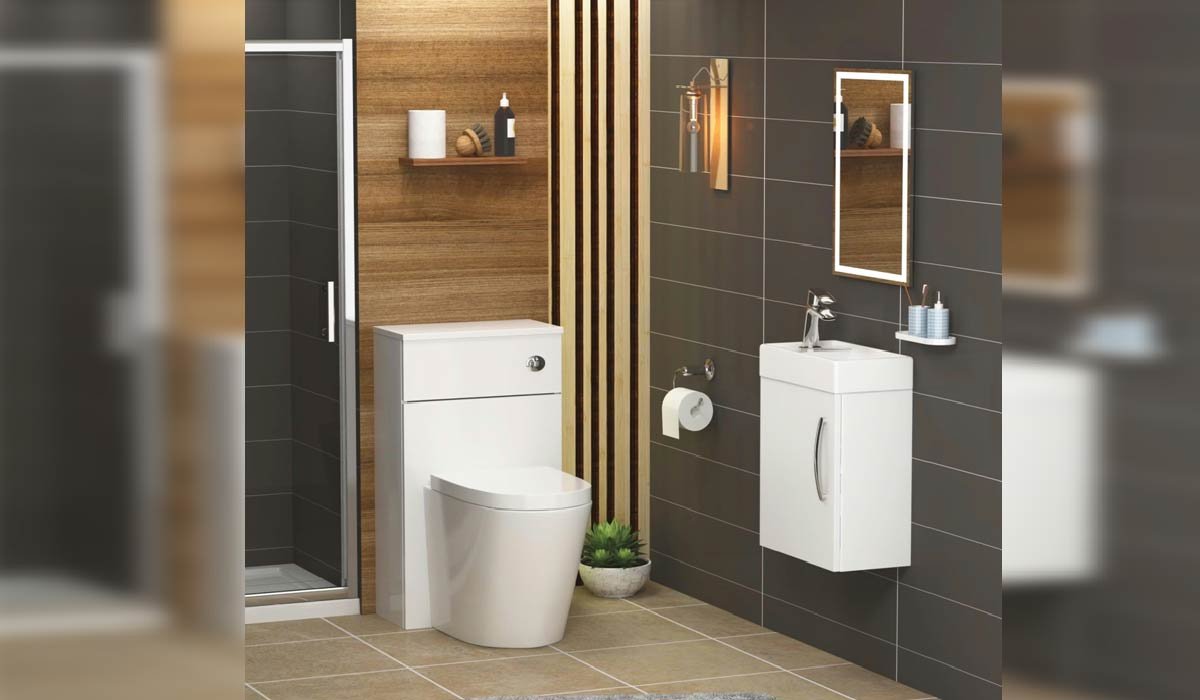
A combination unit merges these items into a single, continuous block, typically along one wall. As a result, the footprint of the cistern housing and the vanity cabinet requires one primary clearance zone. That immediately results in saving valuable space previously mandated between separate units. This is a way to effectively push the entire functional area into the highest possible space.
2. The Power of Reduced-Depth Design
Combination vanity units are available in various sizes, such as 900mm, 1000mm, 1100mm, and 1300mm. For space-saving purposes, a 900mm and 1000mm combination vanity unit featuring reduced depth can be an excellent choice. The merger of toilet, vanity and sink, along with compact sizing, has a massive impact on the circulation path of the small bathroom. Not only does it increase the space between the other fittings and fixtures, such as the shower area, allowing for comfortable movement and preventing the room from feeling blocked or restrictive.
II. Storage and Cleanliness
The benefits extend directly into daily functionality and maintenance.
1. Concealed Cistern and Pipework
With a combination vanity unit, all of the pipework is concealed within the unit. Additionally, the integrated unit features a WC unit ( the water tank part of the toilet) that is attached to a back to wall toilet bowl, creating an integration with the rest of the unit ( vanity sink unit). That means no clutter and a seamless look in the bathroom.
| Traditional Setup | Combination Unit Solution |
| Exposed Cistern: Visibly protrudes into the room. | Cistern is Hidden: Plumbing and tank are sealed within the furniture. |
| Visible Pipework: Waste pipes and water feeds are often exposed or boxed out awkwardly. | Streamlined Plumbing: All plumbing is contained and accessed via a removable panel, usually from the front or top. |
No visual clutter of pipes and a protruding cistern improves the entire feel of the room, making it look more contemporary and, most important, larger than it actually is.
2. Maximised and Organised Storage
A combination unit’s storage is often more efficient than a standalone cabinet or a bathroom vanity unit with a sink because it is designed around specific dimensions. Unlike a bathroom cabinet, the combination unit’s vanity section offers robust storage ( drawers or cabinets) directly beneath the basin. This is exactly the same as a standard vanity unit. This captures vertical volume that would otherwise be wasted with a pedestal sink. Additionally, the continuous run of the furniture helps in incorporating taller, slimline storage elements at the end, providing maximum capacity for toiletries, towels, and cleaning supplies without a large floor footprint.
III. Design Versatility
Combination units come in several formats, allowing them to adapt to different layouts:
| Unit Type | Space-Saving Feature | Best For… |
| Floor-Standing | Provides the most storage capacity and easy installation. | Standard small bathrooms where floor cleaning underneath is less of a priority. |
| Wall-Hung (Floating) | Creates the crucial illusion of more floor space by showing the floor underneath. | Modern ensuites and rooms where maximising visual space is paramount. |
| L-Shaped/Corner | Designed to utilise unused corner space, often the most awkward area in a small room. | Very narrow bathrooms or unusually shaped cloakrooms. |
For a cohesive look throughout the bathroom, you will need to use a single colour, material and finish across the basin, storage and toilet (WC unit). This harmony prevents the visual breakup that occurs with a mismatch of the fixtures. As a result, you get a clean, sophisticated and ultimately uncluttered final aesthetic.
Combination Vanity Units vs. Traditional Solutions
Here we have compared combination vanity units with traditional solutions,
| Feature | Combination Vanity Unit w/ Toilet | Pedestal Sink + Separate Tall Cabinet | Standard Vanity Unit (Sink only) |
| Space Efficiency | Maximum. Combines sink, storage, and concealed toilet cistern into one minimal footprint. Reclaims “dead space.” | Low. Requires two separate floor footprints, increasing visual clutter and dividing the room. | Medium. Efficiently uses under-sink space but requires a separate toilet and often a separate storage cabinet. |
| Plumbing | Fully Concealed. Cistern and pipework are hidden neatly within the furniture housing for a clean look. | Exposed or Semi-Exposed. Pedestal hides pipes, but the toilet cistern is fully visible and the cabinet plumbing is separate. | Concealed. Plumbing for the sink is hidden within the cabinet, but the toilet plumbing remains separate and visible. |
| Aesthetics / Clutter | Highly Streamlined. Creates a single, continuous, and modern focal point. Minimalist and clutter-free. | Fragmented. Two or three separate fixtures break up the visual lines, making the room look smaller and busier. | Streamlined near sink. Offers a clean look around the basin, but does not solve the clutter issues around the toilet/cistern area. |
| Countertop Space | Optimized. Often features a continuous countertop spanning both the basin and the toilet cistern housing, maximizing usable surface area. | Minimal to None. The pedestal sink offers very little or no surface area. Storage is restricted to the cabinet shelves. | Good. Provides counter space directly around the sink basin. |
| Installation Complexity | Moderate-High. Requires precise alignment of both water/waste pipes for the sink and the cistern/pan. Typically requires a professional. | Low-Moderate. Sink is simpler, but a cabinet may require wall-fixing; requires more separate drilling/fixing points. | Moderate. Requires plumbing for the sink, but simpler than a combined unit as the toilet connection is separate. |
| Best Suited For | Small Bathrooms, Cloakrooms, or Ensuites where every inch must be utilized for multi-functionality. | Very Small Powder Rooms where maximum floor visibility is desired and storage needs are minimal. | Medium-Sized Bathrooms where a separate toilet is already ideally placed, but under-sink storage is needed. |
Summing it Up.
The combination vanity unit is a definitive solution for a small bathroom because it is designed on a simple principle that space efficiency can be achieved through consolidation, reduced depth and concealment. The integration of three major functions into a single one streamlined unit can drastically reduce the required floor space, eliminate visual clutter and create a highly functional bathroom environment.