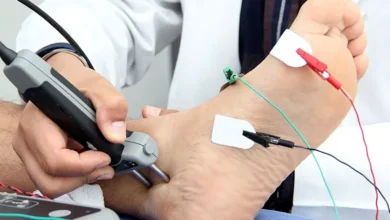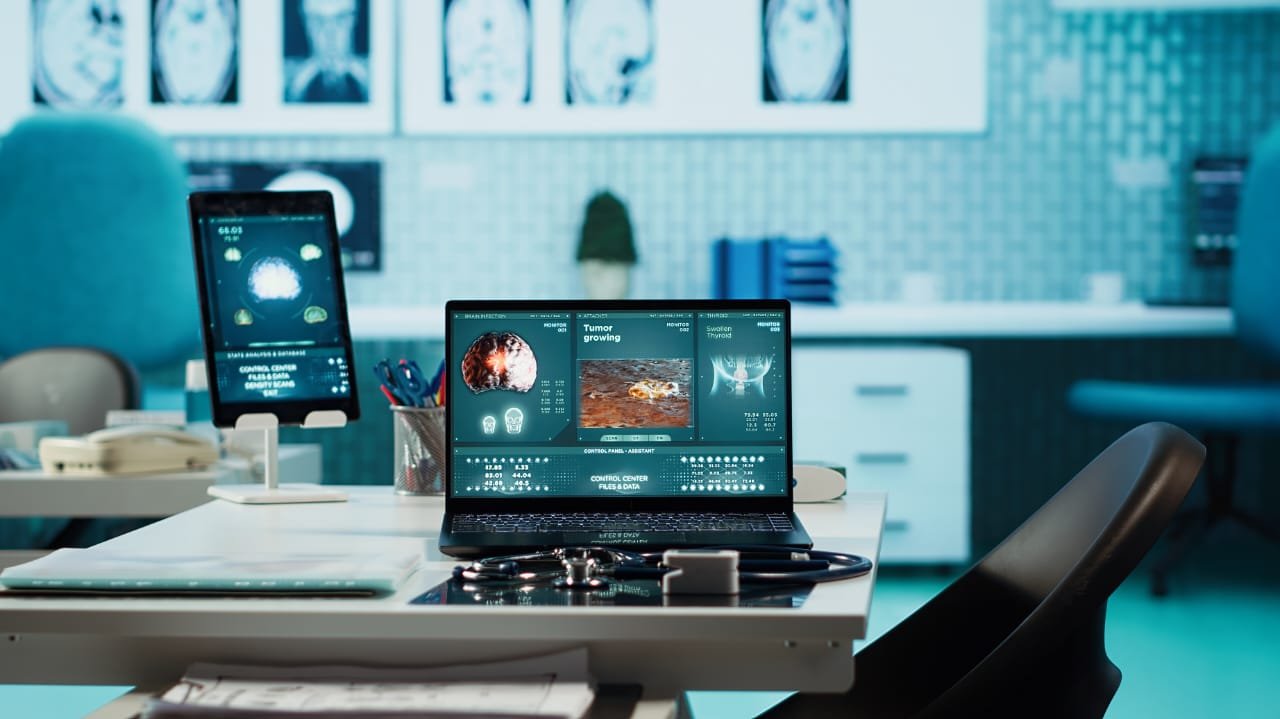
Remote patient monitoring is an already existing healthcare technology that has changed the way healthcare goes beyond the clinic walls, but artificial intelligence is taking it a step further. Conventional monitoring systems are concerned with data gathering and presentation of the patients. AI will not just change passive observation but provide an intelligent interpretation and allow care teams to work more quickly, smarter, and with more confidence. This transformation is transforming the meaning of continuous care.
Why AI Matters in Remote Patient Monitoring
RPM can produce enormous quantities of data daily, particularly when dealing with chronic patients. This data may overwhelm clinical teams without the intelligence added on top, which will restrict its usability. AI can solve this problem by making decisions based on trends and patterns, as well as bringing out really material changes that are not immediately evident. The outcome is an improved signal-to-noise ratio as well as more practical insights for clinicians.
Turning Raw Data Into Predictive Insights
Predictive analytics is one of the most powerful applications of AI to remote patient monitoring. Through historical and real-time information about a patient, AI models can predict possible deterioration prior to it being clinically apparent. Providers can intervene in advance, as any evidence of alterations in vital signs or behavior patterns that may manifest themselves at an early stage can serve as warning signs. Such predictive potential moves care away from reactive crisis management to preventive intervention.
Reducing Alert Fatigue for Care Teams
Fatigue can be a problem in the field of healthcare, particularly in monitoring programs where too many notifications may turn staff numb. The AI can assist with it by ranking the alerts according to clinical relevance, context, and risk. Intelligent systems evaluate severity, duration, and patient history as opposed to flagging all abnormal readings. This will guarantee that clinicians concentrate their efforts in areas that matter the most, hence enhancing efficiency and decreasing burnout.
Personalizing Care at Scale
All patients are unique, and remote patient monitoring systems ought to reflect that fact with AI. Instead of using fixed thresholds, AI is able to customize baselines and care direction depending on personal health history. What can be normal with a given patient can be a cause of concern to another. Individualized surveillance enhances accuracy, reduces false alarms, and helps to make more personalized treatment decisions without necessarily making operations more complex.
Enhancing Chronic Disease Management
AI in Remote Patient Monitoring is especially effective in the management of chronic diseases. Conditions such as diabetes, heart failure, and hypertension need constant maintenance and regular readjustments. AI can recognize the long-term tendencies, relate lifestyle aspects to physiological results, and propose the moments when the interventions can be requested. This intelligence is continuous and contributes to more effective disease control and minimization of the risks of acute events.
Supporting Clinicians, Not Replacing Them
Although many people have mistaken this, remote patient monitoring using AI is not the idea of substituting clinicians. It exists to supplement clinical judgment with repetitive analysis and timely revelations. Ultimate choices are still made by medical personnel who know the circumstances and details of the patient. With the responsible implementation, AI will be a reliable assistant that improves the quality of care instead of reducing human supervision.
Improving Patient Engagement and Adherence
The AI is also involved in remote monitoring on the patient side. Intelligent systems will be able to provide personalized feedback, notices, and educational prompts using real-time information. Relevant guidance can be given to the patients rather than general messages, and the process of engagement can be perceived as meaningful. This personalized communication will enhance compliance with treatment regimens and promote healthy behavior over time.
Strengthening Population Health Management
In the case of organizations that deal with a large number of patients, AI makes it possible to stratify and allocate resources more intelligently. AI-driven remote patient monitoring programs are able to find the high-risk patients, follow outcomes on cohort, and determine the performance of the program. Such insights enable the healthcare leaders to create specific interventions that enhance the outcomes and at the same time reduce costs, which can be sustained over time.
Data Quality, Ethics, and Transparency
The use of AI is significantly reliant on the quality of data and ethical application. In remote patient monitoring, incorrect data or biased models may result in wrong decisions. To promote responsible AI, there must be clear algorithms, validations, and privacy protection to ensure patient privacy. The trust is paramount, and companies need to make sure that AI systems are clear and correspond to clinical benchmarks.
Integration With Existing Clinical Workflows
The most value is provided by AI when it is seamlessly integrated into the current care processes. Single agency intelligence is not only counterproductive but also time-consuming. Efficient remote patient monitoring platforms that are AI-based and integrated with electronic health records, care management systems, and reimbursement systems are successful. This combination will help to offer insights at the appropriate moment, location, and not to interfere with clinical practices.
Conclusion
The implementation of remote patient monitoring will increase with the development of AI technology, which is still becoming more mature. There will be more adaptive, predictive, and deeply embedded systems in future systems that are more entrenched in care delivery models. By implementing AI in a wise manner, organizations will be in a better place to provide proactive, customized, and scalable care.