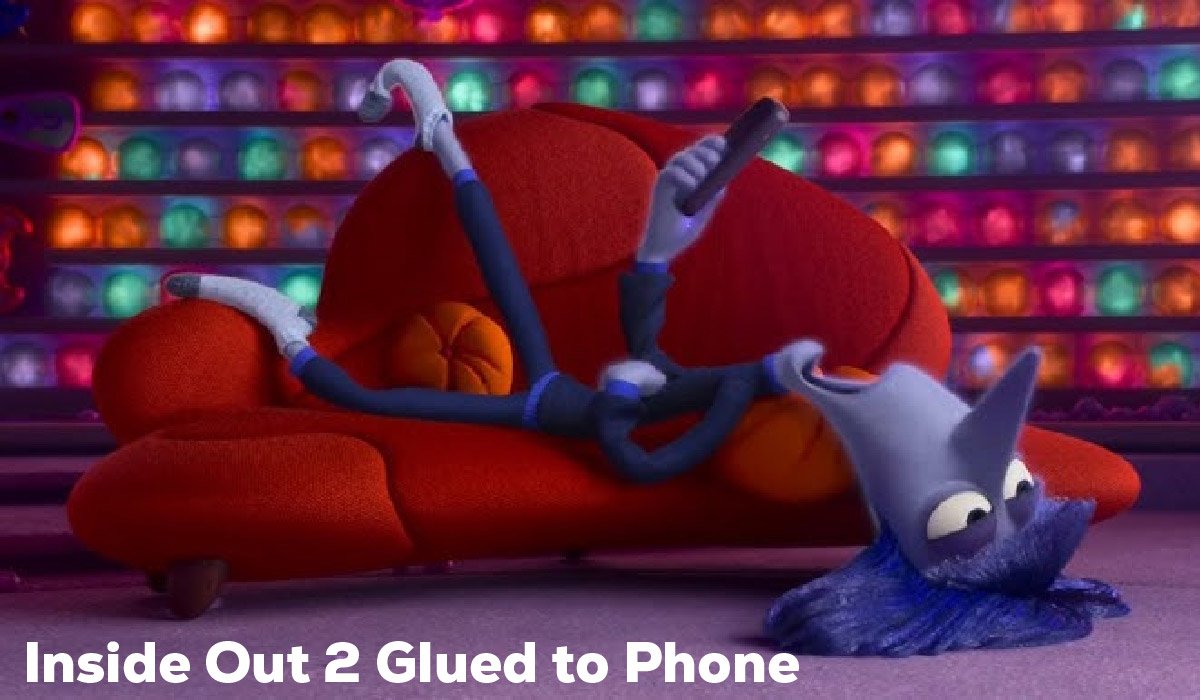
Introduction To Inside Out 2 Glued to Phone
Inside Out 2 glued to phone is more than just a catchy phrase from Pixar’s latest sequel—it’s a powerful and relatable commentary on the world we live in today. As the follow-up to the beloved Inside Out, this film dives deep into the emotional struggles of modern life, focusing on one of the most pressing issues of our time: technology addiction. Among the many memorable moments in the movie, the “glued to phone” scene has captured the attention of audiences worldwide. This moment resonates so strongly because it mirrors what millions of people, especially teens, experience daily—being absorbed in their screens at the expense of real-world interactions. By blending humor, emotional depth, and social commentary, Pixar manages to turn a simple gag into a scene that sparks genuine reflection about our own habits.
In this article, we’ll explore the background of the first movie, the premise of the sequel, and how the glued to phone moment became such a standout scene, while also uncovering its deeper lessons for both children and adults.
Recap of the Original Inside Out and Its Emotional Impact
The first Inside Out introduced audiences to the inner workings of a young girl named Riley through five core emotions—Joy, Sadness, Anger, Fear, and Disgust—each personified with vivid personalities. This creative setup allowed Pixar to explore complex topics like growing pains, mental health, and emotional regulation in a way that was both accessible and touching. The film resonated deeply because it didn’t shy away from showing that all emotions have value, and that even Sadness plays a vital role in our lives.
Viewers connected with Riley’s struggles as she navigated a big move, changing friendships, and personal growth. The balance of humor, heartfelt moments, and clever storytelling made it one of Pixar’s most impactful works. Fans left theaters not only entertained but also more aware of their own emotional landscapes, which set the stage for enormous anticipation when Pixar announced a sequel.
Inside Out 2 Announcement and Premise
When Pixar revealed that Inside Out 2 was on the way, excitement spread rapidly among audiences of all ages. The announcement confirmed that Riley would now be a teenager, a stage of life filled with new emotional challenges. This meant introducing fresh emotions like Anxiety, Envy, and Embarrassment to join the original five in the headquarters of Riley’s mind. The sequel’s premise focuses on how these emotions navigate the complexities of adolescence, including the profound influence of smartphones and technology.
The storyline is set in a modern context where social media, constant notifications, and digital validation play a huge role in shaping identity and relationships. This timely focus ensures that Inside Out 2 is not just a continuation but also a reflection of real-life struggles faced by today’s youth.
The “Glued to Phone” Scene – What Happens
In the “glued to phone” scene, Riley’s phone use is taken to a comedic extreme—she’s shown literally stuck to her device, her face illuminated by the screen, and her attention completely consumed. Around her, the real world fades away as she scrolls, taps, and swipes without pause. Inside her mind, the control room is in chaos.
Joy tries to bring her back to reality, but Anxiety is refreshing notifications, Envy is obsessing over friends’ social media posts, and Embarrassment is hiding in the corner after an awkward online interaction. This exaggerated imagery cleverly represents how technology can dominate our focus and distort our emotional balance. The metaphor works both literally and figuratively, making the scene both humorous and deeply symbolic.
Why Pixar Included the “Glued to Phone” Moment
Pixar is known for using relatable experiences to deliver meaningful messages, and the “glued to phone” moment is no exception. The inclusion of this scene reflects a growing societal concern about the impact of screen addiction on mental health, especially among teens and young adults. Rather than lecturing the audience, Pixar uses humor and emotional storytelling to show how easily we can become trapped in our devices. Studies have shown that teens spend an average of 7–9 hours a day on screens, not counting school-related use, and this heavy engagement can lead to increased anxiety, lower self-esteem, and disrupted sleep patterns. The scene distills these statistics into a relatable, entertaining moment that also prompts viewers to reflect on their own tech habits.
The Emotional Impact of Technology in the Film
Inside Out 2 glued to phone explores the nuanced ways technology affects our emotions. Joy struggles to maintain her positive influence when Riley is distracted by her phone. Anxiety becomes hyper-focused on online interactions, worrying about likes and comments. Envy constantly compares Riley’s life to those of her friends, creating feelings of inadequacy. Embarrassment retreats when something awkward is posted or shared online. Together, these reactions paint a vivid picture of the internal tug-of-war that many people feel in the digital age. By showing these dynamics inside Riley’s head, Pixar helps audiences visualize the emotional consequences of excessive screen time, making the issue more tangible and relatable.
New Characters Max and Lily – Representing the Teen Experience
Max and Lily, two new supporting characters in Inside Out 2, serve as mirrors for Riley’s experiences. Both are teenagers who are also glued to their phones, and their storylines reflect common tech-related struggles faced by young people today. Max’s constant scrolling for validation through likes and comments leads to heightened anxiety and emotional instability. Lily, immersed in endless videos and curated content, struggles to connect with others face-to-face. These characters’ emotional islands—representations of their core personality traits—start to weaken as their reliance on technology grows. Through their shared journey with Riley, the film shows how tech habits can shape identity, relationships, and mental well-being.
Themes and Messages in “Inside Out 2 Glued to Phone”
The movie’s themes are broad yet deeply personal. One central theme is the contrast between connection and isolation—how technology can make us feel connected while also deepening loneliness. Another is identity and self-worth, with online validation playing a dangerous role in shaping how teens view themselves. Mindfulness and balance are also central messages, encouraging viewers to recognize how technology influences their emotions and to make conscious choices about its use. Finally, the film addresses the unique challenges of growing up in the digital age, highlighting pressures that older generations may not fully understand but that are very real for today’s youth.
Societal Issues Reflected in the Movie
Inside Out 2 glued to phone is more than entertainment—it’s a mirror reflecting modern societal struggles. The film addresses social media pressure, the fear of missing out (FOMO), and the decline in face-to-face communication. These are not abstract issues but daily realities for millions. By weaving these themes into the narrative, Pixar creates an accessible entry point for conversations between teens, parents, and educators about healthy tech use and emotional health. The relatability of these scenarios ensures that the film’s messages reach audiences on a personal level.
Parental and Educator Reactions
Many parents and educators have praised Inside Out 2 for addressing technology addiction in a way that resonates with young audiences. Some schools have even incorporated the movie into social-emotional learning (SEL) programs to help students reflect on their relationship with technology. The “glued to phone” scene in particular has been used to start discussions about emotional triggers linked to tech use, how to set boundaries, and ways to rebuild real-world connections. By making these conversations approachable, the film has become a valuable tool for fostering emotional awareness in both home and classroom settings.
How the Movie Promotes Digital Wellness
One of the strengths of Inside Out 2 glued to phone is that it doesn’t portray technology as inherently bad. Instead, it shows the importance of self-awareness and balance. Riley’s journey illustrates that it’s not about quitting tech altogether, but about understanding how it affects her emotions and relationships. By the end of the film, Riley learns to make more mindful choices, using her phone in ways that support rather than undermine her well-being. This realistic approach encourages viewers to adopt healthier digital habits without feeling judged or pressured.
Lessons Learned from Max, Lily, and Riley
Each character’s journey in Inside Out 2 offers a lesson about emotional intelligence in the digital era. Riley learns to prioritize face-to-face interactions and to recognize when her phone use is affecting her mood. Max realizes that constant validation from strangers online can never replace genuine friendship. Lily discovers that curated content can be comforting, but it should not replace real-life experiences. These stories highlight the value of emotional awareness, setting boundaries, and finding joy beyond the screen.
Tips for Managing Screen Time – Inspired by Inside Out 2
The film offers practical inspiration for anyone looking to manage their screen time. Setting app timers can help prevent mindless scrolling. Creating phone-free zones during meals or before bedtime fosters more meaningful interactions. Engaging in offline hobbies like sports, art, or reading can reconnect us with real experiences. Talking openly about emotions related to tech use can increase self-awareness, and modeling healthy behavior for younger family members reinforces positive habits. These strategies are simple yet effective steps toward a healthier relationship with technology.
Inside Out 2 and the Bigger Picture
Beyond its entertainment value, Inside Out 2 glued to phone captures the intersection of emotional health and digital life. In 2025 and beyond, this topic will remain highly relevant as technology continues to evolve. Pixar’s ability to blend heartfelt storytelling with social awareness ensures that the film will resonate long after the credits roll. It challenges audiences to consider not just how much time they spend online, but how that time affects their inner world.
Conclusion: Inside Out 2 Glued to Phone
Inside Out 2 glued to phone delivers a message that is both timely and timeless: technology is neither inherently good nor bad—it’s all about how we use it. By showing Riley’s inner emotional struggles alongside relatable, humorous scenes, the film invites viewers to reflect on their own tech habits. It encourages balance, empathy, and mindful choices, reminding us that while the digital world can be enriching, it should never overshadow the beauty of real-life connections. Our emotions matter, whether we’re online or off, and finding harmony between the two is the key to a more fulfilling life.
FAQs About Inside Out 2 Glued to Phone
1. What is the “glued to phone” scene in Inside Out 2?
The “glued to phone” scene in Inside Out 2 shows Riley, now a teenager, completely absorbed in her smartphone. The film uses this moment to humorously and symbolically highlight technology addiction and its impact on emotions, friendships, and real-life experiences.
2. Why did Pixar include the glued to phone moment in Inside Out 2?
Pixar added the glued to phone scene to reflect real-life issues of screen overuse, especially among teens. It serves as a relatable way to discuss emotional health, social media pressures, and the importance of balancing online and offline life.
3. Which emotions are shown in the glued to phone scene?
In the glued to phone scene, Joy struggles to get Riley’s attention, Anxiety constantly checks notifications, Envy compares her to friends online, and Embarrassment hides after awkward posts. These emotions work together to show how technology affects the mind.
4. What lessons does Inside Out 2 glued to phone teach?
The scene teaches that while smartphones can be useful, too much screen time can lead to emotional imbalance and missed real-life moments. It encourages self-awareness, healthy boundaries, and stronger face-to-face connections.
5. Is Inside Out 2 glued to phone suitable for children?
Yes. The film is family-friendly and uses humor and relatable scenarios to discuss serious topics like technology addiction. It’s suitable for children, teens, and adults, making it a great conversation starter about healthy screen habits.
You May Read Also: Who Is Charles Anthony Vandross? Exploring the Life of Luther Vandross’s Older Brother
For More Information Visit Dotmagazine