Introduction
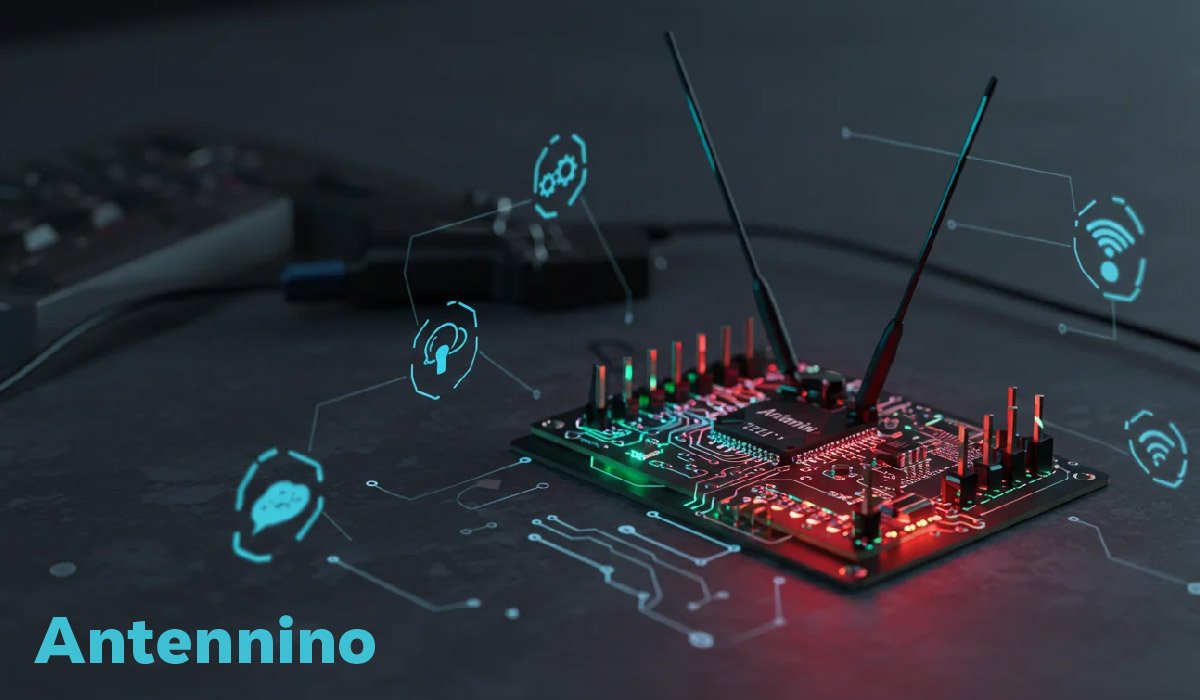
In today’s hyperconnected world, the Internet of Things (IoT) has become more than just a buzzword—it represents a fundamental shift in how devices interact, share data, and create intelligent environments. As the demand for smarter homes, precision agriculture, and automated industries continues to grow, the need for efficient, low-cost, and user-friendly hardware platforms has become critical. This is where antennino enters the picture, offering a powerful yet accessible way for hobbyists, students, and professionals to design and deploy IoT projects.
At its core, antennino is a compact Arduino-compatible board that integrates wireless communication, onboard sensors, and low-power design principles into a single solution. In this article, we will explore every aspect of antennino, from its origins and design philosophy to its technical architecture, antenna strategies, use cases, and future prospects. Readers will gain practical knowledge on how to use antennino effectively while also appreciating its role in the wider IoT ecosystem.
Background: IoT, Antennas & Low-Power Devices
The Internet of Things refers to the vast network of devices that collect, transmit, and act on data. From smart thermostats to environmental monitoring stations, IoT devices are often deployed in remote or hard-to-reach places, meaning they must be reliable, energy-efficient, and capable of communicating wirelessly over long distances. At the heart of this connectivity is the antenna, which plays a crucial role in transforming electrical signals into electromagnetic waves and vice versa.
Without an efficient antenna design, even the most advanced sensors or microcontrollers cannot function effectively. However, antenna design remains a bottleneck for many DIY enthusiasts, as it requires both technical knowledge and precision in implementation. Low power management is another critical factor, since IoT devices are usually powered by batteries that must last months or years without maintenance.
Furthermore, the ability to update devices remotely through over-the-air (OTA) programming is invaluable, saving time and effort in large deployments. Antennino was specifically created to address these needs by combining an Arduino-based platform with an optimized antenna system, low-power management features, and flexibility for diverse applications.
What is Antennino? Overview & Origins
The term antennino is a clever portmanteau of “antenna” and “Arduino,” symbolizing its dual identity as both a wireless antenna solution and an Arduino-compatible board. This dual nature reflects its main goal: to empower makers to create IoT devices that are not only smart but also energy-efficient and communication-ready out of the box. Unlike simple add-on modules that provide partial functionality, antennino is designed as a full-fledged multifunction IoT node that can operate either as a remote sensor or as a gateway collecting information from other nodes.
The idea behind antennino arose from the growing recognition that IoT hardware should be both accessible to beginners and powerful enough for advanced applications. By integrating wireless communication, low-power design, and Arduino compatibility into a single board, antennino positions itself as a game-changer in the DIY electronics landscape.
Hardware Architecture & Components
At the heart of antennino lies the ATmega328P microcontroller, a tried-and-tested chip also used in the popular Arduino Uno. The “P” variant denotes PicoPower technology, which is optimized for low energy consumption—an essential requirement for battery-operated IoT devices. For wireless communication, antennino uses the RFM69 transceiver module operating at 433 MHz. This module not only provides reliable connectivity but also incorporates AES encryption at the hardware level, ensuring secure data transmission.
The board includes a flash memory chip for data logging or enabling OTA updates, making it easier to manage firmware remotely. In addition, antennino features onboard sensors such as the DS18B20 digital temperature sensor and a photoresistor for light detection, giving users the ability to start experimenting immediately without extra modules. Expandability is a core design principle, and this is reflected in its four Grove connectors for I²C, RS232, analog input, and general-purpose I/O. The board also supports a small OLED display through the I²C bus, allowing real-time data visualization.
Power management is facilitated through components such as the MAX856 switching regulator, which can boost low battery voltages, and various jumpers (J1–J4) that allow users to configure power sources ranging from AA batteries to direct 3.3 V input. Circuit details like pull-up resistors, decoupling capacitors, and voltage dividers are carefully designed to ensure stable operation. Even the PCB layout reflects thoughtful engineering, with clear separation between antenna routing and power circuitry to minimize interference.
Low-Power Strategy & Power Management
One of the defining features of antennino is its robust approach to low-power management. IoT devices are typically deployed in places where frequent battery replacement is impractical, so maximizing efficiency is crucial. Antennino leverages both hardware and software strategies to minimize energy use. The inclusion of the TPL5110 digital timer allows the board to cut power entirely to downstream circuits, consuming only 35 nA while waiting to wake the system at defined intervals.
This external timer strategy complements the ATmega328P’s internal sleep and watchdog timer modes, giving users flexibility depending on project needs. Software libraries for deep sleep and low-power operation allow developers to implement duty cycles where the device sleeps for extended periods, wakes briefly to sense and transmit data, and then returns to sleep.
Tradeoffs exist between responsiveness and battery savings, but antennino gives builders the tools to find the right balance. Practical calculations show that, with two AA batteries, antennino can operate for over three years under optimized duty cycles, a testament to its energy-conscious design. This makes it highly attractive for long-term sensor networks and remote deployments where maintenance is costly or inconvenient.
Firmware & Software (Sketch, OTA, Communication)
Because antennino is fully Arduino-compatible, developers can use the familiar Arduino IDE to write and upload sketches. This lowers the learning curve and gives immediate access to a vast library of existing code and tutorials. Users can upload firmware through USB or serial connectors, while also benefiting from OTA updates thanks to the onboard flash memory. This means that once an antennino is deployed, updates can be pushed wirelessly without retrieving the device physically.
The RFM69 transceiver communicates through the SPI bus, using interrupts (INT0) to notify the microcontroller of incoming packets. Advanced features such as Automatic Transmission Control (ATC) allow the module to dynamically adjust transmission power, further conserving battery life. Typical sketch structures involve initializing hardware, entering sleep mode, waking periodically to read sensors, transmitting data, logging if necessary, and then returning to low power. Reliability mechanisms ensure that OTA updates and transmissions recover gracefully from errors. With the right libraries, antennino can be programmed quickly for tasks ranging from simple temperature reporting to complex multi-node communication networks.
Antenna Design & RF Considerations
The antenna is the defining feature of antennino, and understanding its role is key to maximizing performance. Operating at 433 MHz, antennino works within the license-free ISM band that provides a good balance between range and penetration.
The wavelength at this frequency is approximately 0.69 meters, so quarter-wave (164.7 mm) or half-wave (329.4 mm) antennas are typically used. Users can simply solder a piece of copper wire of the correct length to create a basic monopole antenna, or they can connect a commercial high-gain antenna through the onboard u.FL connector. Proper impedance matching (50 ohms) is critical for efficient transmission, as mismatched antennas not only reduce range but can damage the transceiver.
Metrics such as VSWR and return loss (S11) are often measured using tools like vector network analyzers to optimize antenna performance. PCB trace antennas are possible but require careful layout, ground planes, and isolation from noise sources. Real-world performance also depends on factors such as obstacles, interference from other devices, and antenna orientation. By providing both DIY wire antenna options and compatibility with commercial antennas, antennino ensures flexibility for a wide range of applications.
Modes: Gateway vs Node (Multirole)
A unique aspect of antennino is its ability to function both as a sensor node and as a gateway. In node mode, it acts as a remote sensor or actuator, waking periodically to transmit data before returning to sleep. This mode emphasizes low power consumption and portability. In gateway mode, antennino acts as a central collector, often connected to mains power and paired with a display or additional computing resources.
A gateway can be another antennino configured for this role, or it can be an Arduino Uno or Raspberry Pi with an attached RFM69 module. Raspberry Pi gateways are particularly effective because they allow data storage, visualization, and internet integration. This flexibility means that a single antennino board can be repurposed according to project requirements, reducing costs and simplifying development.
Use Cases & Applications
The versatility of antennino opens doors to numerous real-world applications. In environmental monitoring, antennino can collect data on temperature, humidity, and light, transmitting it to a central gateway for analysis. In smart homes, it can control lights, detect door and window status, or manage energy consumption. Agriculture is another promising field, where antennino can monitor soil conditions, weather parameters, and irrigation systems to enable precision farming.
Logistics companies can use antennino-based sensors for asset tracking, while alarm systems benefit from its ability to act as a wireless intrusion detector. Even wearable health devices are possible when paired with lightweight sensors and optimized power settings. Real-world examples include farmers deploying antennino nodes across fields, cities using them for smart street lighting, and healthcare providers integrating them into patient monitoring systems. Each of these scenarios demonstrates how a small, affordable board can create significant impact when thoughtfully applied.
Performance Evaluation & Benchmarks
Performance testing confirms the value of antennino in practical scenarios. Range tests show reliable communication over hundreds of meters in open line-of-sight conditions, with reduced but still usable distances in urban environments with obstacles. Battery lifetime tests demonstrate multi-year operation under low-duty cycles, validating its energy-saving design. Signal strength measurements using RSSI highlight stable connections even at reduced transmission power levels, thanks to the ATC feature of the RFM69.
OTA update success rates are high, especially when nodes are within reasonable range of gateways. When compared to alternatives like ESP8266 or ESP32, antennino consumes far less power but sacrifices high data rates and Wi-Fi connectivity. Against LoRa-based boards, antennino offers lower cost and simpler implementation while still achieving sufficient range for many projects. Overall, benchmarks suggest that antennino strikes a balance between affordability, efficiency, and versatility.
Comparisons with Other IoT Boards & Antenna Projects
When evaluating antennino alongside other boards, its niche becomes clear. Compared to ESP8266 or ESP32, antennino provides superior battery efficiency and simpler hardware but lacks native Wi-Fi. Against LoRa boards, it offers a shorter range but is easier to implement for beginners. Traditional Arduino boards with add-on RF modules can approximate antennino’s functionality, but they often require more wiring and consume more space.
What sets antennino apart is the integration of wireless communication, sensors, power management, and Arduino compatibility into one compact board. This makes it particularly suitable for users who want a plug-and-play solution without the complexity of assembling multiple modules. As a DIY antenna project, antennino also provides hands-on learning in RF design, something most boards leave to external components.
Design Tips & Best Practices
To get the best results from antennino, developers should follow best practices in both hardware and software. PCB layout should ensure the antenna is clear of interference sources, with short traces and proper ground planes. Choosing high-quality low-leakage components further improves energy efficiency. Jumper settings must be carefully selected to match the intended power source, whether batteries, USB, or external voltage. For RF tuning, users should measure impedance and adjust antenna length for minimal VSWR. On the software side, implementing OTA fallback strategies ensures that updates do not brick devices.
External sensors should be powered down when not in use, and wake timing should be carefully scheduled to balance responsiveness with efficiency. Testing with spectrum analyzers, voltage monitors, and vector network analyzers provides valuable feedback during development. Documenting setups, versioning firmware, and engaging with the antennino community helps ensure reproducibility and shared progress.
Manufacturing, Cost & Pricing Considerations
From a cost perspective, antennino is highly accessible. Its bill of materials includes the ATmega328P, RFM69 transceiver, flash memory, sensors, regulators, and passive components—all of which are affordable and widely available. PCB costs remain low, especially for small boards, and assembly can be done either manually or via low-volume manufacturing services. The typical price range of €30 or $20–40 reflects not only the components but also the added value of integration and tested design.
Buying in bulk reduces costs further, while sourcing components globally ensures availability. Packaging and shipping considerations may affect end-user pricing, but compared to the time and effort of assembling equivalent functionality with separate modules, antennino remains cost-effective.
How to Get Started: Step-by-Step Guide
Getting started with antennino is straightforward. Begin by acquiring the board and necessary accessories such as sensors, batteries, and an OLED display. Install the Arduino IDE and ensure the proper drivers are set up. Use a USB-to-serial adapter to load the bootloader if needed. Next, upload a simple “Hello World” sketch where one antennino acts as a node transmitting temperature data while another functions as a gateway receiving it.
Once this is working, experiment with OTA updates by modifying the sketch and pushing it wirelessly. Add sensors gradually, test wake intervals, and monitor battery consumption. Troubleshooting involves checking jumper settings, verifying antenna connections, and ensuring correct library usage. As familiarity grows, users can expand into multi-node networks, integrate cloud platforms, or deploy devices in real-world settings.
Challenges, Limitations & Future Directions
Despite its strengths, antennino has certain limitations. Operating at 433 MHz limits bandwidth and may encounter regulatory constraints depending on the region. Network scalability can be challenging if many nodes operate simultaneously, as collisions may occur. The ATmega328P’s memory also imposes limits on complex applications. Antenna size is another tradeoff, as optimal quarter-wave designs may not fit neatly into small enclosures.
Future directions could include dual-band designs, integration with LoRa or 2.4 GHz modules, and even compatibility with cellular IoT technologies like NB-IoT. Research into energy harvesting, adaptive antennas, and AI-driven communication strategies could further extend its potential. Community involvement will play a big role, as shared libraries, open-source firmware, and hardware designs expand what antennino can achieve.
Conclusion
In summary, antennino represents a thoughtful and practical innovation in the world of IoT. By merging Arduino compatibility, wireless communication, low-power design, and antenna integration into a single board, it lowers the barrier to entry for hobbyists while offering enough depth for professionals. Its ability to function as both a node and a gateway adds versatility, while its emphasis on energy efficiency makes it ideal for long-term deployments.
Whether used in environmental monitoring, smart homes, agriculture, or logistics, antennino delivers tangible value at an affordable price point. More importantly, it invites users to learn, experiment, and push the boundaries of what IoT technology can do. For anyone seeking a reliable, efficient, and educational platform, antennino is not just another DIY board—it is a gateway into the future of connected devices.
FAQs About Antennino
1: What is Antennino?
Antennino is a small, Arduino-compatible board designed for Internet of Things (IoT) projects. It combines a low-power microcontroller, built-in wireless communication, and support for sensors and displays to help users quickly build smart devices and remote sensor networks.
2: How does Antennino work in IoT projects?
Antennino works by collecting data from sensors, processing it with its built-in microcontroller, and then sending the information wirelessly through its RFM69 transceiver. It can operate as a battery-powered sensor node or as a gateway that receives data from other nodes.
3: What are the key features of Antennino?
Antennino features an ATmega328P low-power processor, an RFM69 wireless module at 433 MHz, onboard temperature and light sensors, four Grove connectors for expansion, OLED display support, and advanced power management for long battery life.
4: Why is Antennino good for low-power IoT devices?
Antennino is designed with power efficiency in mind. It uses sleep modes, an external TPL5110 timer, and efficient regulators to drastically reduce energy use, allowing battery-powered IoT devices to run for months or even years without frequent recharging or maintenance.
5: Where can I buy Antennino, and how much does it cost?
You can buy Antennino from online electronics stores such as Amazon, eBay, SparkFun, or Adafruit. Its typical price ranges between €30 and $4,0 depending on the retailer and accessories included.
You May Also Read: Hentquz: The Powerful New Trend Transforming How We Work and Learn
For More Information, Visit Dotmagazine