

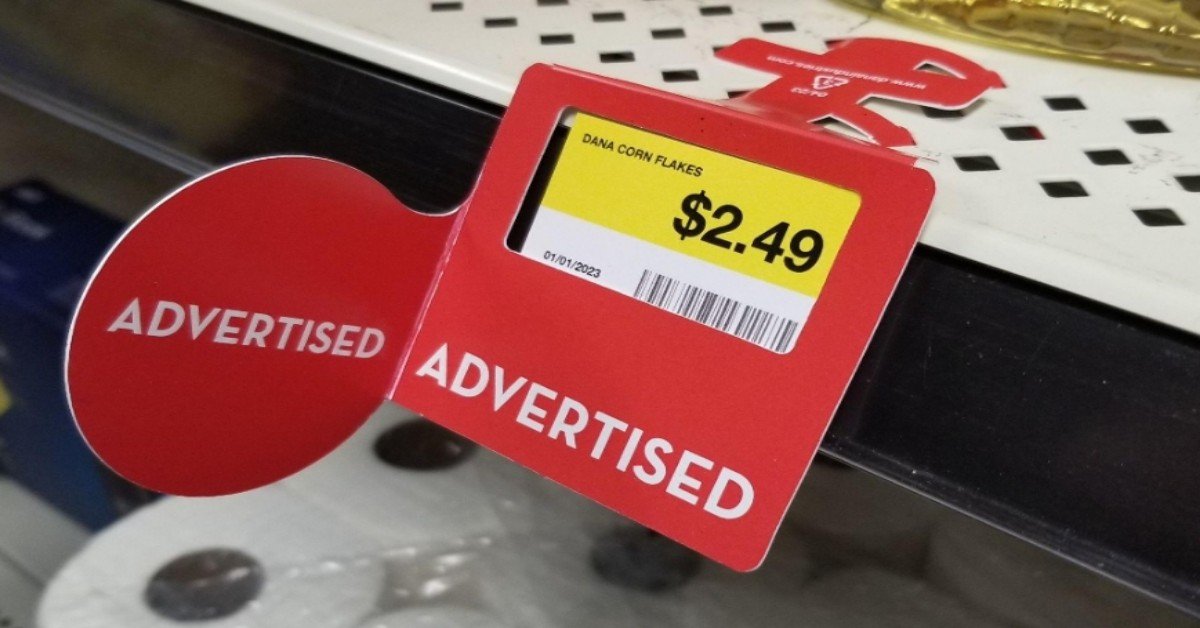
Retailers who implement effective point-of-purchase marketing tools see measurable increases in product sales and customer engagement. Shelf talkers are small but powerful signage solutions that capture shopper attention at the critical moment when purchasing decisions happen, resulting in higher conversion rates and increased revenue for stores of all sizes.
In competitive retail environments where hundreds of products compete for customer attention, strategic shelf edge marketing creates the visual disruption needed to guide buying behavior. This guide reveals how shelf talkers drive sales, where to position them for maximum impact, and which design elements deliver the best results.
What Makes Shelf Talkers Effective for Driving Revenue?
Shelf talkers work because they interrupt the browsing pattern at the exact moment customers evaluate products. These point-of-purchase displays create visual breaks in monotonous shelving, drawing eyes directly to featured items and influencing decisions when shoppers are ready to buy.
How Point-of-Purchase Signage Influences Buying Behavior
Shoppers make the majority of purchasing decisions in-store rather than before arriving. Shelf edge marketing taps into this behavior by providing information and prompts at the shelf.
Key behavioral triggers include:
- Capturing attention during the critical three-second decision window
- Interrupting automatic browsing patterns with bold visuals
- Reducing decision fatigue by highlighting key product benefits
- Triggering impulse purchases through promotional messaging
- Creating perceived urgency with limited-time offers
These psychological factors convert browsers into buyers when signage communicates clear value propositions.
Measuring Sales Lift and Marketing ROI
Retailers track measurable increases when implementing shelf talkers strategically. Featured products often see double-digit percentage sales lifts compared to unmarked items on the same shelves.
The return on investment remains strong because:
- Low production costs relative to other marketing channels
- Quick implementation without complex installation requirements
- Immediate sales impact within days of placement
- Higher conversion rates at the shelf level
- Reusable options for ongoing promotional campaigns
Smart retailers measure performance by tracking sales data before and after adding shelf signage to specific product categories.
How Do Shelf Talkers Increase Product Sales?
Effective shelf edge marketing works through three primary mechanisms: promoting offers, highlighting profitable items, and guiding customer choices. Each approach directly impacts revenue when executed properly.
Promoting Special Offers and Discounts That Convert
Price promotions drive traffic and encourage immediate purchases. Shelf talkers make these offers impossible to miss in crowded aisles.
Successful promotional signage:
- Communicates discount percentages or dollar savings clearly
- Creates urgency with phrases indicating limited availability
- Displays the value proposition in large, readable text
- Suggests product bundles or complementary purchases
- Directs customers to seasonal or clearance items
Retailers report that well-marked promotions consistently outperform unmarked sale items by significant margins.
Highlighting High-Margin Products for Better Profitability
Strategic product placement focuses customer attention on items that deliver the best profit margins. Shelf talkers guide shoppers toward premium options and new launches.
Revenue optimization tactics include:
- Drawing attention to higher-priced alternatives
- Introducing new product launches with prominent signage
- Moving slow-selling inventory through targeted messaging
- Upselling premium versions of standard products
- Cross-promoting complementary items for larger basket sizes
This approach increases not just sales volume but overall profitability per transaction.
Guiding Customer Purchase Decisions at Shelf Edge
Customers appreciate clear information that helps them choose confidently. Shelf talkers reduce purchase hesitation by answering questions before they arise.
Effective guidance provides:
- Product features and benefits at the decision point
- Answers to common customer questions about usage
- Certifications like organic, gluten-free, or locally sourced
- Trust signals through awards or customer ratings
- Simple explanations for complex product differences
When shoppers feel informed and confident, conversion rates increase substantially.
Where Should You Position Retail Signage for Maximum Impact?
Location determines effectiveness. Even the best-designed shelf talkers fail if positioned where customers rarely look or shop.
Optimizing High-Traffic Store Zones for Sales
Certain store locations consistently deliver better results based on natural shopping patterns and customer flow.
Prime positioning includes:
- Eye-level shelves where customers naturally focus
- Endcap displays at aisle ends with high visibility
- Check out zones where impulse purchases happen
- Store entrance areas showcasing promotions
- Aisle intersections where traffic converges
Store managers should track which zones generate the most foot traffic and prioritize those areas for shelf edge marketing.
Strategic Product Placement by Department
Different departments require different approaches. Smart retailers customize placement based on shopping behaviors in each category.
Department-specific strategies:
- Seasonal sections during peak buying periods
- Complementary product groupings that encourage multiple purchases
- New arrival sections highlighting the latest inventory
- Clearance areas are moving discounted merchandise
- Brand-specific zones for vendor partnerships
Testing placement in various departments reveals which locations perform best for specific product types.
What Visual Design Elements Drive More Conversions?
Design quality directly impacts sales performance. Poorly designed signage gets ignored while well-crafted displays stop shoppers in their tracks.
Creating Eye-Catching In-Store Displays
Visual elements must work together to create an immediate impact from several feet away in busy aisles.
Design best practices include:
- High-contrast color combinations like red on white or yellow on black
- Sans-serif fonts sized for readability from three feet minimum
- Single-focused message rather than multiple competing points
- Distinctive shapes or dimensional elements that stand out
- Consistent brand colors and logos for recognition
Retailers should test different designs and measure which versions generate the highest sales lifts.
Writing Clear Promotional Messaging That Sells
Words matter as much as visuals. Concise, benefit-focused copy converts better than vague or wordy descriptions.
Effective messaging strategies:
- Action verbs that prompt immediate response
- Value statements emphasizing customer benefits
- Urgency language like limited time or while supplies last
- Clear pricing with savings amounts prominently displayed
- Brief differentiators explaining why this product stands out
The best shelf talkers communicate one compelling reason to buy using ten words or fewer.
Which Store Types Get the Best Sales Results?
Shelf edge marketing works across retail categories, though implementation strategies vary by store type and customer base.
Retail Categories With Highest Revenue Growth
Certain retail formats see particularly strong results from shelf talkers due to their product mix and shopping patterns.
Top performing environments:
- Grocery stores use signage for promotions and new products
- Hardware retailers are highlighting seasonal items and tools
- Pharmacy sections promoting health and wellness products
- Convenience stores are driving impulse purchases
- Specialty retailers differentiating unique offerings
Success depends on matching signage strategy to customer expectations in each retail format.
Product Types That Benefit from Shelf Edge Marketing
Some product categories naturally benefit more from point-of-purchase marketing than others.
High-impact categories include:
- New product launches requiring customer education
- Premium items where higher prices need justification
- Seasonal products with limited availability windows
- Private label offerings competing against national brands
- Promotional items featured in limited-time campaigns
Retailers should prioritize shelf talkers for products where additional information or promotion directly influences purchasing decisions.
How Dana Industries Delivers Custom Shelf Talkers That Drive Sales
Dana Industries has specialized in transforming retail spaces with innovative store fixtures and engaging in-aisle signage since 1993. Our multi-patented manufacturing process and custom shelf signage solutions establish us as the industry leader serving major retailers, including Walmart, Costco, Sobeys, Loblaws, Toys R Us, and Tractor Supply Co.
Our comprehensive product range extends beyond traditional signage to include aisle blades, sign holders, large format printing, data strips and rails, ESL accessories, and complete merchandising solutions. We manufacture over a billion custom items annually for clients across Canada, the United States, and Latin America, with facilities strategically located to serve North American and South American markets efficiently.
What sets Dana Industries apart is our commitment to resolving in-aisle challenges through customizable shelf talkers and complete fixture solutions designed to boost product visibility, maximize space, and drive sales. We collaborate with retail teams across Marketing, Store Planning, Supply Chain, and Operations to deliver precisely what your stores need. Contact us today to discover how our shelf-edge marketing solutions can help you own the shelf, own the aisle, and own the experience.