Introduction
What if the world’s gentlest rodent also happened to be its largest? Enter the Cadibara, a truly fascinating mammal that captivates scientists, animal lovers, and even social media audiences. Often mistaken for its more common name, “capybara,” the term Cadibara represents a stylized or alternate name that reflects this animal’s unique identity and rising popularity. Native to the wetlands and riversides of South America, the Cadibara is more than just an oversized rodent—it is a peaceful, social, and environmentally significant species.
As the largest rodent on Earth, this semi-aquatic creature holds a critical place in its ecosystem, influencing everything from plant growth to predator food chains. At the same time, its docile temperament and quirky behaviors have made it a viral sensation across the globe. This in-depth article explores everything you need to know about the Cadibara—its biology, habitat, behavior, and essential role in the natural world.
What Is a Cadibara?
The Cadibara, scientifically known as Hydrochoerus hydrochaeris, belongs to the rodent family but stands apart due to its massive size and calm, communal behavior. With a body weight that can reach up to 70 kilograms (154 pounds) and a length of about four feet, the Cadibara is truly a giant among its kind. Classified under the order Rodentia, it shares a distant relation to guinea pigs and agoutis. This mammal has a lifespan of approximately 6 to 12 years in the wild, although some live longer in captivity.
Its preferred environment includes wetlands, marshes, grasslands, and riverbanks where water is always nearby. As a herbivore, it survives on a diet of grasses, aquatic plants, and fruits, and its lifestyle is marked by peaceful coexistence with other animals and a strong inclination toward group living. The Cadibara is social, serene, and surprisingly intelligent—making it an animal worth knowing and protecting.
Origins and Evolution of the Cadibara
The evolutionary history of the Cadibara dates back millions of years and links closely to smaller rodent species such as guinea pigs. As a member of the Caviomorpha infraorder, Cadibaras evolved alongside other South American rodents like pacas and agoutis but developed uniquely large bodies and aquatic abilities over time. Fossil evidence suggests that their ancestors were already semi-aquatic, inhabiting water-rich regions where adaptation to swimming and wetland grazing proved essential.
Over generations, these adaptations strengthened—leading to the modern Cadibara with webbed feet, waterproof fur, and a digestive system well-suited to high-fiber plant material. Its evolutionary success lies in its ability to balance terrestrial grazing with aquatic survival strategies. These features allowed Cadibaras to dominate the ecological niches around lakes and rivers, providing ecological services like vegetation control and seed dispersal. Evolution shaped the Cadibara into a resilient and vital component of South American biodiversity.
Physical Appearance – How to Recognize a Cadibara
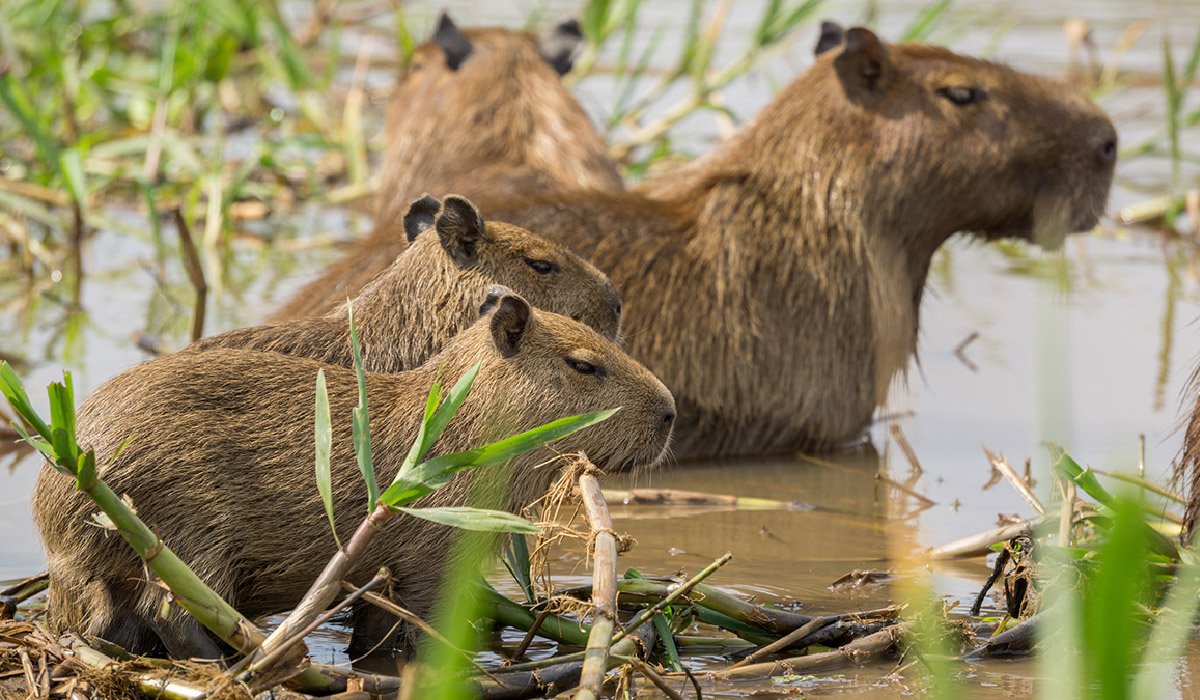
The Cadibara is instantly recognizable thanks to its massive, barrel-shaped body and blunt, friendly-looking face. Standing about 60 centimeters (2 feet) at the shoulder and stretching up to 1.2 meters (4 feet) in length, this rodent commands attention wherever it is found. Its short, coarse fur ranges in color from reddish-brown to grayish-brown, helping it blend into muddy, riverine environments. Unlike many rodents, the Cadibara has a barely visible tail, which adds to its unique appearance.
Perhaps most distinctive are its webbed feet, which are perfectly designed for swimming and navigating through wetlands. The eyes, ears, and nostrils are all positioned high on the head, allowing the Cadibara to stay mostly submerged in water while remaining aware of its surroundings. Its long, sharp incisors are constantly growing and used for cutting through thick vegetation. These combined features reflect the Cadibara’s deep adaptation to a dual life on land and water.
Habitat and Geographic Distribution
The Cadibara is native to a broad range of environments across South America, including Brazil, Venezuela, Colombia, Argentina, Peru, and Uruguay. Its habitat preference is clear: anywhere with abundant freshwater. This includes riverbanks, marshes, swamps, flooded grasslands, and forested wetlands. The presence of water is absolutely crucial for Cadibara survival, not just for hydration but also for cooling, hiding from predators, mating, and foraging.
In dry seasons, they congregate around remaining water sources, often forming larger social groups to enhance safety and resource access. Human activities such as wetland drainage, deforestation, and agricultural expansion have increasingly threatened these habitats. As natural wetlands are converted to farmland or urban areas, Cadibaras lose essential access to the water-based environments they depend on. Yet, in some urban-adjacent wetlands, they’ve also shown adaptability by coexisting with human settlements—though not without conflict or conservation concerns.
Diet and Feeding Behavior
The Cadibara follows a strictly herbivorous diet and spends a large portion of its day grazing on a wide variety of plant materials. Its primary food sources include grasses, aquatic plants, reeds, soft bark, and fruits. The Cadibara’s digestive system is complex, relying on hindgut fermentation to extract nutrients from fibrous vegetation. One unique behavior that aids digestion is coprophagy—the act of eating its own soft feces to absorb undigested nutrients, similar to rabbits.
During wet seasons, food is plentiful, and Cadibaras focus on lush grasses and water plants. However, during dry seasons, they shift to chewing bark or tough foliage when tender plants are less available. Their constant grazing helps control vegetation in wetland areas, indirectly supporting biodiversity by preventing overgrowth and maintaining open water channels for smaller species. This low-impact, eco-friendly diet makes the Cadibara a vital player in its ecological community.
Social Life and Group Dynamics
Cadibaras are highly social animals that live in tightly bonded groups, often ranging from 10 to 20 individuals. During dry seasons or near water sources, these groups can swell to 50 or even 100 members. The group structure is generally hierarchical, led by a dominant male who oversees mating rights and territorial defense. Other members include adult females, juveniles, and a few subordinate males.
Communication is a critical aspect of their social cohesion and involves an impressive range of vocalizations—barks, whistles, purrs, and clicks—each conveying different messages like alarm, contentment, or social bonding. Scent marking using facial glands is another way Cadibaras communicate territory and social status. Grooming and physical closeness, such as cuddling and nuzzling, further strengthen relationships within the group. These behaviors highlight a level of social sophistication rarely seen in rodents, making the Cadibara a fascinating subject for ethologists and wildlife enthusiasts alike.
Daily Routine – What a Cadibara Does All Day
The daily life of a Cadibara is governed by its need to balance food intake, safety, social interaction, and environmental conditions. Early mornings and late afternoons are spent grazing, as temperatures are cooler and predators are less active. Midday often brings intense heat in tropical climates, prompting Cadibaras to rest in shaded areas or, more commonly, immerse themselves in water to stay cool.
During these periods, they may be seen floating calmly, almost meditative in appearance. Throughout the day, they maintain social bonds through grooming and vocalizations, reinforcing their group hierarchy. At any sign of danger—be it a jaguar, caiman, or human—they respond swiftly by dashing toward the water and diving beneath the surface, where they can remain hidden for up to five minutes. Well-worn trails known as “capybara highways” connect grazing spots, watering holes, and resting areas, showing the regularity and intelligence of their daily movements.
Water Adaptations – Built for Swimming
Few mammals are as well-adapted to aquatic life as the Cadibara. Its webbed feet provide excellent propulsion in water, while its dense, water-resistant fur protects against chilling and excessive moisture. The animal’s nostrils, eyes, and ears are strategically placed high on its skull, allowing it to keep most of its body submerged while still monitoring its environment. Cadibaras can dive underwater and hold their breath for up to five minutes, making water not only a refuge but also a key survival tool.
Mating often occurs in the water, further highlighting how integral it is to their lifecycle. In addition to safety and reproduction, water helps regulate their body temperature, especially in hot climates. These water-based abilities distinguish Cadibaras from other terrestrial rodents and help them dominate the ecological niches surrounding tropical wetlands.
Reproduction and Life Cycle
Reproduction in Cadibaras typically occurs throughout the year in tropical regions, though it may be more seasonal in areas with pronounced wet and dry periods. After a gestation period of around 150 days, females give birth to litters of 2 to 8 pups. These newborns are remarkably well-developed—they’re fully furred, have their eyes open, and can eat solid food and swim within a week. However, they continue to nurse for up to 16 weeks while gaining strength and social integration.
In the wild, the entire group plays a role in protecting and nurturing the young, a behavior that contributes to higher survival rates. Pups grow quickly, and by the age of one, they’re usually fully independent. This rapid development cycle ensures that Cadibara populations can rebound quickly in favorable conditions, though habitat destruction and hunting still pose long-term risks.
Predators and Threats in the Wild
Despite their size and group-living strategies, Cadibaras face numerous natural threats in the wild. Apex predators such as jaguars, pumas, caimans, anacondas, and large raptors like harpy eagles frequently prey on them, especially juveniles. To counteract these dangers, Cadibaras rely heavily on group vigilance, fast sprints, and their swimming prowess. However, the most persistent threat comes from humans.
In some regions, Cadibaras are hunted for meat and leather, while their habitats are increasingly lost to agricultural expansion, dam projects, and deforestation. Additionally, pollution and the introduction of invasive species further disrupt their ecosystems. Conservation efforts focus on protecting wetlands and enforcing anti-hunting regulations, but public awareness remains key. The gentle nature of the Cadibara makes it particularly vulnerable, as it often does not show fear in the presence of humans, increasing its risk of capture or harm.
Relationship with Humans
Over the centuries, the Cadibara has had a mixed relationship with humans, ranging from being a hunted animal to a beloved symbol of peace and calm. In rural South America, it has been a traditional food source, while in modern urban societies, it has become a popular zoo attraction and exotic pet. Some cultures, especially in Venezuela and Brazil, feature Cadibaras in folklore, where they are depicted as wise and harmonious animals.
In recent years, their calm demeanor and unique appearance have made them viral celebrities on social media platforms like TikTok and Instagram. In Japan, Cadibaras are a star attraction in hot spring parks, where visitors delight in seeing them relax in steaming water. Although some individuals keep them as pets, experts caution that Cadibaras require ample space, constant water access, and companionship from other Cadibaras to live healthy lives. Captivity without these elements often leads to stress and health problems, raising important ethical questions.
Role in the Ecosystem
The Cadibara plays a critical ecological role in maintaining healthy wetland and grassland ecosystems. As grazers, they help prevent the overgrowth of grasses and aquatic plants, which could otherwise choke waterways and reduce biodiversity. Their movement and grazing patterns create open areas that benefit smaller animals and birds. Cadibaras also contribute to seed dispersal through their feces, helping maintain plant diversity.
They serve as a primary food source for numerous large predators, forming a vital link in the food chain. Additionally, their presence supports symbiotic relationships with species like cattle egrets and parasitic birds that feed on the insects found on Cadibara skin. This gentle giant is truly a keystone species, meaning its health directly influences the well-being of many others within its environment. Protecting Cadibaras ensures the stability of the larger ecosystem in which they reside.
Final Thoughts
The Cadibara is more than just an oversized rodent—it is a remarkable animal whose peaceful nature, social intelligence, and environmental contributions make it one of nature’s unsung heroes. Its ability to adapt to both land and water, maintain harmony in social groups, and regulate vegetation highlights its evolutionary brilliance. Despite not being endangered, the Cadibara’s future depends heavily on the conservation of wetlands and responsible human interaction.
As we face growing biodiversity loss and climate change, animals like the Cadibara remind us of the beauty and complexity of nature. They inspire empathy, curiosity, and a greater sense of stewardship. By learning about and protecting creatures like the Cadibara, we take one step closer to living in balance with the natural world.
FAQs About Cadibara
1. What is a Cadibara?
A Cadibara is the world’s largest rodent, also known as a capybara. It is a semi‑aquatic mammal found in South America and is known for its calm nature, social behavior, and strong swimming ability.
2. Where do Cadibaras live?
Cadibaras live near rivers, lakes, swamps, and wetlands in countries like Brazil, Venezuela, Argentina, Colombia, and Peru. They always stay close to water because it helps them eat, cool down, and escape predators.
3. What do Cadibaras eat?
Cadibaras are herbivores. They eat grasses, aquatic plants, fruits, and sometimes tree bark. They also re‑eat their soft droppings to absorb extra nutrients, which helps their digestion.
4. Are Cadibaras friendly to humans?
Yes, Cadibaras are naturally gentle and calm. They rarely show aggression and can live peacefully around humans and other animals. However, they need space, water, and other Cadibaras to stay healthy.
5. Why are Cadibaras important to the environment?
Cadibaras help control plant growth in wetlands, spread seeds through their droppings, and provide food for predators like jaguars and caimans. Their grazing keeps ecosystems healthy and balanced.
You May Also Read: Jupiterqq Guide: The Ultimate Winning Platform You Must Try
For More Information, Visit Dotmagazine