
Efforts in Engineering Have Made Packaging Machinery A Part Of Brand Value Offering

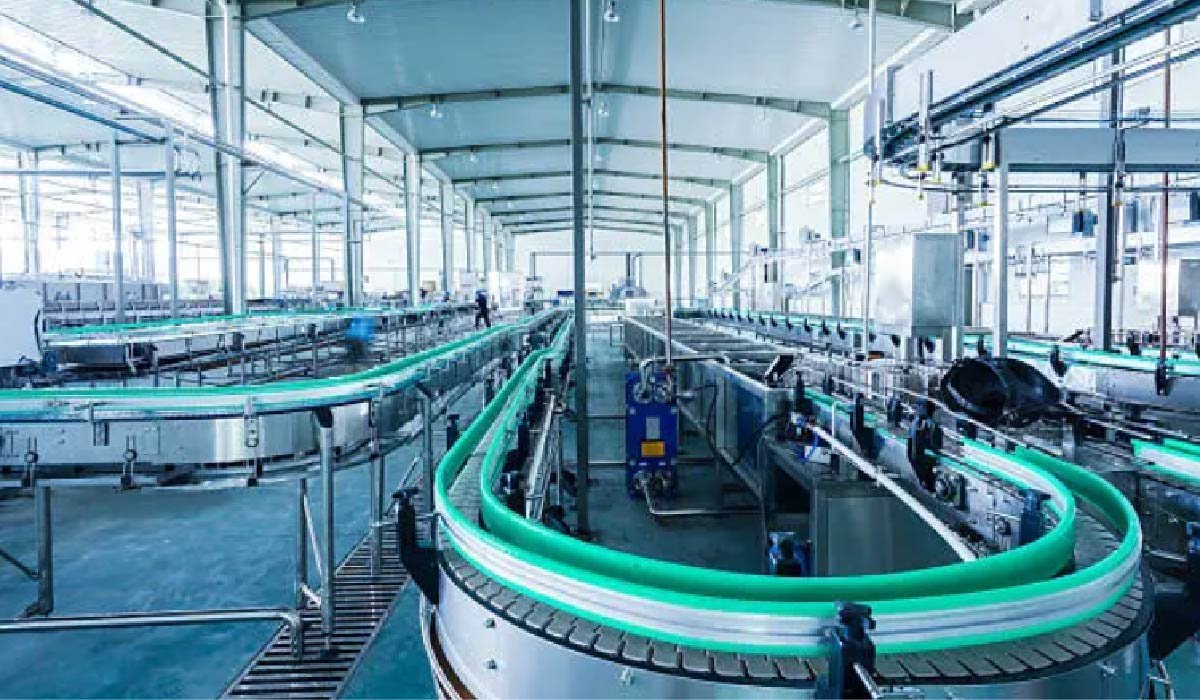
Distinctive brand attributes in the industrial world are defined by efficiency and consistency. In the food and beverage and consumer goods industries, packaging helps cement trust and quality. Every quality product is backed by reliable technology – a complex system engineered by expert packaging machinery manufacturers.
It is an automatic can labeling machine system these manufacturers construct to perform a diversified set of mechanical engineering design tasks. Each product is packaged and ready for the market while meeting quality and regulatory requirements. Modern packaging machinery designs achieve a high level of automation for compliance and quality assurance.
Packaging As A Part Of Brand Value Offering
In the industrial sector, packaging is more than a container, it is a promise. In the tightly regulated B2B industrial world, packaging must protect the product, meet compliance, look good, and not to forget, must be done in an efficient and quick manner. Particularly, industrial buyers are looking to achieve high speed with absolute uniformity and accuracy, not to mention, oversight of a broad range of product types and materials.
This is where these packaging machinery manufacturers become crucial. They transform brand vision into tangible mechanical workings. They can achieve different goals, like prolonging product shelf-life, tamper-evidence, and increasing product visual appeal. Manufacturers work to design automated systems that match the specifications of the product and the goals of the industry.
Production networks on a global scale are dependent on these machines. They have the functionality of a complete product line, and include filling liquids and powders, sealing, capping, and labeling. For these machines to be able to work 24/7, each part of the machine has to work flawlessly and in complete synchronisation with the others, while meeting the required performance specifications.
These machines are, in a way, ambassadors of the brand’s reliability. The more their automated packaging machines work with precision, the more confidence their customers have in their business, resulting in valuable and long-lasting brand reputation in the industry.
The Importance of Machining Excellence
The difference between an average packaging system and an industrial packaging system is precision machining. The level of machining required in the mechanical systems of the machines, including the belts, motors, sensors, and filling heads, is so high that they are able to achieve the same results each time, over thousands of cycles.
Most of today’s systems make use of a technology called servo motors. They provide movement with a response time of a few milliseconds, which results in less waste of materials, and a smaller loss of product, while also increasing the overall quality of the packaged product.
Even the tiniest design flaw in an automated environment can lead to downtime or inconsistent products. As a result, manufacturers must design, prototype, stress test, and simulate multiple times to make sure the equipment will operate consistently and reliably when the equipment is completed, across different weather and humidity levels, and varying loads.
For example, Optical sensors are featured in some automated can labeling machines and closing systems to perfectly align a label, regardless of the container’s shape, speed, or the cost rate to be lost, visually.
Precision engineered systems lead to greater profitability and performance, even in systems designed for packaging to create profitability performance engineered systems.
Automation and Smart Integration
The packaging of Industry 4.0 systems has completely mechanical processes and has made packaging a fully data driven and intelligent operation. Automation allows machines to self adjust, detect an operational irregularity, and optimize performance in real time.
For B2B producers and companies with multiple product lines, this means rapid changeovers and no long manual interval adjustments, which ensures the producer can quickly respond to market changes and reduce downs to maintain high productivity levels across a varied product portfolio.
Integrated sensors and programmable logic controllers (PLCs) within advanced packaging systems communicate with central control units. These intelligent systems record performance data, wear level data, and maintenance needed data. Operators can control multiple production sites through cloud dashboards, providing ease of access and control.
Automation improves safety. Advanced systems include overload protection and fail safe mechanisms that allow consistent system operation and prevent accidents.
The use of robotics coupled with advanced controls and IoT provides fluid integration of filling, capping, and labeling lines. The result is a traditionally separate line, fully integrated into one intelligent packaging system.
Material Efficiency and Sustainable Engineering
Modern engineering philosophy embraces sustainability. B2B clients want new solutions that use less energy, create less waste, and incorporate green materials quickly and efficiently without damaging product quality.
Packaged machinery has new energy efficient drivers, servo controlled motors, and lightweight construction materials. Many systems also use regenerative power systems that harness and recycle kinetic energy while operating, lowering energy costs.
On the materials side, machinery has been redesigned to use thinner films, recyclable plastics, and new biodegradable materials. This also requires new precision sealing systems and adaptable controls to maintain seal integrity while lowering materials used.Furthermore, adoption of the waste-reducing technologies, such as automated film tensioning and error detection, have assisted in defect and reject rate reduction. These improvements engender a more environmentally sustainable and profitably viable lean production model.
The multinational food and plus beverage companies in the target markets cannot ethically ignore the competitive imperative of this sustainability focused engineering.
Advanced Design Offers Quality Control and Product Uniformity
The ability to deliver consistent quality packaging at high volumes is a major competitive advantage in branding. Packaging, however, does come with certain engineering challenges. With the integration of multi-layer controls within the production process, packaging systems have overcome many of these challenges.
Vision systems within the packaging systems identify and remove underperforming packages for missing seals, improper labels, incorrect fill levels or other defects. Pedestrian laser scanners confirm accurate compliance by validating barcodes and checking expiration dates. Potential non-compliance is instantly flagged to the system.
Operators within a feedback system are able to modify machines when tighter tolerances are required or predetermined tolerances are missed. Quality control is built into these systems so that predictive controls are doing the work of identifying trends for wear and misalignment that would otherwise remain undiagnosed until production system throughput delta was outside acceptable range.
The ability to meet the quality standards consistently is a competitive advantage. Reliability translates into low return rates for B2B clients, compliance with target quality standards, and trust within the distribution and retail partners.
Most importantly, advanced packaging engineering makes certain that every product that goes out of the factory exemplifies the company’s commitment to precision, safety, and dependability.
The Future of Industrial Packaging Machinery
The future of packaging engineering is connected devices, predictive intelligence, and sustainable innovations. The future of packaging design is… smart. Each machine is going to use AI to optimize design and run digital twin simulations to better analyze production forecasting.
Robotic systems will perform complicated tasks with flexible motion automation and improve real-time compliance tracking. Augmented reality (AR) is likely to facilitate remote troubleshooting and training to decrease the need for on-site technical support.
For B2B manufacturers, this change is a chance to create a more flexible, efficient, and strong production network. The focus will shift toward predictive rather than reactive machine maintenance to minimize downtime.
The next generation of packaging machinery will also respond to the growing demand for sustainable solutions. Eco-smart systems optimize machine speed, reliability, and industrial-level power to modify energy usage, emit less carbon, and conform to a circular economy.
Final Thoughts
The integration of engineering, automation, and sustainability is what makes packaging innovation of today modern. Packaging machines manufacturers are more than just suppliers—they’re partners in molding how businesses showcase quality, competence, and trust globally.
These systems are the epitome of modern industrial achievement, built with the sustainment of engineering, intelligence, and design. For B2B businesses, the acquisition of more advanced packaging machines is much more than increased production. It is the establishment of a robust brand equity on the foundation of dependability.
The advancement of packaging is in striving for perfection, and is being done today with each innovation.