

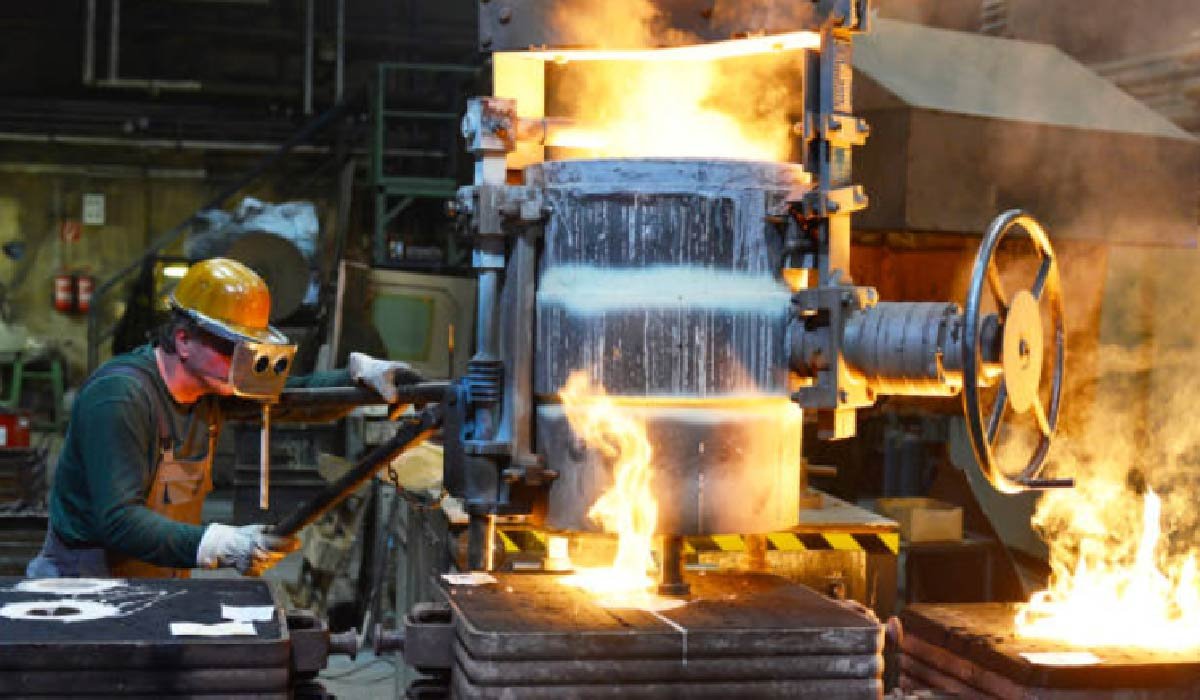
Vacuum investment casting has become an indispensable industry standard for businesses needing high-precision components made from high-temperature alloys. Vacuum investment casting has become an essential process for B2B clients in the aerospace, automotive, energy, and medical sectors to fulfil demands for precision lost wax casting. This article highlights the trends in vacuum investment casting suppliers, the benefits of these suppliers, and the vacuum investment casting suppliers.
Filling in the gaps
In the world of casting wax, vacuum investment casting is an innovation that treats design and manufacture of complex metal parts with high precision. This process differs from traditional casting processes that take place in an open environment when investment casting occurs under a controlled low-pressure environment to reduce the oxidation of high-temperature alloys for investment casting.
The process of investment casting revolves around the creation of a wax pattern. This wax pattern is covered with casting wax, and the hardened wax is melted to create a cavity that is filled with metal under vacuum conditions. This casting process is best for aerospace turbine blades, medical implants, and components of high-performance engines to attain low cavitation, high porosity and polished investment casting.
B2B operators must consider the specific details of vacuum investment casting because the quality of the end result affects the functionality, longevity, and regulatory requirements of the finished product.
Benefits of Collaborating with a Lost Wax Casting Company
There are many benefits for companies manufacturing high-temperature alloys when collaborating with a lost wax casting company.
- Complexity and Precision: They can design and manufacture complex and precise products, which can be difficult or even impossible to obtain with conventional casting or machining.
- Integrity of the Material: The vacuum environment guarantees that there will be no oxidation or contamination of the alloy.
- Less Post Processing: The excellent surface finish and dimensional accuracy inherent in the design reduces the need for extensive machining or refinishing.
- Tailored Options: Numerous Advanced Precision Casting and Machining suppliers will provide tailored approaches to processes and materials.
Companies in aerospace, defense, and energy must collaborate with a lost wax casting company to ensure the stability and reliability of their products, which is crucial for adherence to regulatory requirements.
Selecting the Most Suitable Supplier for Vacuum Investment Castings
For B2B entities aiming to fine-tune the efficacy of production and the characteristics of materials, choosing the most suitable supplier for vacuum investment castings is indispensable. The most important considerations include the following.
- Know-How: Suppliers who’ve mastered high-temperature alloy casting for advanced applications involving intricate geometries will be more competent to cater to customer needs.
- Certifications: The presence of ISO, ASTM, and other domain-specific certifications is an indication of production quality standardization and adherence to global regulations about consistency.
- High-Temperature Materials: For more sophisticated applications, the supplier needs to handle nickel-based superalloys, titanium, cobalt-chromium, and other high-temperature materials.
- Defect-Reduction Support: Design help, simulation, and post-casting analysis can help a supplier and customer mitigate defects and enhance yield.
- Capacity and Turnaround Times: It is crucial to assess how the supplier handles quality for large orders.
To find a supplier who can be counted on for high-temperature alloy components, companies need to do comprehensive qualitative and quantitative evaluations and include a tour of the facilities and an inspection of the quality.
The Role of Silica Sol in High Temp Casting
Silica sol as a binder for ceramic shells is one of the most important parts of vacuum investment casting. Silica sol casting manufacturers offer coatings that are impactful for the generation of defect-free parts through high-temperature alloys. These shells require high strength, thermal stability, and an excellent surface finish.
Multiple thin coatings of colloidal silica constitute the silica sol process. The result is a dense and durable shell that is capable of withstanding the extreme temperatures of molten metals of over 1,500°C. This also aids in the faithful reproduction of complex wax patterns and reduces casting errors such as gas porosity, irregular surfaces, and more.
For B2B, finding a dependable silica sol casting manufacturer is fundamental. The mechanical properties, surface finish, and the final component’s dimensional accuracy are all greatly influenced by the quality of the ceramic shell.
Vacuum Investment Casting Applications in High Temperature Alloys
Vacuum investment casting is popular in many industries that require components with high performance and temperature resistance. Common uses are:
- Aerospace: turbine blades and structural components that need extreme heat resistance, as well as exacting tolerances.
- Automobile: turbocharger rotors and parts of the exhaust system that operate at high temperatures, as well as high performance engine components.
- Energy Sector: Parts for gas turbines, which include valves and nozzles, are subjected to extreme thermodynamic stress and temperature variations.
- Medical Sector: Surgical instruments and implants which require biocompatibility in addition to controlled high precision in dimensions.
B2B companies using vacuum investment casting will enjoy increased performance, decreased failure rates, and improved competitiveness in high-demand industries.
Main Considerations for Production of High-Temperature Alloys
Producing high-temperature alloys by vacuum investment casting will require balancing specific casting methods and the high-temperature alloys’ attributes dictate how to handle the alloy’s composition, which can include:
- Alloy Composition: Each high-temperature alloy may require a different casting approach based on their individual thermal and mechanical properties.
- Casting/Design: Gate, riser, and vent design to guarantee solidification and defect free castings must be designed for uniform solidification.
- Heat Treatment: Casting residual mechanical property stress can be improved by heat treatment of the casting followed by solution annealing and/or aging.
- Surface Treatment: To achieve the final specifications, surface corrosion resistance may require polishing, machining, and/or coating.
- Process Monitoring: Process waste can be minimized via vacuum control and the use of advanced sensors.
AMC will unify the effective management of every stated parameter to guarantee consistent part quality to their clients.
In conclusion, for businesses that need high-performance precision components made of high-temperature alloys, vacuum investment casting becomes very important. Businesses need to work with competent lost wax casting companies to take advantage of advanced manufacturing experience, material knowledge, and customized production. From aerospace to medicine, the right supplier provides dependable, innovatively and efficiently produced, flawless components enabling high-temperature alloy production. Automation and flexibility go hand in hand, to the Innovation of production systems there is a reliable supply of ever efficient high-temperature alloys.
Accomplished manufacturers who produce silica sol casting of superior quality provide even greater casting precision and enhanced casting durability. These features are essential to help businesses thrive in challenging environments. This makes the decision to work with a specific vacuum investment casting supplier very important, as it provides significant business value in terms of quality, performance, and overall success.