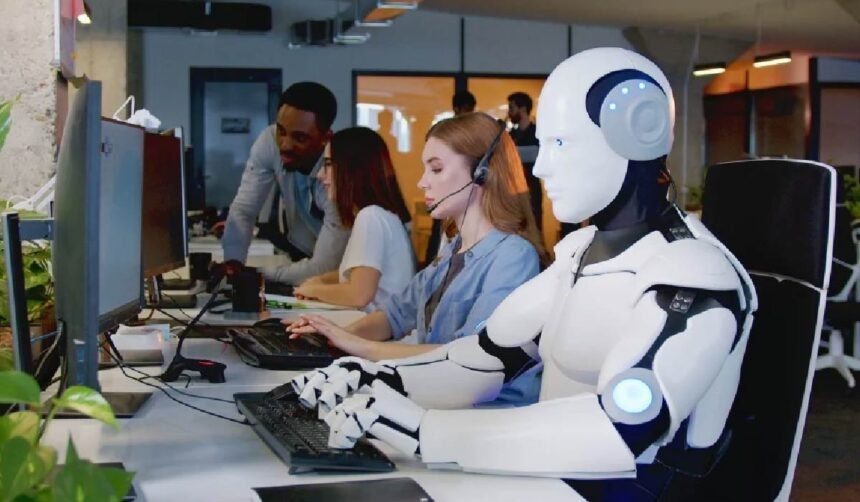
Imagine waking up to an education system where every student gets a personalized learning guide that adapts in real time. Now imagine walking into a car dealership where service feels effortless, instant, and fully tailored to your needs — without waiting in line or repeating information multiple times.
This isn’t a prediction. It’s already happening.
Artificial intelligence has quietly slipped into two unlikely but deeply interconnected worlds: education and customer service.
On one side, AI for Students is reshaping how the next generation learns, studies, and solves problems.
On the other, AI conversational agents for dealership customer service are transforming how consumers shop, compare, and interact with automotive brands.
And the most interesting part?
Both transformations follow the same blueprint — smarter interactions, personalized experiences, and intelligent automation that works behind the scenes.
In this guest post, we’ll explore the intersection of these two fast-moving trends and what they reveal about the future of human-AI collaboration.
Why AI Is Growing Fastest in Education and Dealership Customer Service
AI adoption is skyrocketing across industries, but education and automotive customer service stand out for a simple reason: both rely heavily on communication, guidance, and decision-making support.
In Education — Students Need Adaptive, Always-Available Learning Help
Today’s students face more content, more complexity, and more pressure than ever. Tools powered by AI for Students are stepping in to simplify learning with benefits like:
- Round-the-clock homework assistance
- Personalized study plans
- Concept explanation at any difficulty level
- Instant summarization of long notes or chapters
- Automated quiz creation for exam prep
Instead of one-size-fits-all support, AI gives learners tailored guidance — something traditional classrooms struggle to provide consistently.
In Automotive — Customers Expect Instant Answers and Zero Friction
Car buyers and service customers want:
- Fast responses
- Accurate information
- Transparency
- Personalized recommendations
This is exactly where AI conversational agents for dealership customer service shine. They help with:
- Scheduling test drives
- Comparing models
- Recommending maintenance options
- Managing service queues
- Guiding buyers through financing steps
When communication drives the experience, AI becomes essential.
The Common Thread — Personalized, Predictive, and Effortless Engagement
Even though students and car buyers live in different universes, their expectations look strikingly similar.
They want:
- Instant support
- Personalized recommendations
- Clarity and confidence
- Convenience without complexity
AI brings all these benefits together by analyzing patterns, predicting needs, and delivering answers before frustration builds.
Predictive Assistance for Students
AI tools can now:
- Identify topics a student struggles with
- Recommend tailored exercises
- Predict future performance
- Identify learning gaps long before exams
A student studying physics might receive a notification like:
“Based on your last 10 sessions, you’re likely to struggle with momentum problems. Here are three practice questions to strengthen this area.”
That’s proactive support in action.
Predictive Support for Dealership Customers
For dealerships, AI predicts:
- When a vehicle likely needs service
- Which car models fit a buyer’s budget and lifestyle
- What questions a customer might ask next
- How to reduce friction in the buying process
For example, AI conversational agents for dealership customer service may send a personalized prompt:
“It’s been 5,000 miles since your last oil change. Here are open service slots this week, plus pricing options.”
That’s customer convenience elevated.
Real-World Scenarios Where AI Delivers Value Every Day
Let’s break down the everyday ways AI creates meaningful change across both sectors.
Scenario 1 — The Student Preparing for Exams
Meet Aisha. She’s preparing for college entrance exams.
AI for Students helps her by:
- Summarizing each chapter in easy-to-read notes
- Generating quizzes based on her weak areas
- Explaining confusing concepts step by step
- Tracking her study progress automatically
What used to take hours now takes minutes.
Scenario 2 — The First-Time Car Buyer Feeling Overwhelmed
Now meet Daniel. He wants to buy his first car but doesn’t know where to start.
Thanks to AI conversational agents for dealership customer service, Daniel can:
- Describe his lifestyle and budget
- Receive relevant car comparisons instantly
- Ask questions without hesitation
- Book a test drive in seconds
He never feels pushed — just supported.
Key AI Capabilities Powering Both Transformations
Even though education and dealerships operate differently, the AI technologies under the hood are remarkably similar.
Natural Language Understanding (NLU)
This enables AI to understand questions like:
- “Explain this equation step by step.”
- “Which SUV has the best mileage under $30k?”
Recommendation Algorithms
AI recommends:
- Study paths for students
- Car models or service packages for customers
Predictive Analytics
AI uses patterns to forecast:
- Student performance
- Vehicle maintenance needs
Automated Workflow Execution
AI handles tasks such as:
- Scheduling tutoring sessions
- Booking test drives or service appointments
The intelligence is the same — only the context changes.
The Human Side of AI — Augmenting, Not Replacing
There’s a misconception that AI replaces educators or dealership staff. Reality paints a very different picture.
H3: In Education
Teachers remain central.
AI simply:
- Personalizes instruction
- Reduces administrative load
- Gives students more confidence and independence
In Dealerships
Sales and service teams remain essential.
AI simply:
- Answers FAQs
- Filters serious buyers
- Reduces wait times
- Helps staff focus on meaningful interactions
AI is a co-pilot — never the captain.
Statistics That Show How Fast AI Is Being Adopted
- Over 68 percent of students now use AI tools for academic help.
- Dealerships leveraging conversational AI have seen a 30 to 50 percent reduction in response time.
- Almost 74 percent of consumers prefer chat assistance over waiting for phone support.
- Schools using personalized AI learning tools report 20 to 35 percent improvements in student retention.
The data is clear — AI isn’t a trend. It’s infrastructure.
How Organizations Should Prepare for the Next AI Wave
Whether you’re a school, dealership, or tech-driven business, preparing for AI means:
- Investing in data quality
- Training staff early
- Selecting scalable AI tools
- Prioritizing transparency and ethics
- Integrating human oversight
Companies that adopt AI now gain a long-term advantage — especially those embracing conversational automation.
Conclusion: The Future Belongs to Adaptive, AI-Powered Experiences
Education and dealership customer service might look different on the surface, but their evolution reflects the same global shift — the move toward personalized, efficient, and intelligent experiences.
From AI for Students helping learners study smarter, to AI conversational agents for dealership customer service streamlining automotive interactions, the world is entering a new era of assistance where information feels more human, more contextual, and more intuitive than ever.
AI isn’t replacing people.
It’s elevating how people learn, buy, explore, and make decisions.
And this is only the beginning.
FAQs
1. How is AI helping students learn more effectively?
AI personalizes learning pathways, simplifies complex topics, generates practice questions, and provides instant explanations tailored to each student’s level.
2. Why are dealerships adopting conversational AI?
Dealerships use AI to respond faster, handle customer inquiries 24/7, manage bookings, and reduce wait times — improving the overall buying and service experience.
3. Can AI replace teachers or dealership staff?
No. AI supports humans by automating repetitive tasks and providing insights, but human expertise and empathy remain essential.
4. Are AI tools easy for businesses to integrate?
Modern AI platforms are designed for quick integration with existing systems, making deployment simpler than ever.