
Surfboard materials affect speed, control, and buoyancy. PU boards offer smooth control, EPS with epoxy is lighter and faster, and fibreglass or carbon fibre boosts strength and precision. Softer foam boards provide stability for beginners.
Confused by the variety of surfboard materials—EPS, PU, epoxy, soft-top—and not sure which one actually suits your surfing style? You’re not alone. For both new and experienced surfers, picking the right board can feel overwhelming. Each material affects speed, manoeuvrability, and durability differently, and choosing the wrong one can hold back your performance or even lead to a costly mistake.
Understanding how surfboard materials influence your ride is essential if you want to maximise your time on the waves. From lightweight epoxy boards that give a lively, responsive feel to traditional PU boards prized for smooth control, every choice comes with trade-offs.
So, how do you figure out which surfboard material is actually right for your style and skill level?
1. Polyurethane (PU): The Classic Feel
Polyurethane foam boards have been a surf staple since the 1950s. They’re built with a PU foam core wrapped in fibreglass and finished with polyester resin. This combination creates a solid, balanced feel in the water. When stored on a surfboard rack or a vertical surfboard rack, PU boards stay organize and protected, helping maintain their shape and performance over time.
PU boards are slightly heavier than modern alternatives, giving them smooth control and momentum through turns. That extra weight also helps them cut through choppy surf. However, they’re less durable, prone to dings and water absorption over time, and they lose their lively “pop” faster than epoxy boards.
Best for: Surfers who love the traditional, predictable feel and flow of classic boards.
2. Expanded Polystyrene (EPS): Lightweight and Lively
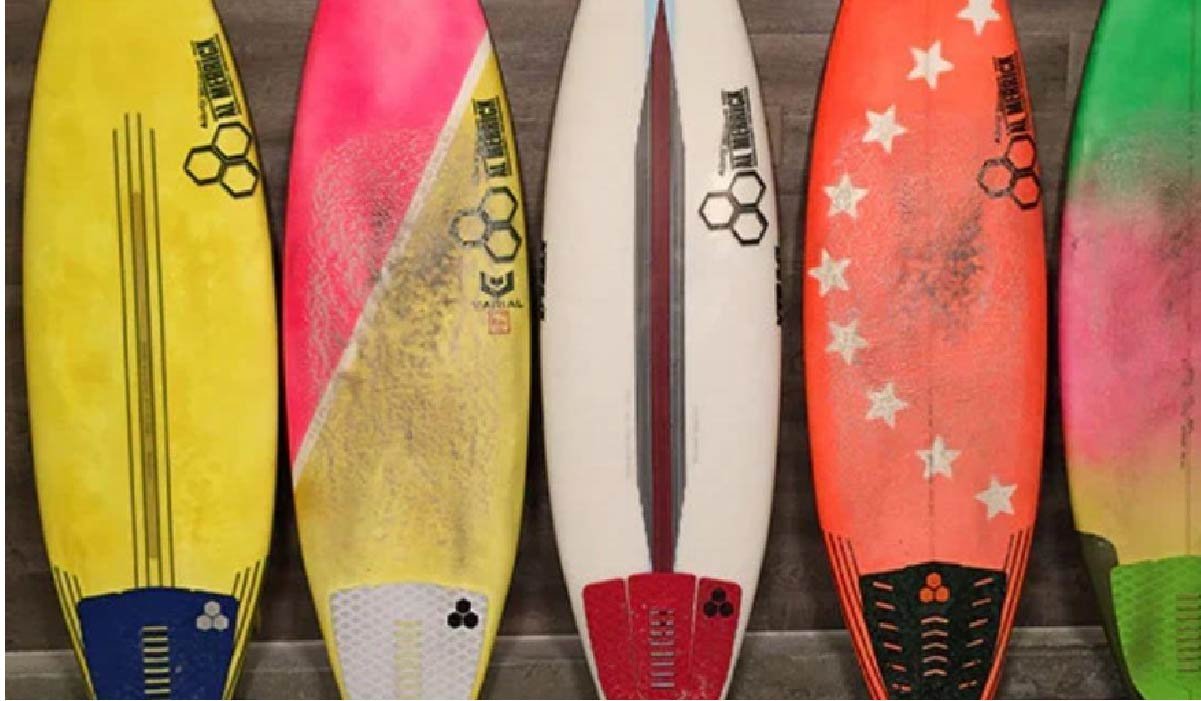
EPS foam boards are the modern evolution of PU. They’re lighter, more buoyant, and typically use epoxy resin instead of polyester. This combo makes them float higher and paddle faster, which is ideal for smaller, weaker waves. Storing them properly on a surf rack helps maintain their shape and longevity, keeping your board ready for the next session.
They feel springy and responsive underfoot, great for quick turns and boosting speed in soft conditions. The trade-off? They’re a bit too light in rough or windy surf, sometimes feeling “chattery” compared to heavier PU boards.
Best for: Beginners or small-wave riders who value easy paddling and extra lift.
3. Epoxy Resin: Strength and Flexibility
Epoxy resin is what holds most EPS boards together, and it’s a big part of what makes them so tough. Compared to polyester, epoxy is stronger, more flexible, and better at resisting cracks and delamination.
Epoxy boards are also lighter, which means faster acceleration and more snap in your turns. They keep their pop for longer, making them ideal for high-performance surfing. The downside is the price, but the extra durability often makes them worth it.
Best for: Travelling surfers or anyone looking for a light, responsive, and durable board.
4. Fibreglass: The Reinforcement Layer
Every surfboard needs a sturdy shell, and that’s where fibreglass comes in. It’s the layer that covers the foam and gives the board strength. The thickness of this glass layer affects performance, thinner glass makes a board lighter and more flexible, while heavier glass adds durability.
Performance boards often use lighter fibreglass for speed and manoeuvrability, while longboards and big-wave boards use thicker glass for stability and longevity.
Best for: Surfers who want a balance between strength and responsiveness.
5. Carbon Fibre: High-End Precision
Carbon fibre is a premium upgrade seen in performance boards. It adds stiffness and power while keeping weight low. Some boards use it in patches or strips to reinforce key areas, while others feature full carbon wraps.These boards hold energy through turns and deliver explosive drive, but they can feel too stiff for beginners or casual surfers.
Best for: Advanced surfers chasing speed, control, and top-tier performance.
6. Soft-Top Foam: Safe and Forgiving

Soft-top boards are made from durable foam like EVA or IXPE and are perfect for learning. They’re buoyant, safe, and tough to damage, making them a favourite for beginners and surf schools. While they lack the sharp performance of hard boards, their stability and safety make them unbeatable for small waves and fun sessions.
Best for: Beginners or families who want easy, stress-free surfing.
Choosing the Right Material
There’s no single “best” surfboard material, it all depends on your goals.
- For traditional control: go with PU.
- For lightweight speed: choose EPS with epoxy.
- For high-end precision: carbon fibre is the way to go.
- For learning: stick with a soft-top.
Understanding how surfboard materials affect performance helps you pick a board that fits your surfing style and the waves you love most. So next time you’re waxing up, remember, what’s inside your board has just as much impact as how you ride it.
Ride Smarter and Let Your Board Work for You
Choosing the right surfboard material isn’t just about the latest trend or what looks cool on the beach, it’s about matching your board to your skills, the waves, and the kind of ride you want. Every material, from classic PU to lightweight EPS with epoxy, offers its own balance of speed, control, and durability. Even soft-top boards, often overlooked by experienced surfers, provide a safe and stable entry point that builds confidence for years to come.
By understanding how materials affect performance, you can make smarter decisions on your next board, ensuring each session feels smoother, faster, and more enjoyable. So before you wax up or invest in a new setup, ask yourself: what kind of ride do I really want, and which board will help me get there? The right choice might just take your surfing to the next level.