
Many people try dermaplaning hoping it will work like laser or electrolysis. It leaves the skin smooth right away, so it is easy to see why the treatment gets compared to long-term hair removal options.
Dermaplaning is not an alternative to laser or electrolysis. It only removes surface hair for a short time and does not affect the hair follicle.
Laser reduces hair growth long term, and electrolysis permanently destroys each follicle. Dermaplaning is a temporary smoothing treatment, not a permanent hair-removal option.
In this guide, you’ll learn exactly how dermaplaning, laser, and electrolysis work, when each one makes sense, and whether dermaplaning can ever act as a true alternative.
Is Dermaplaning Alternative to Laser or Electrolysis? 8 Facts
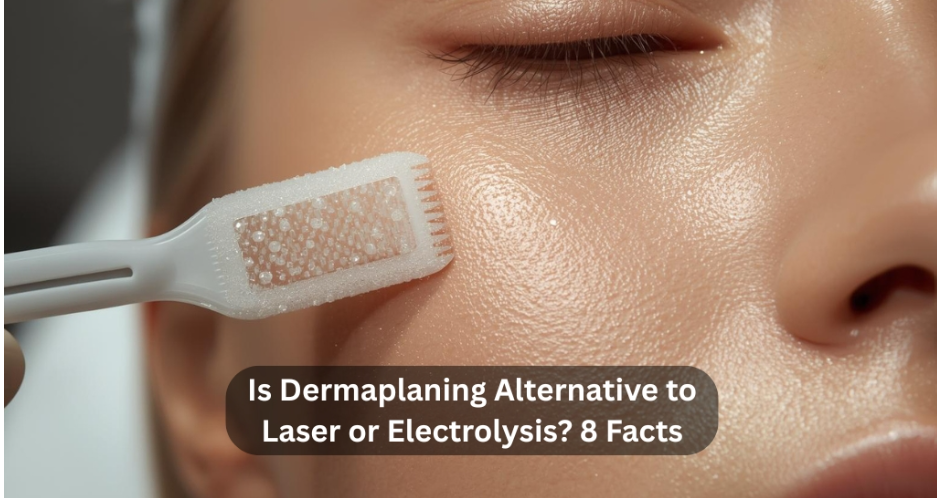
Dermaplaning is a manual exfoliation treatment that uses a sterile blade to gently skim away dead skin and fine facial hair. The process feels light and controlled, and most people enjoy the instant glow.
- It removes only surface hair, which is known as vellus hair.
- Results usually last about one to three weeks before the hair grows back at its normal rate.
- Benefits include smoother makeup application, brighter skin and better product absorption.
Although it can remove peach fuzz, dermaplaning does not affect the hair root. Nothing in the process damages the follicle, so it cannot offer long-term reduction.
What Laser Hair Removal Does
Laser hair removal targets pigment inside the follicle. The light converts to heat and weakens the follicle over time. With multiple sessions, you can reach a high level of long-term reduction.
- Most people see hair become finer and lighter as treatments progress.
- Results can last months or years, depending on the area and hormones.
- It works best on darker hair with lighter skin because the laser needs contrast to find the pigment.
Laser is designed for reduction, not instant exfoliation, and it reaches far deeper than dermaplaning ever can.
Cheap laser hair removal can still be a good option when the clinic uses proper equipment and trained staff, offering effective results at a lower cost.
What Electrolysis Does
Electrolysis sends a tiny electrical current into each follicle to destroy the growth cells. When done correctly, the treated follicle cannot grow hair again.
- It offers permanent results.
- It works on any hair colour or skin tone, because it does not rely on pigment.
- It is often chosen for small areas that need full removal, such as the chin, upper lip or bikini line.
Electrolysis is the only method approved for permanent hair removal. If you are comparing electrolysis hair removal London prices, keep in mind that costs often vary based on the size of the area and the number of sessions needed. Electrolysis is the only method approved for permanent hair removal, so the value comes from long-term results rather than quick fixes.
Can Dermaplaning Replace Laser or Electrolysis?
Dermaplaning cannot replace these treatments, because it never reaches the follicle. Without affecting the root, it has no way to give long-term or permanent results.
It cannot thin or slow future growth. It cannot treat deeper, coarse hair. And it cannot address concerns like hormonal growth or ingrown hairs. In all these situations, laser or electrolysis offer solutions that dermaplaning simply is not designed to provide.
Dermaplaning should be seen as a temporary smoothing method, not a substitute for deeper hair-removal technologies.
When Dermaplaning May Be a Short-Term Alternative
Dermaplaning can still be helpful in specific situations. It gives quick results with no downtime, which makes it appealing for many clients.
It may be a short-term option for people who want:
- Fast surface hair removal before an event
- A starter treatment if they are not ready for laser or electrolysis
- Gentle exfoliation because their skin reacts to harsher methods
- Removal of fine peach fuzz that is not suitable for laser
In these cases, dermaplaning offers a smooth finish even though the results are temporary.
When Laser or Electrolysis Are the Better Choice
Laser or electrolysis become far more effective when the goal is lasting reduction or full removal.
They are usually the better choice for:
- Thick or coarse hair
- Long-term or permanent results
- Large areas, such as legs or underarms
- Hormonal hair growth, including face and neck
- Recurring ingrown hairs, which improve when follicles are disabled
These treatments reach the root, so they provide changes that dermaplaning cannot match.
Who Should Avoid Using Dermaplaning as an Alternative
Some people should skip dermaplaning when looking for anything more than short-term smoothness.
It is not advised for:
- Active acne, since the blade can irritate breakouts
- Open wounds or inflamed skin
- Recent chemical peels or strong exfoliants
- Anyone expecting permanent results, because dermaplaning cannot deliver them
These clients would benefit more from professional hair-removal treatments designed for deeper action.
Conclusion
Dermaplaning is not a true alternative to laser or electrolysis. It is a temporary method that removes surface hair and brightens the skin, but it does not slow or stop growth. Laser and electrolysis remain the only options for long-term or permanent reduction. Dermaplaning works best when used as a short-term smoothing treatment alongside, not instead of, permanent solutions.
FAQs
Does dermaplaning make hair grow back thicker?
No. It only trims the surface hair, and the follicle stays unchanged. The regrowth looks the same as before.
Can you do dermaplaning between laser sessions?
Yes. Many people use it to keep skin smooth while their laser course is underway, as long as the skin is not irritated.
Is dermaplaning safe for sensitive skin?
Most people with sensitive skin tolerate it well, but any active redness or inflamed spots should heal first.
How long do dermaplaning results last?
Most results last one to three weeks, depending on how fast your vellus hair grows.
How much are dermaplaning prices UK?
Dermaplaning prices in the UK vary by clinic, location and whether the treatment is paired with a facial. Most clinics charge a moderate fee for a single session, with higher prices in major cities. Many places offer discounted packages if you plan to book regular treatments.
What is the difference between electrolysis vs laser hair removal?
Electrolysis treats each follicle one at a time with electrical current, which makes it fully permanent for every hair type and colour. Laser treats large areas quickly by targeting pigment in the follicle, which gives long-lasting reduction but may need occasional top ups. The right choice depends on your hair type, the area you want to treat, and how fast you want results.