
Is Your Standing Desk Actually Just a Box? The Ergonomics of ‘Dual-Purpose’ Furniture

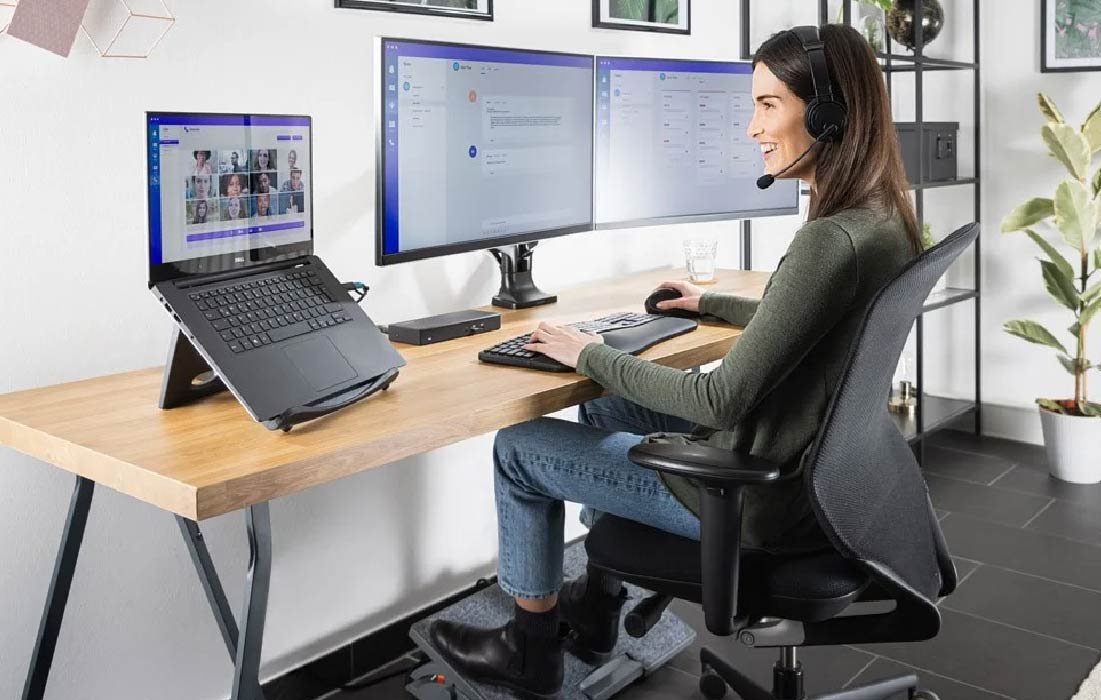
In the modern office, the “standing desk” is a status symbol. It is a sleek, motorized piece of technology that promises to save us from the health risks of sedentary life. We spend thousands of dollars on them, adjusting the height by the millimeter to achieve perfect ergonomic alignment.
But walk out of the carpeted office and onto the concrete floor of the warehouse, the shipping dock, or the maintenance bay, and you will see a different story.
Here, workers have been standing for decades. They don’t have motorized desks. Instead, they often hunch over low tables, stack boxes on the floor, or balance clipboards on top of tall shelving units. They are suffering from the same back pain as the office worker, but often without the ergonomic intervention.
However, a quiet revolution is happening in industrial design. Facility managers are realizing that the most valuable piece of real estate on the shop floor isn’t the floor itself; it’s the 40-inch horizontal plane.
The Magic of the “Elbow Height”
Ergonomics is essentially the science of fitting the task to the human. When it comes to standing work—whether that is packing a box, inspecting a machined part, or reviewing a manifest—the golden rule is “Elbow Height.”
For precision work, the work surface should be roughly 2 to 4 inches above elbow height. For light work (like writing or assembly), it should be just below elbow height. For heavy work, it should be lower to allow for leverage.
For the average adult male, this “sweet spot” usually hovers between 36 and 42 inches off the ground.
This is why the traditional 30-inch desk height is a disaster for standing work. It forces the spine into a “C” curve, straining the lumbar discs and the neck. Conversely, a 72-inch high shelf is too high to work on.
The solution lies in the “Counter Height” sweet spot. This is the dimension where storage meets action.
The Death of “Dead Space”
In a traditional layout, storage and workspace are separate. You have a workbench where you work, and a cabinet where you store things. This footprint is expensive. It requires two distinct zones.
By integrating the two, you create a “Dual-Purpose” asset. A sturdy, steel cabinet that stands 40 inches tall is no longer just a box for holding tools; it is a standing desk.
This effectively doubles the utility of the square footage.
- The Top Surface: Becomes a staging area. A shipping clerk can pack a box at a comfortable height without bending over. A supervisor can lay out blueprints or a laptop to review production schedules.
- The Internal Volume: Remains secure, high-density storage for the tools and supplies needed for that specific task.
The “Lean” Logic of Point-of-Use
This consolidation aligns perfectly with “Lean Manufacturing” principles.
One of the seven wastes in Lean is “Motion”—the unnecessary movement of people. If a worker has to walk 20 feet to a cabinet to get a roll of tape, then walk 20 feet back to a table to pack the box, they have wasted time and energy.
By using a waist-high storage unit as the table, the tool is literally beneath the task. The worker stands at the unit, pulls the tape from the drawer below, packs the box on the surface above, and moves on. The travel time is reduced to zero.
The Durability Factor
Of course, you can’t just turn any cabinet into a workbench. A standard file cabinet is made of thin sheet metal. If you drop a 50-pound alternator on it, the top will cave in.
This is where industrial design diverges from office furniture. True industrial counter-height units are built with reinforced tops—often wood, composite, or heavy-gauge steel—specifically designed to take a beating. They are engineered to handle “dynamic loads” (impact and vibration) rather than just “static loads” (holding paper).
Conclusion
We often overcomplicate ergonomics. We think we need sensors and motors and memory settings. But sometimes, the best ergonomic solution is simply a sturdy metal box of the correct height.
By rethinking how we deploy storage, we can transform the industrial environment. We can stop forcing workers to choose between storing their gear and saving their backs. A well-placed unit creates a functional “island” of productivity, offering a solid surface for the task at hand and a secure vault for the tools required. Whether it is used as a shipping station, a maintenance hub, or a supervisor’s kiosk, utilizing Global Industrial counter height cabinets turns passive storage into an active participant in the workflow, proving that sometimes the best standing desk isn’t a desk at all.
For More Information, Visit Dotmagazine