

The process of purchasing the first portable power bank or portable charger can be confusing. There are many capacities, charging speed, and features available in the market; therefore, it is easy to select the wrong one and find oneself disappointed. With over ten years of experience of working with consumer tech content and testing charging accessories in real-life scenarios, I have learned that the most effective portable charger is not the priciest one, it is the one that fits in your everyday routine.
This guide will assist all first-time buyers to learn how portable power bank operate, what is actually important, and how reputable brands such as Anker can lead the pack in terms of quality in the industry.
What Is a Portable Power Bank and How Does It Work?
A power bank is a small battery that is used to store electrical power and provide it to your gadgets in the event that you do not have a wall socket available. After being charged, it can operate smartphones, wireless earbuds, tablets, and even some laptops in terms of capacity and output.
A portable charger is designed to transform the stored energy into a regulated electrical output that fits your requirements of the device. Quality models are efficient in regulating voltage, which is safeguarding your phone battery and even guarantees a stable charge rate. Personally, charging a well-constructed power bank that is certified significantly lowers the amount of overheating and charging disruptions.
Choosing the Right Capacity for Your Needs
Capacity is calculated in milliampere-hours (mAh) and this figure influences directly the number of times that your device can be charged. To the first time users, it is more significant to know how to use it in the real world than to compete on the highest number.
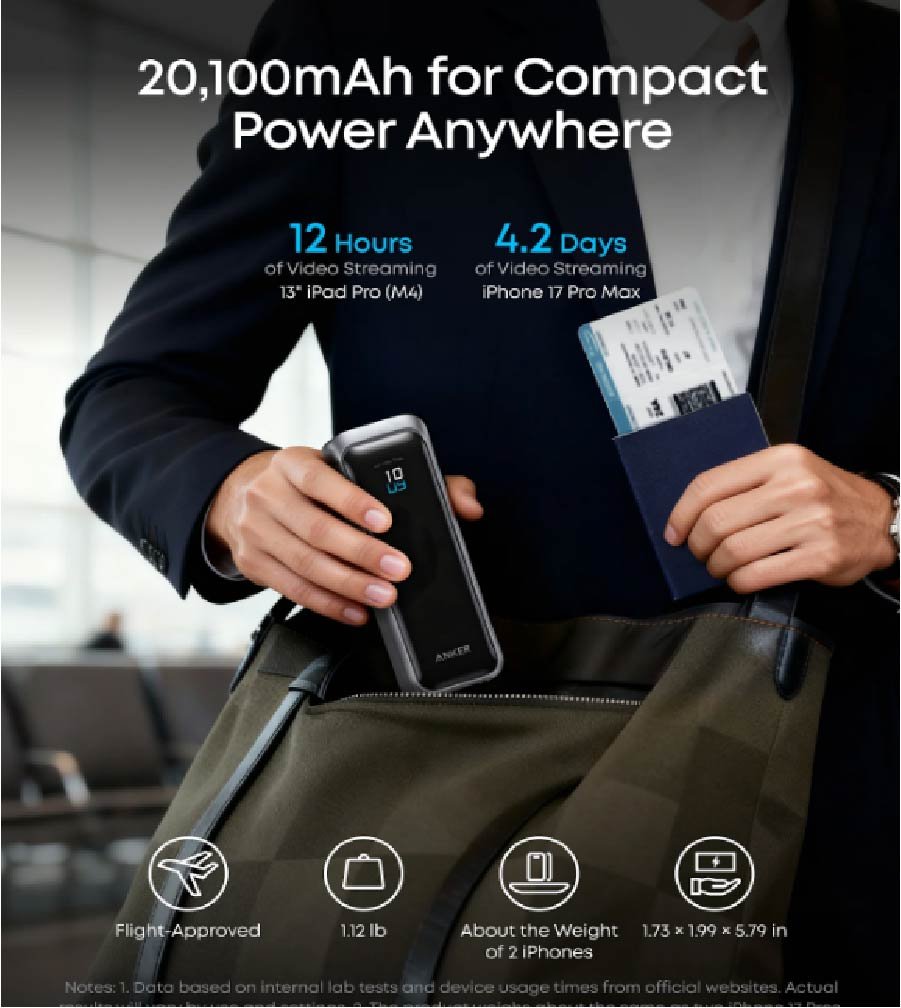
A smaller portable charger of approximately 5,000-10,000mAh will be suitable to use on a daily basis and also in case of emergency charging. The models are small and can be placed in pockets or small bags. The middle-range portable power banks of 10,000-20,000mAh provide a moderate solution to travelers and students, and can charge a smartphone several times. Models with higher capacity such as over 20,000mAh are more appropriate on long journeys or those with various devices but they are heavier and require more time to recharge.
Charging Speed and Output Explained Simply
Not every portable charger can provide an equal speed of power. The output is measured in watts or amps with a higher output corresponding to quicker charging when used in combination with an appropriate device. The characteristics such as rapid charge and power delivery are very helpful in minimizing the charging time particularly of the new smartphones.
Based on practical experimentation, a portable power bank capable of charging a phone in accordance with modern fast-charging requirements can recharge a phone in almost half the time that older devices can. Here, one can distinguish such trusted brands as Anker, which pay much attention to the constant power supply and compatibility of devices.
Port Types and Compatibility
The current portable chargers are available in various port types such as USB-A and USB-C. USB-C is the standard of choice because it is quicker to charge and has a reversible connector. Other power banks will also be pass-through charging, which means that you can charge the power bank and your gadget simultaneously.
The most important thing to consider when purchasing your first portable power bank is that it should be compatible with the existing cables and devices to prevent the purchase of unneeded accessories.
Safety Features You Should Never Ignore
One of the least considered factors of the purchase of portable chargers is safety. An excellent portable power bank will be equipped with overcharging, overheating, and short circuit protection. Uncertified products that are cheaper do not have these protection measures and this poses a bigger risk of damaging the devices.
When used in a professional testing setting, safety-certified chargers have always been found to be more reliable in the long-term compared to generic ones. This renders safety features an uncompromising element of first-time purchasers.
Build Quality and Brand Reliability
The construction of a portable charger is directly proportional to its lifespan. A well engineered product is represented by durable casings, quality internal batteries, and consistent performance. Established brands invest in testing and certification which translates into superior user experiences in the long run.
Anker, in particular, has established its brand by prioritizing long-term battery life, consistent charging rates, and the ability to provide customers with quality service, which is why it is usually recommended to beginners.
Is a Portable Power Bank Worth It for Everyday Use?
The answer is yes to the majority of the users. A portable power bank gives one the peace of mind when they have to work long days, travel, or when there is power outage. It gets rid of the fear of low battery messages and is flexible to an extent that cannot be matched by traditional wall chargers.
Final Thoughts
There is no need to complicate the choice of your first portable power bank or portable charger. With the capacity, speed of charge, safety and reliability of the brand, you can easily find a solution that suits your lifestyle and budget. A carefully selected portable charger is not just another accessory, it is a reliable part of your day to day life that helps you stay connected at the time when you need it the most.
FAQs
How is a portable power bank and a portable charger different?
The battery itself is known as a portable power bank, and the action that it provides is a portable charger. The terms are commonly used interchangeably in day to day use.
How many hours does a portable charger take to be replaced?
An excellent portable charger will last a few years, depending on how often it is used and how it is charged. It can be made to live longer by proper care and not subjected to extreme temperatures.
Will a portable power bank break my phone battery?
An efficient portable power bank that has in-built safety measures will not damage your phone battery. Unregulated chargers of poor quality may lead to long-term damage.
Can one carry a portable charger when travelling?
The majority of portable chargers can be carried with a person and be taken on a flight provided that they do not exceed the size limits of airlines. It is always important to check the mAh rating prior to flying.