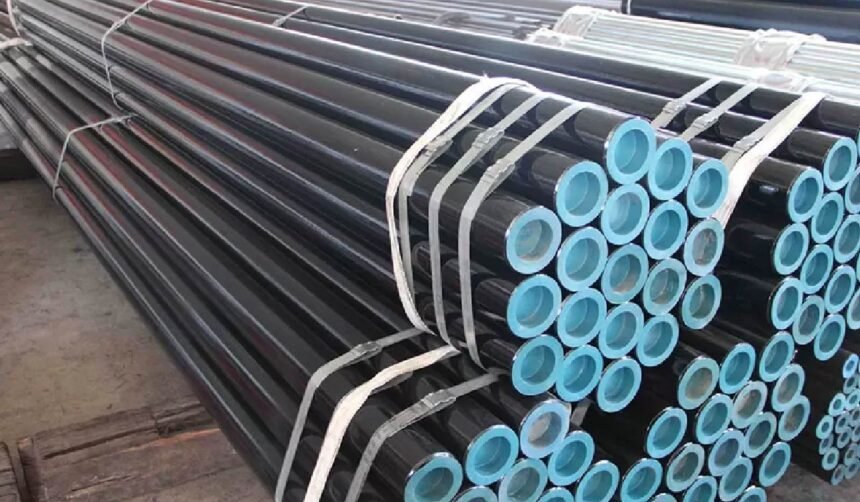
In the oil and gas industry, water wells, and many drilling projects, slotted pipe, slotted liner, and slotted casing are commonly used. These tools help control sand production, allow fluids to flow, and keep the well stable. Although they look similar, each one has different features, strengths, and best uses. This article explains what each is, how they differ, where they work best, and how to choose the right one.
What is a Slotted Pipe?
A slotted pipe is a steel tube with narrow cuts (slots) along its body. The slots let oil, gas, or water flow into the pipe while stopping sand and small particles from entering. This helps keep the well clean and prevents clogging.
Slotted pipes come in many sizes. Slot width usually ranges from 0.006 inches to 0.25 inches, depending on the sand size in the formation. The slots can be arranged in straight lines or in a staggered pattern. Staggered patterns give the pipe more strength.
These pipes are made by cutting precise slots using laser or mechanical methods. They are strong enough for most conditions but are most common in shallower wells or lower-pressure environments. A good slotted pipe manufacturer can provide custom slot sizes and materials to match your project.
Slotted pipes are easy to install and usually cost less than other options. They work well when you need simple sand control without very high pressure or deep placement.
What is a Slotted Liner?
A slotted liner is also a tube with slots, but it is used differently from a slotted pipe. It is placed only in the production zone (the part of the well that produces oil, gas, or water), not the full length of the well. It hangs from the casing above it and supports the open hole section.
Like slotted pipes, liners are made of steel (carbon steel or stainless steel) and have slots sized to match the formation particles. The slots allow high fluid flow while blocking sand.
Slotted liners are popular in horizontal wells because they bend more easily and fit curved sections. They are usually 20 to 40 feet long and can be connected to reach the needed length. They help increase production rates by providing a larger inflow area compared to some other methods.
Liners are lighter and cheaper than full casings, but they still offer good sand control. They are often used when the main well is already cased and cemented, and only the reservoir section needs protection.
What is a Slotted Casing?
A slotted casing is the strongest of the three. It is a full-length pipe that runs from the surface down to the bottom of the well. Slots are cut only in the sections that need to produce fluids, while the rest remains solid to protect and isolate different zones.
Slotted casings are made from thick, high-strength steel. They can handle very high pressure, high temperature, and corrosive fluids. The threads on each end allow sections to be connected securely. After installation, the casing is cemented in place to fix it to the formation.
This type is common in deep wells, offshore drilling, and unstable ground conditions. It provides structural support for the entire well and helps prevent collapse or cross-flow between zones. Although more expensive, slotted casings offer the highest safety and durability in tough environments.
Key Differences Between Slotted Pipe, Slotted Liner, and Slotted Casing
Here are the main differences side by side:
- Length and placement — Slotted pipe can be used anywhere in the well; slotted liner is placed only in the production zone; slotted casing covers the full well depth.
- Strength — Casing is the strongest, followed by pipe, then liner.
- Cost — Pipe is cheapest, liner is medium, casing is most expensive.
- Installation — Pipe is simple to run; liner is hung from above; casing is cemented in place.
- Best for — Pipe suits shallow or low-pressure wells; liner suits horizontal production zones; casing suits deep, high-pressure, or complex wells.
- Flow area — Liner and casing often provide larger inflow areas because of their design and placement.
Slot size and pattern can be similar across all three, but casing usually has extra reinforcement around slotted sections.
Common Uses and Applications
- Oil and gas — Slotted casings are used in deep vertical or offshore wells. Slotted liners are very common in horizontal shale wells. Slotted pipes are used in older or simpler wells.
- Water wells — Slotted pipes are widely used for domestic and agricultural water wells to filter sand and draw clean water.
- Environmental and monitoring wells — Slotted liners or pipes help sample groundwater without pulling in too much sediment.
- Geothermal and injection wells — Slotted casings provide durability in high-temperature or high-pressure conditions.
The right choice depends on well depth, formation type, pressure, and budget.
How to Choose the Right One
Follow these steps to decide:
- Check well depth and pressure — Deep or high-pressure wells usually need slotted casing.
- Look at the production zone — Horizontal wells or targeted sand control often favor slotted liners.
- Consider budget and simplicity — Shallow wells with basic needs can use slotted pipe.
- Test formation sand size — Match slot width to particle size for best filtration.
- Think about long-term use — Stronger options (like casing) cost more upfront but reduce future problems.
Always consult a reliable supplier for advice. For high-quality options and custom designs, visit https://uniasen.com/ to see available products and technical support.
Conclusion
Slotted pipe, slotted liner, and slotted casing each solve sand control and well stability in different ways. Pipes are simple and economical, liners are great for production zones, and casings offer maximum strength and protection. Choosing the correct one improves well performance, reduces maintenance, and increases safety.
Understanding the differences helps you pick the best tool for your project. If you need more information or specific products, feel free to contact experienced suppliers.