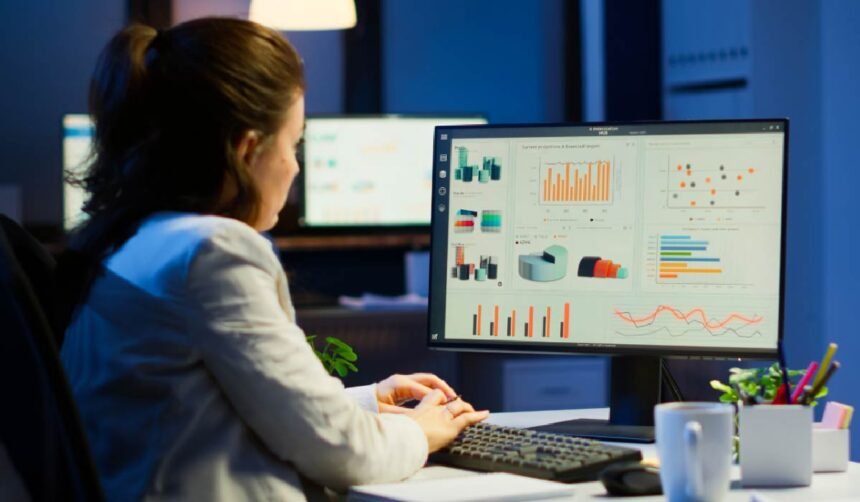
Employee monitoring used to sound like something straight out of a dystopian office drama. But in today’s world, it’s a lot less Big Brother and a lot more Big Helper. When done right, the numbers you gather can become the secret sauce for a happier, more motivated team. And yes, you can use data without creeping everyone out. So let’s talk about how to use employee monitoring statistics to enhance productivity and support your team.
-
Spot Workload Bottlenecks Before They Cause Meltdowns
Every team has those chaotic weeks when tasks pile up like laundry nobody wants to fold. The difference between a minor mess and full-on burnout often comes down to timing. Monitoring data helps you see:
- When workloads spike
- Which tasks take longer than expected
- Where project handoffs get stuck
Instead of waiting for someone to say, “I’m drowning,” you already know the tide is rising. That means you can redistribute tasks, adjust deadlines, or bring in extra support before anyone even has to ask.
-
Identify Peak Productivity Hours
Everyone has a “zone” time. For some, it’s early morning “don’t talk to me yet” hours. For others, productivity doesn’t kick in until their third cup of coffee. Monitoring patterns helps you uncover these productivity rhythms.
- Are your developers doing their best work at 10 p.m.?
- Does your customer support team peak mid-afternoon?
- Do meetings always fall right during the most productive hour of the day?
Knowing this lets you schedule deep-work periods or collaborative tasks more strategically. Instead of fighting natural cycles, you work with them and you get more done with less effort.
-
Improve Processes Without Guesswork
Teams often know a workflow isn’t working, but they can’t always explain why. Monitoring data highlights:
- Repeated task redundancies
- Tools slowing people down
- Inefficient approval chains
- Where constant context-switching is killing focus
Instead of guessing where the bottleneck is, you can pinpoint it like a productivity detective. And once you fix the underlying issue, your team feels the difference instantly.
-
Celebrate the Right Wins
Teams are often praised for the wrong things: long hours, frantic multitasking, or “powering through” lunch. With the right data, you can shift the focus to healthier, more meaningful achievements:
- Reduced error rates
- Faster turnaround times
- Improved consistency
- Smarter prioritization
-
Give Employees Better Self-Awareness Tools
Monitoring isn’t only useful for managers. Employees actually benefit a ton from seeing their own patterns. Imagine giving your team insights such as:
- “You do your best work before noon.”
- “You spend most of your interruptions between 3–4 p.m.”
- “You completed recurring tasks faster this month.”
Self-awareness leads to self-correction. People naturally adjust when they understand where their focus goes, how much time meetings consume, or which tasks drain them the fastest. Best of all? It feels empowering, not punitive.
-
Strengthen Remote and Hybrid Collaboration
Remote work is amazing, until four people accidentally start working on the same thing. Monitoring statistics help you:
- Track task ownership
- Reduce duplicate work
- Ensure visibility across time zones
- Keep everyone aligned on progress
Instead of micromanaging, you keep the workflow transparent so everyone knows who’s doing what. It leads to smoother communication and far fewer Slack messages that could have been avoided.
Final Thoughts
The difference between constructive monitoring and invasive oversight is communication. Let your team know why you’re gathering data, how it benefits them, and what you won’t do with it. When people feel respected and informed, monitoring becomes a tool for empowerment rather than surveillance. And when used thoughtfully, it can genuinely enhance your team’s productivity and morale.