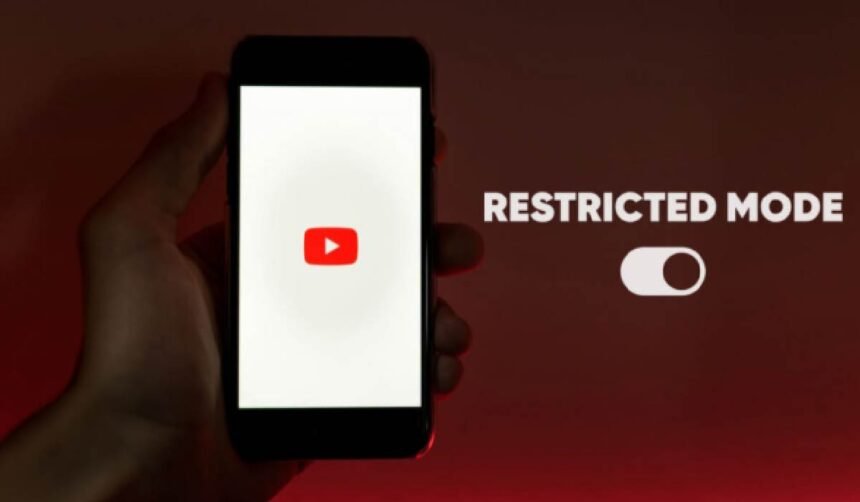
YouTube is the number one video platform of the world, where educational content, entertainment, news, and expressions are delivered by billions of creators and viewers. However, even though you find it everywhere in the world, lots of users in the world are not at freedom of accessing YouTube. The varying accessibility by location is infinitely different, and it has led to digital disparities whereby citizens in certain nations have unlimited access and others are entirely denied access to the platform. Knowing the reasons behind these limitations can be used to understand why YouTube connectivity has become a burning international connectivity problem that has impacted billions of individuals worldwide.
Censorship by Government and Political Control
The greatest impact of the restrictions in YouTube is the censoring of the government to regulate the flow of information and manifest opposition. Some countries such as China, Russia, Iran and Turkey have introduced network level blocking of YouTube completely blocking out any content no matter what the nature of the same is. Such governments consider YouTube as one of the platforms through which they can disseminate information that they have no control over and therefore total blocking is better than selective blocking of content.
During politically sensitive times, such as elections or protests or other events, which they consider to be threatening to them, authoritarian regimes tend to increase blocking. Overnight, the citizens in these areas are denied access to educational tutorials, entertainment, and communication tools depending on the decision of the government on censorship. Other nations have partial restrictions of YouTube, restricting particular types of content or channels, allowing the rest free access, which results in erratic restrictions that cause certain video to be loaded and others to be blocked.
Content Licensing and Geographic Distribution
In addition to the government mandate, YouTube itself has its geographic restrictions, which are determined by content licensing deals. Copyright holders such as music labels, film studios use licensing to ensure that they only serve videos in certain areas at the same time, thus YouTube cannot serve the same videos everywhere. The same music video that has been licensed to be distributed in North America cannot legally be served to European users. YouTube does not simply show limited content, but it completely blocks the access of users who do not belong to licensed territories.
Such licensing prohibitions confuse honest consumers who want to have access to information that is present in the rest of the world yet limited in their location. Geographic licensing policies by the copyright owners, aimed at maximizing revenue by pricing content differently in different geographic locations, establish fake scarcity that exasperates customers who have been paying to gain access to internet without the capacity to access any of the content found in the world market.
Network and Institutional Blocking
In schools, places of work and casual institutions often block YouTube to curb bandwidth usage, deter distractions or even organizational policies. Instead of applying a granular control, network administrators block the entire YouTube instead of controlling the content people can go through on YouTube on the basis of whether it is educative or entertaining. This institutional blocking does not allow students to get access to the educational tutorials, and researchers to get access to the relevant content.
ISP-Level Throttling and Filtering
A network level blocking or throttling of access to YouTube is implemented by some internet service providers, usually on the grounds of bandwidth management. This screening can make YouTube practically unusable with the speed of connection reduced even when it is not blocked.
Overcoming the Problems of Access Restriction
Geographic and network-level constraints are real obstacles to the access of information and digital equality. The restrictions can be overcome with solutions such as unblock Youtube services with VPN technology that will hide the location of the user and redirect the traffic to the servers located in open areas. With a seeming ability to visit the YouTube site in nations which have no censorship, the user circumvents state censorship, license limitations and blockages by institutions which block the legitimate entry.
The VPN services that provide the access to the servers in 40+ countries allow the users to seem to be connected to the unrestricted areas overcoming the geographic lock and ensuring the full security and privacy of the traffic with the encryption of the traffic.
The Digital Divide Reality
Limits in access to YouTube generate real digital divides where a basis to access information lies solely by geographical happenstance of birth. The citizens of limited areas are not free to find educational content, entertainment, and communication tools because of limited availability. Having this knowledge of these restriction causes, one can understand how the barriers to technology can preserve information inequality even though the internet has a hypothetical promise of universality.