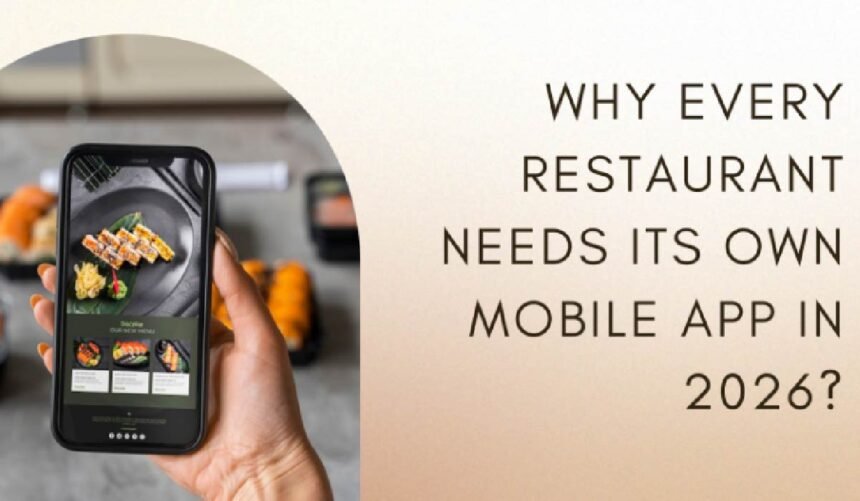
The restaurant industry has undergone a dramatic transformation over the past few years, with digital ordering, contactless payments, and mobile-first customer experiences becoming the new standard rather than the exception.
In 2026, having a mobile app is no longer a luxury reserved for large chains; it’s a necessity for restaurants of all sizes looking to stay competitive, build customer loyalty, and maximize revenue.
As consumer behavior continues shifting toward convenience and personalization, restaurants without their own mobile apps risk losing customers to competitors who offer seamless digital experiences.
This shift isn’t just about keeping up with trends; it’s about meeting customers where they are and providing the frictionless service they now expect from every dining experience.
Enhanced Customer Convenience and Accessibility
Modern diners prioritize convenience above almost everything else when deciding where to order food. A dedicated mobile app puts your restaurant directly in customers’ pockets, making it effortless for them to browse menus, place orders, and track deliveries without navigating through third-party platforms.
Unlike aggregator apps, where your restaurant competes with dozens of others, your own app creates a direct channel where you control the entire customer experience from start to finish.
Mobile apps eliminate common friction points in the ordering process. Customers can save their favorite orders, delivery addresses, and payment information for one-tap reordering. They can schedule orders in advance for pickup or delivery at specific times, accommodating their busy schedules.
Push notifications keep them updated on order status, special promotions, and new menu items without requiring them to actively check for updates. This level of convenience builds habit-forming behavior where customers naturally turn to your app whenever hunger strikes.
Personalized Customer Experience
Your restaurant app becomes smarter with every interaction, learning customer preferences and ordering patterns to deliver increasingly personalized experiences. The app can recommend dishes based on previous orders, dietary preferences, and popular items among similar customers.
Personalized promotions targeting individual tastes and ordering frequency make customers feel valued while driving higher conversion rates than generic mass marketing.
Partnering with a specialized Restaurant App Development Company ensures these personalization features are implemented effectively using advanced algorithms and customer data analytics.
Expert developers can integrate recommendation engines, customizable menu filters for dietary restrictions, and intelligent upselling features that enhance average order values while genuinely improving the customer experience.
Direct Customer Relationships and Data Ownership
Third-party delivery platforms may bring volume, but they also stand between you and your customers, owning the relationship and the valuable data that comes with it. When customers order through your own app, you gain complete access to ordering patterns, preferences, feedback, and contact information.
This data becomes your most valuable asset for making informed business decisions about menu optimization, pricing strategies, inventory management, and marketing campaigns.
Direct relationships mean you can communicate with customers on your terms through push notifications, in-app messages, and email campaigns without paying platform fees or competing for attention.
You control the messaging, timing, and frequency of communications, building brand recognition and loyalty that extends beyond individual transactions. Customers become your customers rather than shared users of a delivery marketplace.
Reduced Dependency on Third-Party Platforms
While third-party delivery platforms provide reach, they come with significant drawbacks: commission fees ranging from 15-30% per order, limited control over customer experience, and no direct access to customer data.
These platforms also frequently change their algorithms, fee structures, and policies in ways that can dramatically impact your visibility and profitability overnight.
Your own mobile app reduces this dependency, allowing you to capture orders directly without paying hefty commissions. Even if you continue using third-party platforms for discovery and reach, your app becomes the preferred ordering method for loyal customers through exclusive deals, loyalty rewards, and fee-free ordering. Over time, this shift from platform-dependent to platform-supplemented operations significantly improves profit margins.
Increased Revenue Through Loyalty Programs
Mobile apps provide the perfect infrastructure for sophisticated loyalty programs that drive repeat business and increase customer lifetime value. Digital loyalty programs are more effective than traditional punch cards because they’re always accessible, automatically tracked, and can offer tiered rewards that incentivize higher spending.
Customers who participate in loyalty programs typically spend 12-18% more per transaction and order more frequently than non-members.
Your app can gamify the dining experience with points, badges, achievements, and exclusive member benefits that create emotional connections beyond the food itself.
Limited-time challenges, referral bonuses, and birthday rewards keep customers engaged and give them reasons to choose your restaurant over competitors. The data from loyalty program participation also provides invaluable insights into what motivates your best customers.
Seamless Payment Integration
Mobile apps streamline the payment process with saved payment methods, mobile wallets, and one-click checkout that removes barriers to purchase.
The easier you make it to pay, the higher your conversion rates and the larger your average order values. Apps can also facilitate contactless payment options, split bills among groups, and integrate with corporate meal allowance programs that appeal to lunch crowds.
Working with an experienced Software Development Company in Dallas or your local area ensures your payment systems are secure, PCI-compliant, and integrated with modern payment technologies like Apple Pay, Google Pay, and emerging cryptocurrency options.
Security in payment processing builds customer trust while protecting your business from fraud and chargebacks.
Operational Efficiency and Order Management
Restaurant mobile apps don’t just benefit customers; they dramatically improve back-of-house operations and order management. Digital orders eliminate transcription errors from phone orders, reduce staff time spent taking orders, and integrate directly with kitchen display systems for streamlined preparation.
Orders arrive with complete accuracy, including modifications, special instructions, and timing preferences clearly documented.
Apps can also manage order volume more intelligently by displaying real-time wait times, temporarily pausing online ordering during rush periods, and automatically routing orders to the appropriate preparation stations.
This prevents kitchen overwhelm while setting accurate customer expectations. Integration with inventory management systems can automatically flag or disable menu items that are sold out, preventing customer disappointment and wasted staff time handling unavailable item orders.
Better Customer Feedback Loop
In-app feedback mechanisms capture customer sentiment immediately after delivery or pickup when experiences are fresh in their minds. This real-time feedback is more actionable than delayed reviews on third-party platforms and gives you opportunities to address issues before they escalate into public negative reviews.
Automated surveys can be brief and non-intrusive, asking targeted questions about specific aspects of the experience.
Positive feedback can be channeled toward public review platforms, while negative feedback can be addressed privately with service recovery offers delivered instantly through the app.
This proactive approach to customer satisfaction turns potential detractors into loyal advocates while continuously improving your operations based on direct customer input.
Competitive Advantage in Local Markets
As more restaurants launch their own apps, those without digital ordering capabilities increasingly appear outdated and inaccessible to younger demographics who expect mobile-first experiences.
Your app becomes a competitive differentiator that signals innovation, customer-centricity, and commitment to convenience. In local markets where multiple restaurants compete for the same customers, a well-designed app with exclusive features can be the deciding factor.
Your app also enables hyperlocal marketing with geofencing technology that sends notifications to nearby customers with timely offers when they’re most likely to order.
Location-based promotions during lunch hours, happy hour specials, or last-minute dinner deals can capture impulse orders from customers who might otherwise choose competitors. This precision targeting is impossible with traditional advertising and provides measurable ROI that justifies the app investment.
Conclusion
The restaurant industry in 2026 demands digital-first thinking, and mobile apps have become essential infrastructure rather than optional enhancements. From building direct customer relationships and reducing platform dependency to enabling sophisticated loyalty programs and improving operational efficiency, the benefits of owning your mobile ordering channel far outweigh the investment required.
Restaurants that embrace mobile app technology position themselves for sustainable growth, improved profitability, and stronger customer loyalty in an increasingly competitive marketplace. Those that delay risk becoming invisible to the growing segment of customers who won’t order from restaurants without seamless mobile experiences.
The question is no longer whether your restaurant needs a mobile app, but how quickly you can launch one to capture the opportunities available in today’s mobile-driven dining landscape.