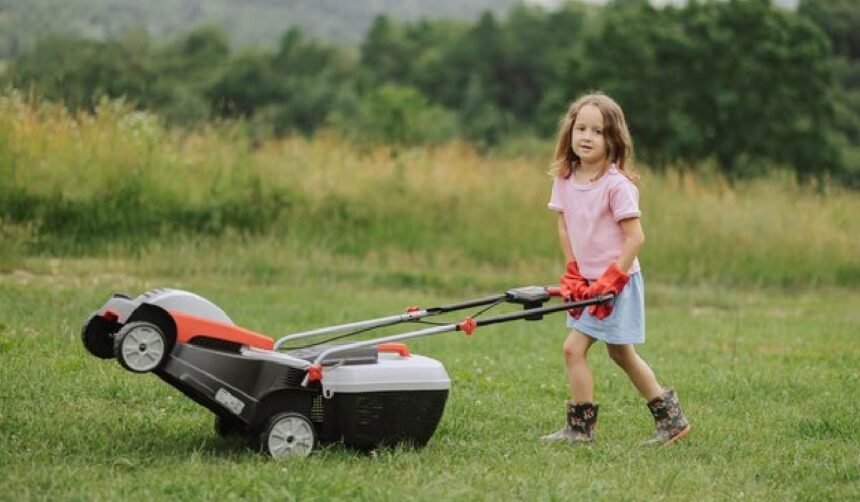
There’s a common assumption baked into lawn care culture: the more time spent working on grass, the better it looks. People who have the nicest lawns must spend hours every week maintaining them, right? But here’s what actually happens in most neighborhoods—the homeowners with the best-looking lawns often aren’t the ones working hardest. They’re the ones who’ve figured out how to work smarter, choosing approaches and tools that multiply their effort instead of just adding more hours to the weekly routine.
The obsession with time investment creates a trap where lawn care becomes increasingly elaborate without producing proportionally better results. Someone mows twice a week instead of once. They add more fertilizer applications. They spend weekends fixing minor imperfections that barely register visually. The lawn might improve slightly, but the return on all that extra time is terrible. Meanwhile, strategic decisions about maintenance frequency, tool efficiency, and realistic standards can produce excellent results with a fraction of the effort.
The Tool Efficiency Gap That Changes Everything
Most lawn maintenance time gets eaten up by inefficient tools and outdated approaches. Push mowers that require multiple passes, manual edgers that take forever to create clean lines, rakes that move leaves around more than they collect them—these create situations where lawn care consumes entire weekends not because lawns need that much attention, but because the tools make simple tasks take forever.
The shift to more efficient equipment changes the time equation completely. Modern battery-powered tools eliminate the maintenance overhead of gas engines—no more fuel mixing, carburettor cleaning, or pull-cord struggles. They start instantly and run quietly, making it possible to knock out quick maintenance tasks without the production of dragging out gas-powered equipment. For people who want to minimize mowing time entirely, options exist that handle the job automatically. A robot lawn mower runs on a schedule without human intervention, keeping grass at a consistent height through frequent small cuts rather than occasional large ones.
Tool efficiency extends beyond powered equipment. Simple upgrades to basic tools create time savings that add up quickly. A quality spreader that distributes fertilizer evenly in one pass beats making multiple trips trying to achieve uniform coverage with a cheap model. Proper edging tools that cut clean lines on the first attempt eliminate the need for follow-up touchups. These aren’t expensive professional-grade investments—they’re just functional tools instead of frustrating ones.
Why Frequent Small Efforts Beat Occasional Big Ones
The traditional lawn care model involves letting maintenance slide until problems become obvious, then spending a full Saturday fixing everything at once. Grass gets shaggy before someone finally mows. Weeds spread across flower beds before a marathon weeding session happens. Leaves pile up until raking becomes an all-day project. This approach guarantees that lawn work always feels overwhelming and time-consuming because it only happens when it’s already behind schedule.
Frequent small maintenance prevents this backlog from building. Mowing before grass gets too long takes half the time because the mower isn’t struggling through heavy growth. Spending ten minutes pulling visible weeds every week or two prevents the hour-long sessions needed when weeds take over. Clearing leaves as they fall avoids the weekend-consuming cleanup required after weeks of accumulation.
This frequent-but-brief approach also produces better visual results. Lawns that get consistent attention look maintained all the time rather than cycling between neglected and freshly worked. The grass stays at an even height. Weeds never establish enough to become obvious. Edges remain defined without the stark just-edged appearance that fades within days. The yard reads as cared for rather than alternating between messy and temporarily perfect.
The Acceptable Versus Perfect Problem
A huge amount of lawn care time goes toward improvements that don’t actually improve how yards look from any normal viewing distance. Someone spends an hour meticulously trimming every edge to perfect straightness, but from the street or even from ten feet away, slightly uneven edges look identical to precise ones. Another person obsesses over scattered dandelions across a large lawn, where the few yellow dots barely register visually unless someone walks the property looking for them specifically.
The gap between acceptable and perfect is where most wasted time lives. An acceptable lawn looks maintained—grass is cut to consistent height, major weeds are controlled, edges are reasonably defined, and obvious debris is cleared. A perfect lawn looks identical to acceptable from any normal viewing distance but requires exponentially more time investment to achieve marginal improvements that mostly matter to the person doing the work.
This doesn’t mean accepting a neglected-looking yard. It means recognizing when additional effort stops producing visible results. The first pass with an edger creates defined borders that dramatically improve appearance. The second pass to make those borders millimeter-perfect creates no meaningful visual change. Removing the biggest, most obvious weeds improves how a lawn looks. Hunting down every tiny weed in areas nobody looks at closely doesn’t.
What Actually Makes Lawns Look Good
Certain maintenance elements have outsized visual impact, while others contribute very little to overall appearance despite taking significant time. Understanding this imbalance allows concentration of effort where it matters most and elimination of low-value tasks.
Consistent mowing height creates the biggest single visual improvement. Grass cut to even height across the whole lawn looks maintained regardless of whether it’s perfect grass or average turf. Conversely, expensive grass that’s mowed irregularly with uneven results looks neglected. The consistency matters more than the frequency—a lawn mowed every week to the same height looks better than one mowed twice a week with random height variations.
Clean edges along hardscaping provide the second major visual impact. Defined borders between grass and driveways, sidewalks, and patios create the impression of intentional maintenance even if other areas aren’t perfect. Fuzzy, undefined edges make even well-maintained lawns look sloppy. Edging doesn’t need weekly attention—every two or three weeks maintains definition without excessive time investment.
Cleared hardscaping surfaces contribute significantly to tidy appearance. Driveways, walkways, and patios free of grass clippings, leaves, and debris look maintained. These same surfaces covered in organic material look messy regardless of how perfect the adjacent lawn is. Quick clearing after mowing or as part of routine maintenance takes minutes but has major visual impact.
Weed control in high-visibility areas matters more than total weed elimination. Weeds near the front entrance, along the street-facing border, and in prominent beds register visually. Weeds in the back corner nobody sees or in areas barely visible from normal viewpoints don’t affect how maintained a property looks. Focusing weed control effort where people actually look creates better results with less work than attempting weed-free status everywhere.
The Maintenance Level That Actually Works
Different properties and lifestyles need different maintenance levels, but most people default to whatever their neighbors do or whatever feels like proper homeownership regardless of whether that level makes sense for their situation. Someone with a tiny yard might spend hours on elaborate maintenance that a larger property with simpler needs could skip entirely.
Finding the right maintenance level starts with identifying what matters for how the property gets used. Families who use the backyard constantly for play and entertainment need functional, durable grass more than perfect aesthetics. Properties in neighborhoods with visible front yards but private backyards can focus effort on street-facing areas and relax standards elsewhere. Homes with extensive landscaping might need minimal lawn work but more attention to beds and plantings.
The schedule matters as much as the tasks. Weekly mowing during peak growing season prevents grass from getting ahead of maintenance capacity. Biweekly edging keeps borders defined without excessive time investment. Monthly fertilizing during active growth supports healthy turf without creating the accelerated growth that requires more frequent mowing. These frequencies can adjust based on growth rates, weather patterns, and personal tolerance for slightly longer grass between cuts.
Making Time Reduction Actually Work
Moving to lower-time maintenance requires intentional changes rather than just doing less and hoping for the same results. The reduction comes from efficiency improvements and strategic choices, not from neglect.
Tool upgrades provide the most immediate time savings. Replacing slow, frustrating equipment with functional alternatives cuts task time substantially. This doesn’t require buying top-tier professional gear—mid-range consumer equipment that actually works well creates major improvements over cheap tools that barely function.
Adjusting maintenance frequency to match actual needs rather than arbitrary schedules prevents both over-maintenance and the catch-up work that comes from letting things slide too long. Grass doesn’t need cutting on a fixed schedule—it needs cutting when it gets long enough to look shaggy or create clumps when cut. Observing actual growth patterns and adjusting accordingly saves time while maintaining appearance.
Accepting good-enough results in low-impact areas frees time for high-impact maintenance. The small weeds in the rarely-seen side yard don’t need immediate attention. The slight unevenness in the back corner where nobody looks doesn’t require fixing. Saving that time for maintaining the visible, important areas produces better overall results than trying to achieve perfection everywhere.
The goal isn’t minimal lawn care—it’s optimal lawn care. Enough attention to maintain appearance and health, without the excessive time investment that produces diminishing returns. Most lawns can look genuinely good with far less weekly time than people assume, as long as that time gets spent on the tasks that actually matter.