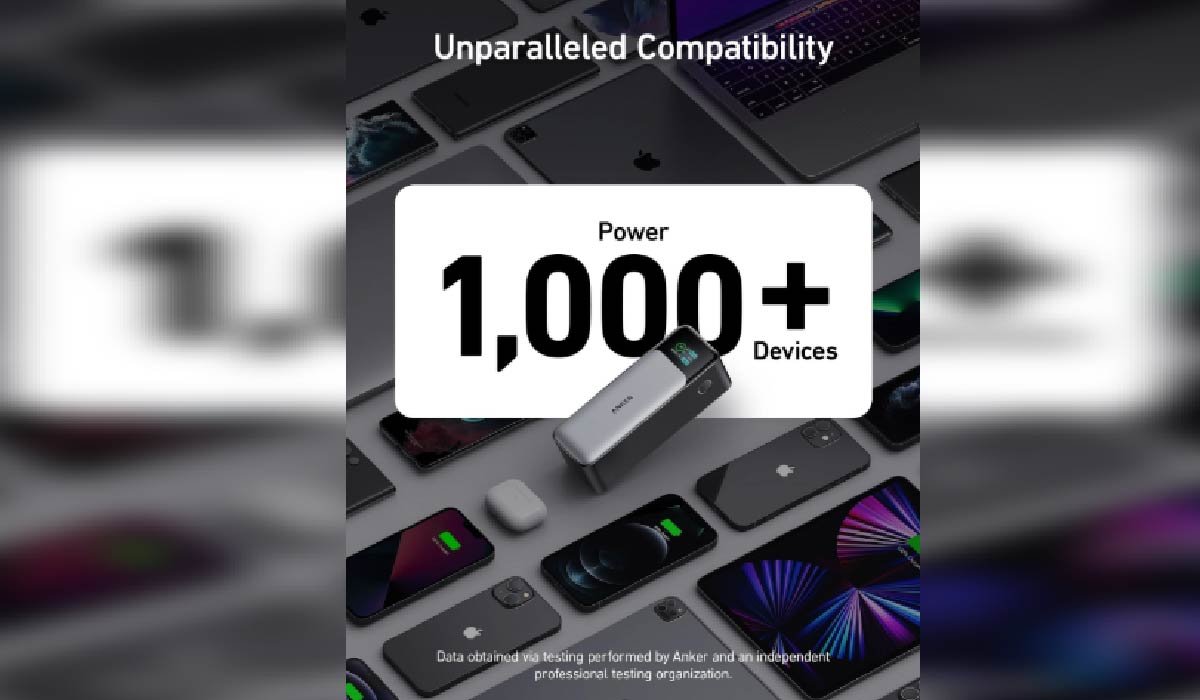
Never before has there been more need for a power bank that can be trusted. As the use of smartphones, tablets, wearables, and even laptops become increasingly power-hungry, the demand to be able to charge them quickly and on the go increases. By the year 2025, portable chargers have become advanced energy sources, featuring increased speeds of charging, better power transfer security, and much better battery life. Being a traveler, I have learnt not to select a portable charger based on the largest battery size, but rather on a balanced technology device that best suits your style and charging requirements.
This paper offers an analytical depth into the existing power bank market including design, performance, charging technology, and usability in the real world to assist the user make an informed decision.
Why the Power Bank Has Become an Essential Lifestyle Gadget
Even in 2025 the euphemistic concept of a portable charger has changed. Individuals depend on their mobile devices in remote work, scholarly studies, communication and entertainment. Consequently, power banks have changed to be used in emergencies and become daily needs.
The emergence of workplaces and online classes requires continuous power among students and workers. An empty battery is not just a nuisance any longer because it may impact meetings, assignments, and even a significant workflow. That is the reason why the current portable chargers focus on efficiency, speed and long-life.
I had used a power bank with a memory of 20,000mAh to flash charge my phone, earbuds, and smartwatch before I even arrived at the hotel on one of my out of city trips. This actual case in point explains why battery capacity and power output is more important today compared to a few years ago.
Key Features Defining the Best Power Banks in 2025
Capacity is no longer a measurement that is simply gauged with the modern portable charger. Rather, technology has challenged the performance and safety limits. Analytical assessment discloses that it has a couple of distinguishing features:
Fast Charging and USB-C Dominance
USB-C Power Delivery (PD) is the standard that will lead the industry in 2025. It promotes quicker, painless as well as dependable charging. A majority of the modern-day laptops have switched to USB-C charging, which means that large power banks can be used to replace the massive brick adaptors.
The larger wattage outputs of 30W, 45W and even 67W allow users to charge their tablets, MacBooks, ultrabooks, and up-end smartphones without losing any of their power. This change has refined the significance of the use of power banks which aid in the process of fast charging of multiple devices.
Compact Designs With Higher Energy Density
The next significant trend is high-energy battery cells. Lithium-polymer and sophisticated lithium-ion materials are the new materials used by brands in delivering more power in smaller sizes.
In 2025, any 10,000mAh portable charger would be the same weight as a 5,000mAh version of the same that existed five years prior. That is an immediate consequence of the engineering advancements, superior thermal control, and smarter systems of power distribution.
Smarter Safety and Thermal Controls
With the increased power of portable chargers, it is important to have integrated chipsets. Safety systems now include:
- Overcharge protection
- Temperature monitoring
- Adaptive current control
- Short-circuit prevention
The technologies minimize the risk of overheating, provide a longer battery life, and the conditions of the stable charge, which makes the process in the modern power banks much safer than the older generations.
Impact of Usage Scenarios on Power Bank Performance
To form an analytical interpretation of power bank performance, it is important to assess how the users deal with their devices on a daily basis. Undergraduate students can be more interested in light and pocket size chargers, whereas the travelers or the digital workers may want to have high capacity power banks that can recharge laptops.
As an illustration, I have tried various models when I am working at the cafes, airports, and even on the public transport when I am working remotely. The distinction between a 20W and 45W USB-C device can be seen at a glance once one sets to charge a laptop on the road. A low output charger will just retard the device but a high wattage portable charger will actually retain the device functional and productive.
In the same manner, players who use handheld devices such as the Nintendo switch or the Steam Deck get the advantage of power banks that are slenderly tuned to high wattage and constant current supply.
How to Choose the Right Portable Charger in 2025
The features must be matched to the user needs and thus the choice must be made. The fundamental considerations are capacity, number of ports, number of portability, charging standards and output wattage. Knowledge of these factors analytically enables users to use performance to the full advantage and prevent any compatibility.
To students, the power bank size can be 10,000mAh, which is small. To travelers, the 20,000mAh and above capacities guarantee unlimited power supply to cameras, laptops and phones. Persons in energy-consuming careers, creators, developers, or field researchers, can enjoy the higher rating of higher models that provide a 45W-100W output.
The experiment of testing different portable chargers in diverse settings has shown that all charging devices should have equivalent functionality when it comes to modern devices (that is, both with and without USB-C PD compatibility) and, thus, they are the most future-proof choice.
Final Thoughts
This will be more developed, efficient, and necessary in portable chargers in 2025. Being a student who needs reliable back-up power or a traveler because you need to use several gadgets at the same time or a professional working anywhere, the right power bank will greatly influence your productivity. The knowledge of capacity, charging technology and performance metrics will enable buyers to select models that provide reliable, safe and fast charge on all level devices.
FAQS
Which capacity should be used on a daily basis?
A model of 10,000mAh is usually adequate in smartphones and mini-sized gadgets and provides one to two full charges.
Is it possible to charge a laptop using the power bank?
Yes, but it should be able to sustain USB-C PD with a wattage rate of your laptop needs or beyond.
Are power banks destroyed with time usage?
It is true that all the lithium-based batteries deteriorate, however, the modern portable chargers with sophisticated chipsets wear out more gradually and continue to be efficient.