
Selecting, Installing, and Maintaining Handrails for Stairs in Residential Spaces

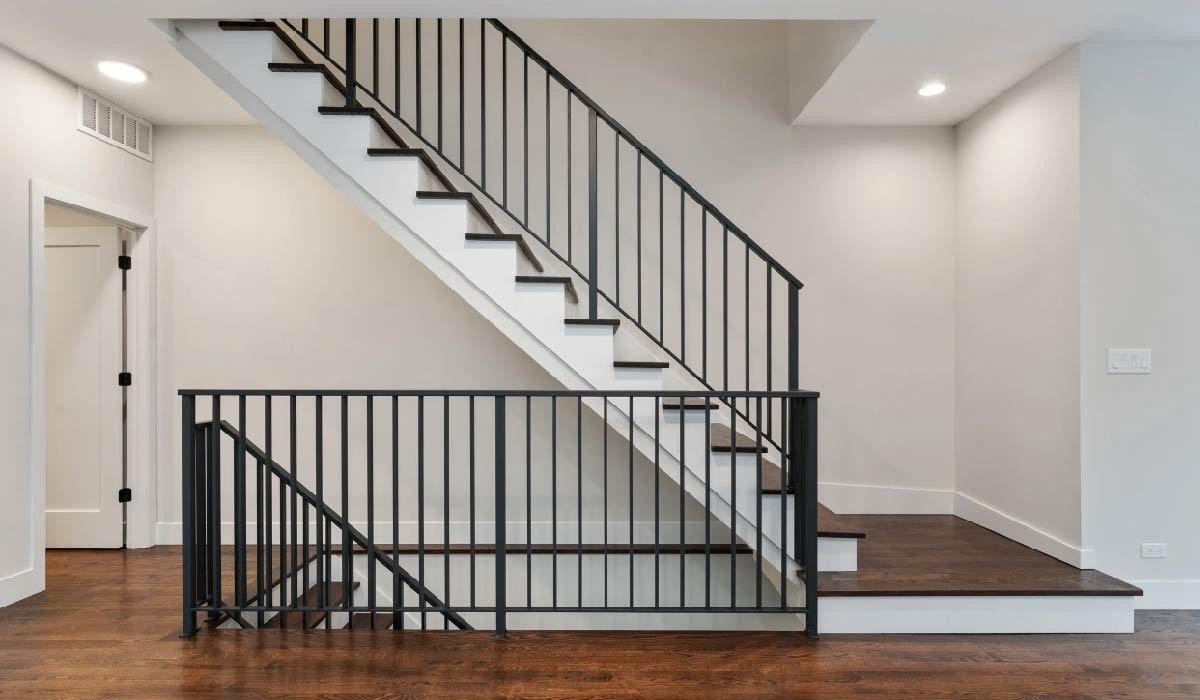
The handrails are among the most significant safety and a design feature of any home space. They direct movement, give support, stop falling, and alter the visual appearance of the stairs. So if you are either constructing a new house or remodeling an old one, it is imperative to take the right handrail, put it up in the correct way, and store it in the long run to be able to make a beautiful and safe environment.
Since staircases grab the eye naturally, they do this by connecting the different areas of living, showing the architectural flow, and most of the time, becoming the visual landmarks of the house. Thus, the handrail has to perform both functional and aesthetic roles. Apart from being safe, it has to go with the interior design and be durable for years to come. Homeowners who put their minds into handrails normally end up having not only safer but also more elegant and harmonious stairs.
Safety, Comfort, and Local Requirements
Even though the design of a handrail is an important factor in its selection, safety regulations are the ones that determine how it has to be installed. It is common for building codes to lay down specifications like the minimum heights, the distance between the posts, and the loads that the handrail should be able to bear. These rules are very important in stopping accidents from happening and in making sure that handrails are useful for people who need them the most – kids, adults, the elderly, and people with mobility impairments.
Moreover comfort is very much at the center of the focus as well. The handrail is to be held in a natural way without the user having to think about it. The shape of the hand should be the one that fits, and the place where the hand is to be moved should be the one that the user can move without thinking. The one feeling too wide, too narrow, too high, or too low can frustrate users and diminish the staircase experience. By trying out the grip before installation, homeowners can be sure that there will be no problems with usability in the future.
Installing Handrails Correctly
The installation of a handrail system is of utmost importance to its safety and the time it will last. A handrail that is of the highest quality will still fail if it is not installed correctly. The mounting brackets have to be perfectly aligned so that there is no wobbling, and the rail has to go with the angle of the stairs in a very smooth way. Every connection point has to be fixed to the solid structural framing in such a way that the handrail will be able to support the weight and the use that it will have during the day.
Usually, professional installation is advised, particularly in the case of metal or custom-fabricated handrails. To install metal safely, one must have specialized tools and knowledge. The angles have to be very precisely measured, and the welds or joints have to be clean and secure. The railing, thus, will be stable for decades.
Many homeowners spend time researching durable railing options before choosing the right one, which often leads them to explore specialized providers offering high-quality Wrought Iron Handrails that combine strength, design flexibility, and long-term performance. These kinds of solutions help ensure that the handrail becomes a lasting and visually appealing feature of the home.
Maintaining Your Handrail for Long-Term Performance
We cannot separate the everyday use from handrails. It is quite inevitable that the users’ (hands) oils, the cleaners, and the moisture will influence the handrails even if the latter are rubbed with some friction. Indeed, the upkeep of handrails depends on the material, but generally, remark steel and wrought iron as the most durable ones.
Indeed, metal handrails are very easy to care for. Periodic washing rejuvenates their appearance, while infrequent check-ups are for ensuring the firmness of the brackets and joints. Powder-coated surfaces are practically impervious to micro-scratches and rust which is a great advantage for people living in humid or salty air areas. In the case of metal handrail wearing, it is easy and quick to perform a finish or a coat renewal so that it is almost indistinguishable from the original.
Considering Interior and Exterior Consistency
When you have stairs inside the house and outside the house as well, using the same handrail material for both the indoor and outdoor stairs can visually connect the two areas. Metal railings can smoothly go from inside the house to outside the deck, patio, or garden stairs. Metal railings are also resistant to all kinds of weather, flexible in appearance, and able to endure without any problem even if there is a sudden change in temperature or moisture.
Handrails as Architectural Statements
Handrails are often considered as an essential part of a home. However, apart from their basic function, they have the power to significantly change the look of the residential environment. A stylish steel or wrought-iron handrail, for example, is able to lift the class of the stairway, making it look like a piece of art which in turn beautifies the whole interior.
Final Thoughts
The whole process of picking, putting in, and taking care of a handrail might look like the tiniest detail of your home design, yet it amazingly affects the safety, ease, lifespan, and even the aesthetic balance of your place. The most notable effect is that of just one item: the material mainly steel or wrought iron used in making your metal railings which will give not only stylish looks but also durable service and less cleaning. An accurate setup thus safety and solidness of the structure are assured, and if you keep on taking care of it, it will remain a neat and functional accessory for a long time.