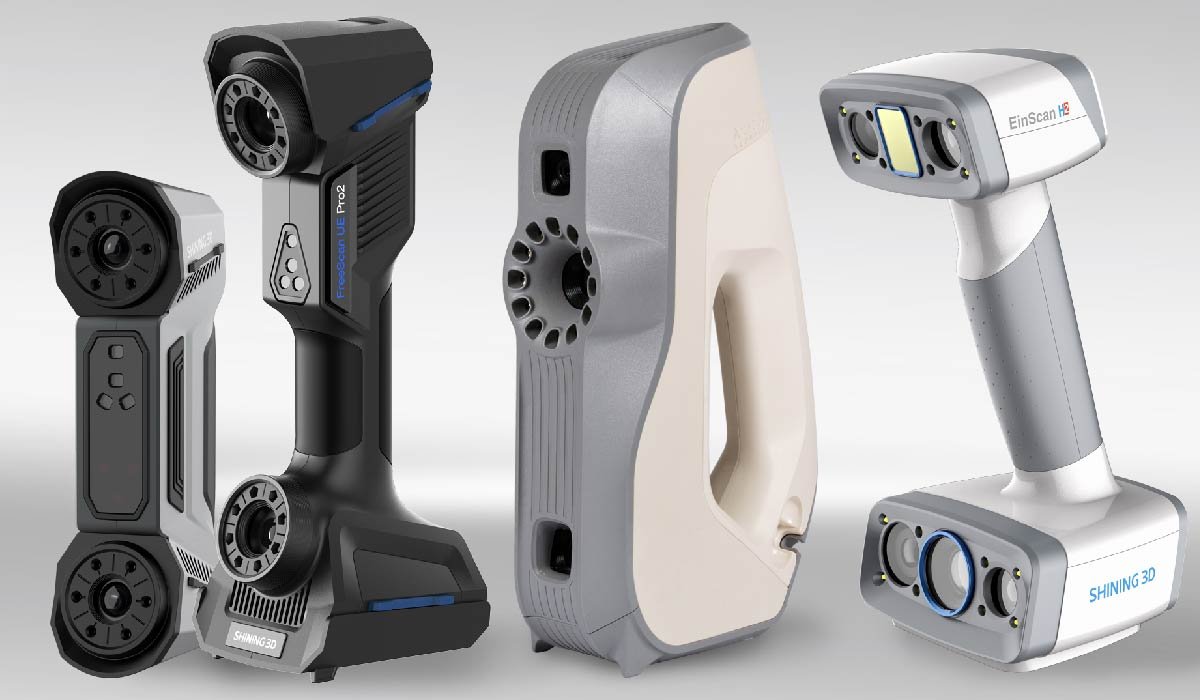
In the era of rapid technological advancements, the handheld 3d scanner has emerged as a game-changing tool in various industries. From engineering and manufacturing to healthcare, art, and education, handheld 3D scanners enable the accurate capture of real-world objects and environments, converting them into precise digital models. Unlike traditional stationary scanners, handheld devices offer unmatched mobility, flexibility, and efficiency, making them ideal for professionals and hobbyists alike.
This article explores the features, types, applications, benefits, and considerations of handheld 3D scanners, providing a detailed guide for anyone looking to adopt this transformative technology.
What is a Handheld 3D Scanner?
A handheld 3D scanner is a portable device designed to capture the three-dimensional shape and details of physical objects and convert them into digital models. Unlike desktop or industrial scanners, handheld devices allow users to move freely around the object, making it easier to scan large or complex items.
Handheld 3D scanners use advanced technologies such as structured light, laser scanning, or photogrammetry to capture accurate geometry, surface texture, and sometimes color. These digital models can then be used for applications like 3D printing, reverse engineering, quality control, or virtual archiving.
How Does a Handheld 3D Scanner Work?
The operation of a handheld 3D scanner involves three main stages:
- Scanning the Object
Handheld scanners project light patterns or laser beams onto the object’s surface. Sensors detect the reflection or distortion of the light to capture the object’s shape. Users can move the scanner around the object to ensure all sides are captured, creating a comprehensive 3D model.
- Processing the Scan Data
After capturing the raw data, specialized software processes the scans. It removes noise, fills gaps, and generates a clean, editable 3D model. These models can be exported in formats compatible with CAD programs, 3D printers, or animation software.
- Utilizing the 3D Model
Once processed, the 3D model can be used for various purposes. Engineers may use it for reverse engineering, designers for prototyping, healthcare professionals for custom prosthetics, and artists for digital replication of sculptures. The combination of scanning and digital modeling streamlines workflows and enhances productivity.
Key Features of Handheld 3D Scanners
Modern handheld 3D scanners offer a range of features to enhance accuracy, usability, and versatility:
- High Precision: Sub-millimeter accuracy captures fine details of objects.
- Portability: Lightweight and compact designs allow scanning in different environments or on-site.
- Speed: Advanced devices can quickly capture large objects without sacrificing detail.
- Color and Texture Capture: Some scanners can record surface color and texture for realistic digital models.
- Software Integration: Comes with software for processing, editing, and exporting models in multiple formats.
Types of Handheld 3D Scanners
Handheld 3D scanners are designed for various applications and requirements:
Structured Light Scanners
These scanners project a light pattern onto an object and capture distortions to create a 3D model. They are ideal for medium to high-precision applications and can quickly scan surfaces with intricate details.
Laser Scanners
Laser-based scanners are highly accurate, using laser beams to measure distances on an object’s surface. They are suitable for precision engineering, quality control, and industrial applications.
Photogrammetry-Based Scanners
These scanners use multiple photos from different angles to reconstruct a 3D model. They are versatile and cost-effective, though slightly less precise than laser or structured light scanners.
Applications of Handheld 3D Scanners
The portability and precision of handheld 3D scanners make them suitable for a wide range of industries:
Manufacturing and Engineering
Handheld 3D scanners are invaluable in reverse engineering, product prototyping, and quality inspection. Engineers can scan existing parts to verify dimensions, detect defects, or create improved designs.
Healthcare
Medical professionals use handheld scanners to design custom prosthetics, orthotics, and dental models. Accurate scans of patients’ anatomy enable personalized treatment plans and improved patient outcomes.
Art and Design
Artists and designers utilize handheld scanners to digitize sculptures, create replicas, and modify models digitally. In the entertainment industry, scanners help capture realistic 3D models for gaming, animation, and virtual reality.
Education and Research
Educational institutions use handheld scanners to teach design, engineering, and 3D modeling. Researchers can scan fossils, artifacts, or specimens for digital preservation and analysis.
Architecture and Construction
Architects and construction teams use handheld scanners to create precise as-built models of buildings or structures, aiding planning, renovation, and documentation.
Benefits of Using a Handheld 3D Scanner
Investing in a handheld 3D scanner provides multiple advantages:
- Portability: Scan objects anywhere without the need for large, stationary equipment.
- Efficiency: Quickly capture objects without complex setup.
- Accuracy: High-resolution scanning ensures reliable digital models.
- Versatility: Suitable for engineering, healthcare, art, architecture, and research.
- Cost-Effective: Reduces the need for multiple devices by handling objects of varying sizes.
- Digital Preservation: Objects can be archived digitally for future replication, modification, or analysis.
How to Choose the Right Handheld 3D Scanner
Choosing the right handheld 3D scanner depends on specific requirements:
- Object Size: Consider whether you will scan small items, large objects, or complex assemblies.
- Accuracy Needs: Industrial applications may demand sub-millimeter precision, while hobbyists may require less.
- Portability: Handheld scanners should balance ease of use with scanning capabilities.
- Software Compatibility: Ensure the scanner integrates with your workflow and supports 3D printing, CAD, or other applications.
- Budget: Prices vary; select a scanner that offers a balance of performance, features, and cost.
For users seeking a reliable and versatile option, this handheld 3d scanner delivers exceptional precision, portability, and software support, making it suitable for both professional and personal applications.
The Future of Handheld 3D Scanners
The future of handheld 3D scanners is promising, with ongoing innovations improving speed, accuracy, and accessibility. AI-assisted scanning, wireless connectivity, real-time processing, and user-friendly software are making these devices even more efficient. As costs decrease and performance improves, handheld scanners are expected to become standard tools in industries from design and manufacturing to education and creative arts.
Conclusion
A handheld 3d scanner is a revolutionary tool that bridges the physical and digital worlds. By capturing detailed 3D models of objects, it enables reverse engineering, prototyping, 3D printing, and digital preservation.
Modern handheld scanners combine portability, precision, and software integration, making them invaluable for professionals and hobbyists across multiple industries. Choosing the right device involves considering accuracy requirements, object size, portability, software compatibility, and budget.
For those looking for a high-performance and versatile solution, this handheld 3d scanner provides excellent results, helping users innovate, create, and preserve digital models with ease.
Integrating a handheld 3D scanner into your workflow can save time, reduce errors, and unlock new possibilities in design, engineering, healthcare, and the creative world.