
From Garage to Doorstep: What Everyone Should Know Before Moving a Vehicle

The “Great American Road Trip” is a staple of cinema and literature, but when that road trip is forced by a cross-country relocation, the romanticism quickly evaporates. Suddenly, you aren’t looking at the sunset over the Grand Canyon; you’re looking at 2,400 miles of gray interstate, fluctuating gas prices, and the mechanical anxiety of putting excessive wear on your engine.
Moving a vehicle from your current garage to a new doorstep thousands of miles away is a logistical puzzle. It involves more than just finding a driver; it involves protecting a high-value asset, navigating insurance complexities, and understanding the nuances of the transport industry. For many, the realization that driving is actually the more expensive and stressful option comes too late.
To ensure your car or bike arrives in the same condition it left, you need a strategy. This guide serves as your comprehensive roadmap to the world of vehicle relocation, from the initial quote to the final signature on the delivery report.
The Economics of Transport: Why Driving Often Costs More
The first question every mover asks is: “Should I just drive it myself?” On the surface, the cost of a tank of gas seems lower than a professional transport quote. However, an expert-level analysis reveals a different story.
1. The Odometer Penalty
Every mile added to your car decreases its resale value. If you’re moving from New York to Los Angeles, you’re adding roughly 2,800 miles in a single week. For a leased vehicle, this could result in significant overage fees. For a high-end luxury vehicle, those miles represent a measurable drop in equity.
2. The “Hard” Costs of Travel
A cross-country drive isn’t just gas. It’s three to five nights in hotels, fifteen to twenty meals, and the inevitable “road tax” of coffee and snacks. When you add the cost of a plane ticket back (if you’re moving one car while the family flies), the price gap between DIY and auto logistics services begins to close rapidly.
3. Time as a Currency
Time is the one resource you cannot earn back. A cross-country move takes 40 to 60 hours of active driving. For a professional, those are billable hours or vital time needed to set up a new home, find schools for children, or start a new job. Outsourcing the move to professional auto logistics services allows you to focus on the human side of relocation while the machine is handled by experts.
Understanding the Carrier Landscape: Open vs. Enclosed
In the transport world, your choice of “container” defines the safety level and the price point. Understanding the difference is the first step in protecting your investment.
Open-Air Transport: The Industry Standard
The most common sight on the highway is the multi-car open carrier. These trailers typically hold 7 to 10 vehicles.
- Pros: It is the most budget-friendly option and has the highest availability.
- Cons: Your vehicle is exposed to rain, snow, sun, and road debris (like rocks kicked up by other trucks).
- Best For: Daily drivers, older models, and budget-conscious moves.
Enclosed Transport: The “White Glove” Solution
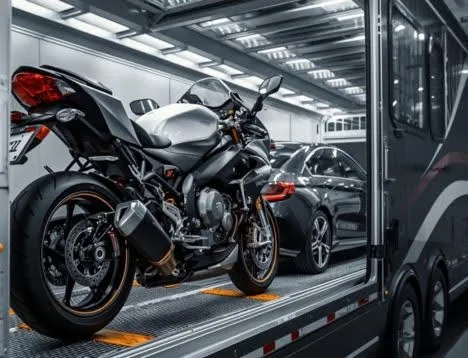
Enclosed trailers feature hard or soft sides that completely shield the vehicle from the outside world.
- Pros: Total protection from weather and debris. Increased security (thieves can’t see what’s inside). Often comes with hydraulic lift gates for low-clearance sports cars.
- Cons: Costs roughly 40-60% more than open transport.
- Best For: Luxury cars, vintage collectibles, and high-performance exotics.
The Two-Wheeled Challenge: When the Vehicle is a Motorcycle
Motorcycles present a unique set of challenges that standard car haulers often aren’t equipped to handle. Unlike a car, which is stable on four wheels, a motorcycle is top-heavy and prone to shifting.
If you need to ship a motorcycle across the country, you shouldn’t rely on a general mover who plans to “squeeze it in” between boxes. Professional motorcycle transport involves specialized equipment:
- Custom Cradles: Metal or wood frames that lock the bike in place.
- Soft-Tie Straps: Straps that secure the bike without scratching the chrome or damaging the suspension.
- Enclosed Protection: Most riders choose enclosed transport to ship a motorcycle across the country because bikes are significantly more vulnerable to weather and prying eyes than cars.
Pre-Shipment Prep: The “Garage” Phase
Before the carrier arrives at your home, your vehicle needs to be “road ready” for a trip where it isn’t actually driving. This is the most critical phase for the owner.
The Deep Clean
Wash your vehicle thoroughly. This isn’t about vanity; it’s about inspection. Dust and dirt can hide small scratches or dents. You want the vehicle’s surface to be pristine so that the pre-shipment inspection report (the Bill of Lading) is 100% accurate.
The Documentation Strategy
In the digital age, there is no excuse for a lack of evidence. Take high-resolution photos of every panel, the roof, the undercarriage, and the interior. Record a video of the engine running. If a dispute arises later, these timestamped photos are your best defense.
The Quarter-Tank Rule
Logistics companies prefer the gas tank to be at approximately 1/4 full. Why?
- Weight: A full tank of gas adds about 100-150 lbs to the vehicle. Multiplied by 10 cars on a trailer, that’s over half a ton of unnecessary weight.
- Safety: It minimizes the risk of leaks while providing enough fuel for the driver to load and unload the vehicle.
Remove Personal Items
It is incredibly tempting to pack your trunk with “overflow” items from your house. Resist this.
- Legal Risks: Carriers are licensed to move vehicles, not household goods. If the Department of Transportation (DOT) inspects the truck, they can fine the driver for “unauthorized cargo.”
- Insurance: The carrier’s insurance covers the vehicle, not your golf clubs or laptop left in the backseat.
- Theft: Personal items in a vehicle are a magnet for “smash and grab” theft at truck stops.
Navigating the Industry: Broker vs. Carrier
When you search for a quote, you will encounter two types of entities: brokers and carriers. Understanding who you are talking to is vital for managing expectations.
The Broker
A broker doesn’t own trucks. Instead, they have access to a massive database of thousands of independent carriers. They act as the “travel agent” for your car, finding the best route and price.
- Pros: They do the legwork of verifying insurance and licensing for you.
The Carrier
The carrier is the company that actually owns the truck and employs the driver.
- Pros: Direct communication with the person hauling your car.
- Cons: Limited routes. If they don’t have a truck in your area on your date, they can’t help you.
Legal and Insurance: Protecting Your Asset
Don’t assume your personal auto insurance covers your vehicle while it’s on a trailer. In many cases, it doesn’t.
Verify the USDOT Number
Every legitimate transport company must have an active USDOT and MC (Motor Carrier) number. You can verify these on the Federal Motor Carrier Safety Administration (FMCSA) website. If they can’t provide these numbers, walk away immediately.
Understanding the Bill of Lading (BOL)
The BOL is the most important document in the process. It is a legally binding contract and a condition report.
- At Pickup: The driver will mark any existing damage. You must review this carefully. If they mark a “scratch” on the door that isn’t there, correct it before signing.
- At Delivery: This is your only chance to claim new damage. Once you sign the BOL at delivery, you are stating that the vehicle arrived in satisfactory condition.
Seasonal Factors and Timing
The auto transport industry is seasonal. Understanding the “vibe” of the market can save you hundreds of dollars.
- The “Snowbird” Effect: In late autumn, thousands of retirees move their cars from the Northeast to Florida/Arizona. Prices for those routes skyrocket. In the spring, the reverse happens.
- Summer Peak: Summer is the busiest moving season. If you can wait until late September or October, you’ll often find lower rates and more flexible schedules.
- Weather Delays: If you are moving a vehicle through the Rockies or the Midwest in February, expect delays. Safety always takes priority over speed.
The “Doorstep” Experience: Receiving Your Vehicle
When the big day arrives and the truck pulls into your neighborhood, don’t rush.
- Confirm the Location: Large car haulers are often 75-80 feet long. They cannot navigate tight cul-de-sacs or neighborhoods with low-hanging trees. Be prepared to meet the driver at a nearby shopping center or wide-access road.
- The Inspection: Perform a “walk-around” in daylight. If the car arrives at night, use a high-powered flashlight or ask to move the car under streetlights.
- Check the Odometer: Ensure the mileage matches (within reason — a few miles for loading/unloading is normal).
- Sign and File: Keep your copy of the BOL for at least six months.
Conclusion: Peace of Mind is the Ultimate Goal
Moving your vehicle from garage to doorstep is a significant undertaking that requires a blend of mechanical preparation and logistical savvy. While the DIY route of driving cross-country has its charms, the reality of wear and tear, hidden costs, and time loss makes professional transport the superior choice for the modern mover.
By following a strict preparation checklist, choosing the right carrier type, and ensuring all legal i’s are dotted and the t’s are crossed, you transform a potentially stressful event into a seamless transition. Your vehicle is more than just a way to get around; it’s an investment in your lifestyle and your mobility.