Nowadays, more than 250 centralized exchanges and over 350 decentralized platforms exist. Given the overwhelming number of platforms with diverse offerings, choosing an appropriate cryptocurrency exchange is daunting.
This article provides deeper insights into cryptocurrency exchanges, how they function, their types and how to choose the right one.
What is a cryptocurrency exchange?
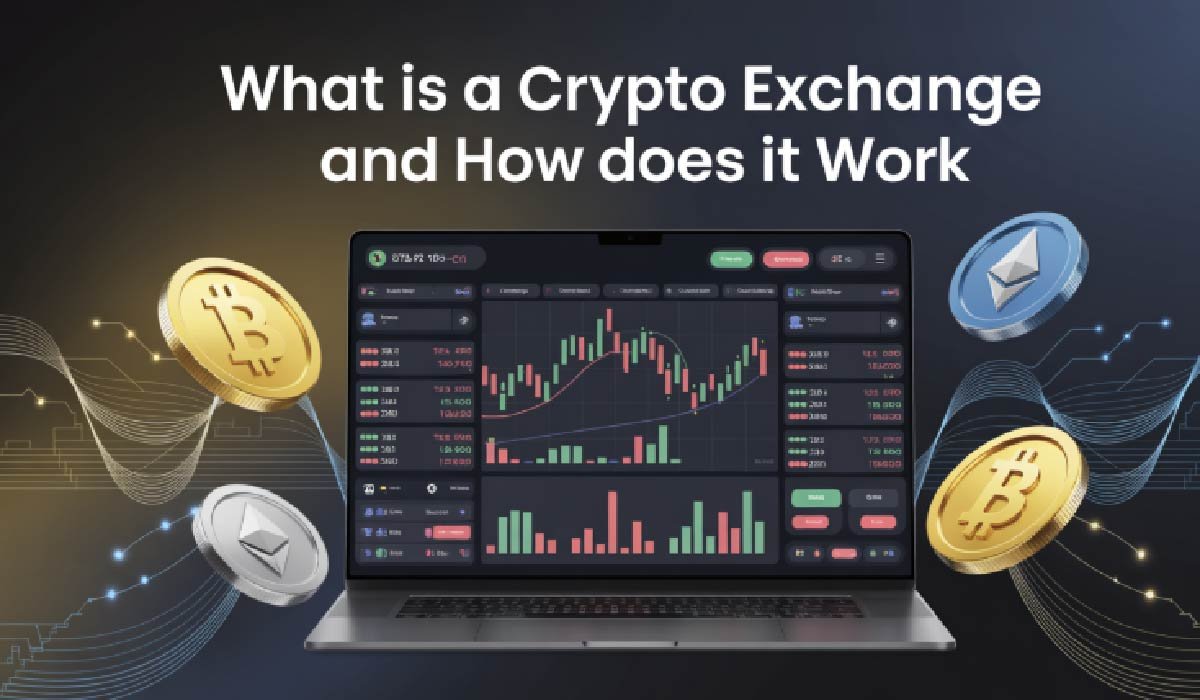
Cryptocurrency exchanges are marketplaces that enable you to buy, sell, and trade digital currencies, such as Bitcoin, Ethereum, and Polkadot. Many exchanges also allow you to trade with leverage, open crypto derivatives positions, or stake tokens. Additionally, they offer advanced tools and features, catering to both individual and institutional users with varying levels of trading experience.
How do crypto exchanges work?
Cryptocurrency exchanges match buyers and sellers, helping them trade or invest in cryptocurrencies effortlessly using advanced trading engines, order books, or mathematical algorithms. To trade on an exchange, you must create an account, complete identity verification, and make your first deposit. You also need to enable two-factor authentication, set an anti-phishing code, and whitelist withdrawal addresses to secure your account.
How to buy cryptocurrencies on exchanges
- Choose a digital asset exchange based on your needs and preferences.
- Register on the chosen platform by entering your basic details and setting up a secure password.
- Use an invitation code or link during registration to get the exchange’s bonuses for new users (optional)
- Complete the know-your-customer (KYC) process by submitting the required documents and a selfie.
- After verifying your identity, fund your account by depositing cryptocurrencies or fiat currencies.
- Select the cryptocurrency you want to buy and your preferred payment method.
- Execute the transaction.
- Check whether the purchased crypto has been credited to your account, provided the transaction was successful.
What are Centralized Exchanges?
Centralized exchanges (CEXs) are akin to conventional stock and commodities exchanges. They can also be compared to e-brokerage services as they serve as intermediaries between buyers and sellers. Moreover, CEXs are owned and managed by a central authority that fully controls user accounts and transactions. Every trade you make requires the platform’s approval. Therefore, you need to trust the exchange owners completely. Currently, Binance is the largest centralized exchange globally, while Coinbase is the best crypto exchange in the US.
Advantages
- Regulatory compliance: Most CEXs possess valid licenses to operate in different locations and are registered with regulatory authorities. They’re also required to comply with KYC and anti-money laundering (AML) policies. Thus, they mandate identity verification, especially if you want to use the platform’s advanced features and participate in reward programs.
- Account recovery: Since CEXs verify your identity and manage the private keys of your exchange wallet, account recovery becomes easier. You can access your digital assets even if you lose your login credentials.
- Liquidity: Most leading exchanges, such as Bybit and Binance, offer comprehensive liquidity. Hence, your orders will get matched faster without triggering intense price movements or loss of value. High liquidity also prevents malicious actors from manipulating the market.
- Speed: CEXs process trades faster than decentralized crypto exchanges. They offer deep liquidity and use high-performance engines to facilitate near-instant transactions with low latency.
- Features: Many centralized exchanges are feature-rich, offering multiple trading options, staking products, advanced tools, and early access to new tokens.
Disadvantages
- Security breaches: Centralized exchanges preserve customer data on central servers. Additionally, user funds required for transactions are stored in hot wallets. Hence, they’re prime targets for hackers.
- Price manipulations: Many CEXs have been accused of engaging in insider trading or manipulating cryptocurrency prices and trading volumes.
What are Decentralized Exchanges?
Decentralized exchanges (DEXs) are autonomous crypto trading platforms that operate on a blockchain network. They use smart contracts or escrow accounts to enable peer-to-peer trading and token swapping. Unlike centralized exchanges, DEXs aren’t controlled by a central authority. They provide an intermediary-free and trustless environment, where users can transact directly with each other.
Additionally, DEXs don’t require users to complete KYC verification. Hence, they’re best-suited for traders seeking privacy and anonymity. Typically, they rely on on-chain order books, off-chain order books, or automated market makers to facilitate cryptocurrency transactions. Presently, PancakeSwap is the top DEX on BSC, while Uniswap is the most well-known DeFi protocol on Ethereum.
Advantages
- Privacy: As DEXs are no-KYC exchanges, you don’t need to submit personal details, including identity and address proofs. You can start trading on these platforms by simply connecting your crypto wallet.
- Asset custody: Decentralized exchanges are non-custodial platforms, meaning they don’t store your funds. You’re in complete control of your digital assets and private keys, as funds are directly credited to your linked wallet.
- Anonymity: Since DEXs don’t preserve your personal information, nobody apart from you can access the data. Moreover, they’re censorship-resistant, as no central authority or server controls or records your data.
Disadvantages
- Limited trading pairs: DEXs support a limited number of coins and trading pairs. They don’t provide fiat on/off ramps. You can trade only crypto-to-crypto pairs.
- Lack of liquidity: Decentralized exchanges are less liquid than their centralized counterparts. Therefore, your orders may take longer to match, or transactions may fail, especially while trading lesser-known tokens. Low liquidity also creates room for market manipulations.
- Interoperability issues: You can easily swap coins that exist on the same blockchain through a DEX. However, trading crypto assets that reside on different chains or distributed ledgers is daunting and may require specialized software.
Top 10 Cryptocurrency Exchanges
| Crypto exchange | Best For | 24-hour trading Volume (as of Dec 14, 2025) | Supported coins | Trading pairs | Fees | |
| Maker | Taker | |||||
| Binance | Advanced tools, and deep liquidity | $5.65B+ | 441+ | 1,634+ | 0.1% | 0.1% |
| Bybit | Leveraged and derivatives trading | $1.63B+ | 491+ | 654+ | 0.1% | 0.1% |
| Gate | P2P trading, and vast altcoin selection | $1.55B+ | 2,139+ | 2,568+ | 0.1% | 0.1% |
| OKX | Spot trading, institutional services | $979.13M+ | 298+ | 701+ | 0.08% | 0.1% |
| Bitget | Copy trading | $1.2B+ | 638+ | 729+ | 0.1% | 0.1% |
| Coinbase | User-friendly interface and US traders | $735.2M+ | 354+ | 488+ | 0.4% | 0.6% |
| Kraken | Strong security, and tokenized stock trading | $456.57M+ | 641+ | 1,410+ | 0.25% | 0.4% |
| MEXC | Wide selection of cryptocurrencies, memecoin trading and low fees | $1.53B+ | 3,500+ | 2,571+ | 0% | 0.05% |
| Pancakeswap V3 | Perpetuals trading, farms, syrup pools | $766.28M+ | 814+ | 1,479+ | 0.02% | 0.07% |
| Uniswap V3 (BSC) | Token swapping, Liquidity pools | $237.81M+ | 1,093+ | 1,689+ | AMM-based, no maker/taker fees, 0.3% for swapping crypto. | |
Key Considerations When Choosing a Crypto Exchange
Reputation
Always choose reputable exchanges recommended by experts and the broader crypto community. To gauge the reliability of an exchange, evaluate user feedback on review platforms like Reddit and Trustpilot. You can also refer to top aggregator sites such as CoinMarketCap or CoinGecko. These sites rank exchanges based on trading volumes, liquidity, and traffic. Overall, the higher the customer ratings and rankings of an exchange, the better.
Security and regulatory compliance
The crypto space has been marred by scams and fraud. Mt. Gox, once considered the largest Bitcoin exchange, lost over 650,000 – 850,000 Bitcoins in a hack, leading to its closure. In recent years, prominent exchanges like Kucoin and Binance faced regulatory scrutiny for alleged violations of KYC/AML norms.
You should choose secure, transparent, legally-compliant, and trustworthy exchanges, preferably with a clean track record. Moreover, if you want to trade on a CEX, check whether it’s licensed by a recognized body.
DEXs are generally more secure. However, they aren’t registered with regulatory authorities. Hence, you must rely on user reviews, aggregator sites, and other data sources to verify the trustworthiness of a DEX.
Type of cryptocurrency exchange
Centralized exchanges are usually legally-compliant and registered with regulatory bodies.
They often have a physical address, making it easier to recover your assets or involve regulators if a hack occurs. They’re also regularly audited and have cutting-edge security features. Thus, if you prioritize security and compliance, CEXs are your best bet.
DEXs are non-custodial platforms that utilize smart contracts to facilitate peer-to-peer transactions. However, they may not have a physical address and aren’t registered with any regulatory body. Additionally, traders must be well-versed in blockchain mechanics and cryptocurrency concepts to trade on DEXs. Hence, decentralized exchanges are best-suited for advanced traders who prefer privacy, autonomy, and anonymity.
Trading fees
To maximize your gains, it is essential to select a platform that charges competitive fees. Most major exchanges like Binance and OKX follow a tier-based fee structure. Your maker/taker fee progressively decreases as your trading volume increases. Additionally, these exchanges levy zero fees for depositing cryptocurrencies.
Contrarily, you may incur higher fees when trading on DEXs. Since the trades are executed on-chain, you need to pay gas or network fees. During periods of high demand, the fee may skyrocket due to network congestion. Besides, you need to pay a fee while swapping tokens and adding/reducing liquidity. If an order book is involved, you must also incur maker/taker fees.
Other factors
Analyze every platform in terms of supported coins & trading pairs, features, customer support, liquidity, and user interface. Choose exchanges with diverse offerings, an intuitive interface, a vast coin selection, comprehensive liquidity, and prompt customer service.
How is a cryptocurrency exchange different from a cryptocurrency wallet?
Crypto exchanges facilitate the buying, selling, trading, and staking of cryptocurrencies. Conversely, cryptocurrency wallets help you send, receive, transfer, store, and manage your digital assets across blockchains in a single place.
| Crypto exchange | Crypto wallet | |
| Key function | Help users buy, sell, and trade cryptocurrencies. | Help users send, receive, store, and manage crypto assets. |
| Control of assets and private keys | CEXs control users’ private keys and may entrust the custody of their assets to trusted third parties. | Non-custodial wallets allow users to control their private keys and assets. |
| KYC verification | Usually mandatory for centralized exchanges. | No KYC needed for self-custody wallets |
| Features | Multiple trading and staking options and advanced trading tools | Limited trading and staking services. |
| Security risks | Cyber threats, compliance issues, and account freezes | Loss of private keys, online hacks (hot wallets), and physical damage (cold wallets) |
| Fees | Trading, withdrawal, and network fees. | Only network/gas fees. |