

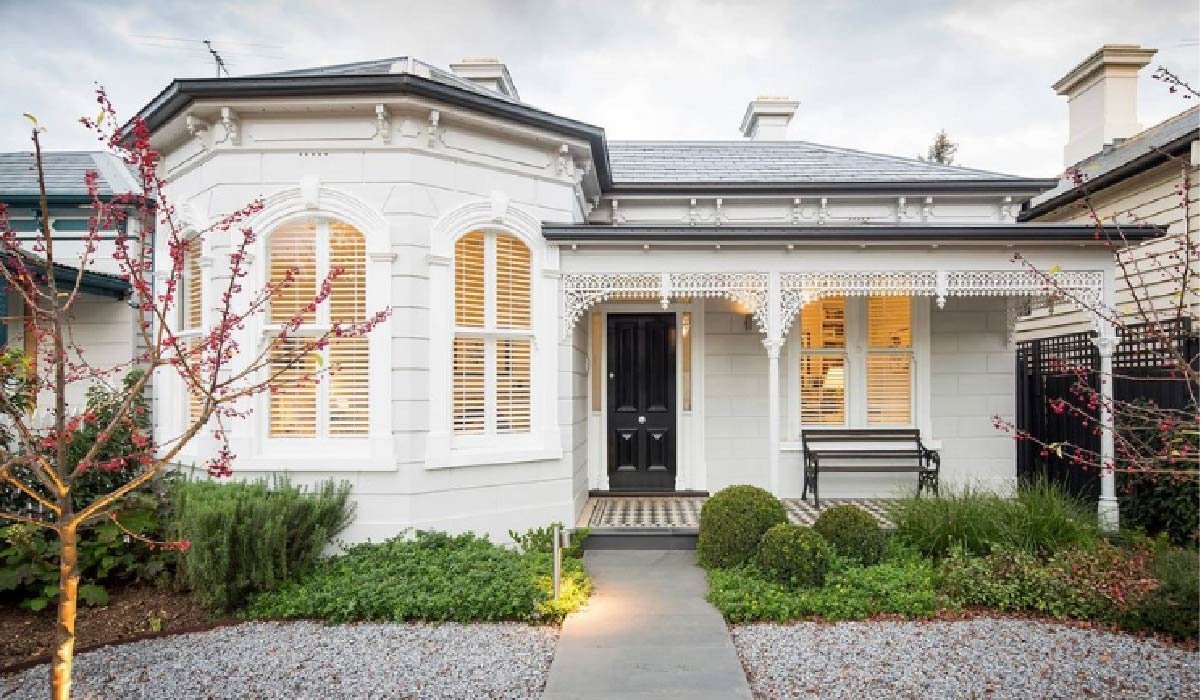
Extending a heritage house in Australia is even more complex than building a pergola on an ordinary block. But it’s not impossible. As a matter of fact, some of the most beautiful houses in the country are the outcomes of maneuvering these very rules.
When you begin to dive into a Heritage Home Renovation, you soon understand that restoring is about taking care of the house, and not simply mending things up; it involves a kind of thinking of keeping the home with all its imperfections intact, and trying not to make everything laser-straight and as new as possible.
I have been participating in the building game long enough to witness many people doing everything correctly (and some making mistakes). It is not about fighting rules; it is about working with them, knowing why they exist and how they work. Let us deconstruct what you are actually dealing with and the way to get that approval stamp.
Understanding Heritage Listings: State Register vs. Local Heritage Overlay
You must have an idea of how protected your house is before you make a single sketch. Not all heritage listings in Australia are created equal.
State Heritage Register: The big league. When your house is on the State Register it is regarded as important to the history of the whole state. The rules here are strict. You will be dealing with the Heritage Council of your state and not your local council.
Local Heritage Overlay: This is much more widespread. This normally implies that your house contributes to the character of the neighbourhood. The council would like to maintain the streetscape ambience. Usually, they do not mind so much what happens at the back of the house as long as the front does not look like it has been modified.
This is extremely important; you should inspect your Section 32 (vendor statement) or just search your local council regarding your property in their planning map. Knowing the difference will save you a lot of headaches in the future.
Heritage Design Rules: Why You Shouldn’t Fake History
The greatest fallacy that people believe is that the council wants them to make their extension look exactly how the old house looked. They believe that they should find similar bricks, duplicate the decorative cornices, and construct a replica wing of the 19th century at the back.
In fact, that is the last thing heritage advisors tend to desire.
A document known as the Burra Charter has a massive impact on heritage guidelines in Australia. It outlines principles stating that distinguishing between new and old work is a must. When you make an extension that exactly resembles the original house, you are distorting history. Future generations will not understand where the 1890 construction ended and the 2024 construction began.
Subtle but differentiated is the sweet spot. You want a connection to the size and materials of the house since its beginning but one that is independent as a structure of contemporary building. That is the reason you find glass links or contemporary timber boxes affixed to old stone cottages. It narrates a very distinct tale: “This is old, and this is new.”
Heritage Overlay Restrictions: The “Hidden from Street” Test
In a Heritage Overlay, the view from the street is sacred. It is the main task of the council to make sure that the historic character prevails when one passes your house.
This gives you some rules of thumb for your extension:
- Setbacks are to be welcomed: Your extension must as a rule be recessed at the side boundaries, and preferably concealed behind the roof of the old house.
- Height is an issue: When going up a level, the second story would need to be recessed in most cases as that would prevent it from looming high above the original facade.
- The test of the Hi-Vis vest: Suppose that your extension is wearing a hi-vis vest. It won’t be approved should it be screaming for attention and drowning out the original cottage. It must be the silent backing act, not the solo performer of the play.
The Heritage Impact Statement (HIS): Essential Paperwork
You cannot make a bunch of plans and wish them luck. Probably you will require a Heritage Impact Statement (HIS).
A report is an assessment of your proposal compared with the heritage controls, which is normally prepared by a heritage consultant. It is bureaucratic and to be honest, it is just that. But it’s also your best weapon.
The consultant should be a good speaker who understands the language of the council. They will review your plans and prepare a justification stating why your new extension will in fact not negate the heritage value of the property (at least not harm the heritage). They may suggest that by taking away a 1970s lean-to which was poorly constructed and putting in its place a high-quality architectural box, more of the original building can be found.
Do not attempt to write it yourself. The several thousand dollars outlay on a professional consultant will save you tens of thousands lost in redesign charges and holding costs should the council not approve of your initial effort.
Top Tips for Securing Heritage Planning Approval
To conclude, I would like to leave you with some of my insider tips that may easily get your project “over the line”:
- Gold is the pre-application meetings. Before you make actual plans, most councils have the service of having you drop in to have a chat. Take your rough sketches. Get them to the point: “Is this too high? Is this too wide?” Their comments are normally free (or cheap) and invaluable.
- Don’t paint the bricks. Offering to paint or render original face brick is often a quick method of securing a rejection letter unless they were already painted.
- Landscaping counts. In some cases, a landscape plan which shows a few trees already established in the landscape and softening the view can be a tipping point to the approval of a permission extension when it is slightly visible.
Damage to the existing site is one of the issues that heritage officers are concerned about when it comes to extensions. Heavy excavation, pouring wonderful amounts of concrete, and months of vibration by building machinery would destabilize old footings which were in most cases merely bluestone rocks placed on clay.
It is here that construction methodology is a tool of design. This is the reason we are witnessing a huge trend of off-site construction. In some constructions like modular homes Australia, the construction of most parts of the building occurs in a factory, hence the time spent at the site is very minimal, and this will also ensure that there is minimal disturbance to the heritage and to the neighbors.