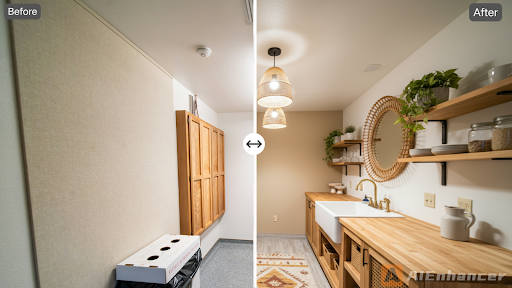
Interior design decisions used to feel heavy. Once an idea took shape, it was hard to reverse without cost or regret. Today, expectations are different. People want to test ideas visually, move faster, and feel confident before committing. This shift has changed how homes are imagined and discussed. Design is no longer a single moment; it’s a flexible process shaped by clarity, feedback, and the freedom to explore without pressure.
Rethinking How Interior Ideas Take Shape
Starting With an Existing Space, Not an Ideal One
Most homes don’t begin as blank canvases. They come with constraints, habits, and history. AIEnhancer starts there, using a single interior photo as the foundation. When AI room design is applied, the room is not erased or replaced. It is reinterpreted. Proportions, lighting, and structure are read carefully, producing a design that still feels rooted in reality.
This approach matters. AI room design treats the original space as context, not a flaw. The result feels like a thoughtful evolution of the room rather than a dramatic fantasy that ignores how people actually live.
Why Immediate Visualization Changes the Outcome
Design ideas behave differently when they remain abstract. They linger longer than they should and resist criticism. AI room design shortens the gap between idea and reaction. Seeing a concept instantly often triggers a clearer emotional response than words ever could.
That speed doesn’t reduce quality. It improves it. AI room design encourages quick iteration, allowing users to discard weak ideas early and focus energy on directions that genuinely resonate.
Grounded in Practical Constraints
Many digital design tools favor perfection over feasibility. AIEnhancer takes the opposite route. AI room design respects ceiling height, window placement, and awkward corners. Those constraints are not hidden; they are incorporated. The designs feel achievable, which makes the tool useful beyond inspiration boards.
Exploring Styles Without Surrendering Control
Modern Interiors With Balance
Modern spaces often struggle to feel warm. AI room design approaches modern style with restraint. Clean lines are softened by texture and light, producing rooms that feel calm but not cold. The space looks intentional without feeling overly curated.
Industrial Design That Feels Thoughtful
Industrial interiors can quickly become overwhelming. AI room design introduces balance by pairing raw materials with subtle warmth. Exposed elements feel purposeful rather than unfinished. The result is a space that feels confident, not aggressive.
Minimalism as Refinement
Minimalism works best when it feels deliberate. AI room design treats minimalist spaces as an exercise in refinement. Visual clutter is reduced, but personality remains through proportion, light, and rhythm. The room feels focused, not empty.
Rustic and Scandinavian Comfort
Rustic designs generated through AI room design emphasize natural textures without drifting into excess. Scandinavian interpretations lean toward brightness and flow, helping smaller rooms feel more open. In both cases, comfort guides the design rather than decoration.
Bohemian Expression With Structure
Bohemian style thrives on layers, but layers still need order. AI room design introduces an underlying structure that keeps colors and textures from competing. The space feels expressive while remaining cohesive, which is harder to achieve than it appears.
Extending Design Thinking Beyond One Room
Interior and Exterior as One Conversation
Interior changes often spark questions about the home as a whole. Exterior appearance enters the discussion naturally. AIEnhancer supports this broader perspective through its house design capability, allowing users to align exterior concepts with interior updates.
This connection helps avoid the disconnect where a modern interior sits behind an exterior that tells a different story.
Creating Consistency Across Spaces
When AI room design is applied across multiple rooms, a natural cohesion begins to take shape even without strict planning or enforced rules. Colors echo subtly from one space to another, creating visual connections that feel effortless rather than forced. Materials repeat with intention, reinforcing a sense of unity without ever appearing monotonous. Transitions between rooms feel smoother, as if the home itself guides the eye and movement. Achieving this kind of flow typically requires years of design experience, careful attention, and a keen eye for balance, yet with AI room design, it emerges almost organically, giving the entire home a consistent rhythm and harmony that feels both deliberate and intuitive.
Practical Impact in Real Situations
Clearer Renovation Discussions
Renovation conversations often suffer from vague descriptions and mismatched expectations. AI room design creates a shared visual reference. Everyone responds to the same image, reducing misinterpretation and speeding up decisions. The process becomes calmer and more efficient.
Real Estate Visualization That Builds Trust
Outdated interiors can hold listings back. AI room design reframes those spaces as potential without crossing into exaggeration. Buyers can imagine a future while still trusting what they see. That emotional clarity often influences decisions more than numbers do.
Encouraging Smarter Experimentation
Bold ideas usually feel risky. AI room design lowers that risk by making exploration easy and reversible. Users test directions they might otherwise avoid, discard what doesn’t work, and move forward with confidence. Exploration sharpens clarity instead of creating confusion.
Why AIEnhancer Feels Grounded, Not Overbearing
Technology That Supports Momentum
The intelligence behind AI room design is complex, but the experience feels simple. AIEnhancer doesn’t force new workflows or demand technical knowledge. It integrates quietly into how people already think about space, supporting progress instead of slowing it down.
Preserving Human Judgment
AI room design does not dictate style or outcomes. It presents possibilities and leaves judgment intact. Users remain in control, guided by their own preferences, reactions, and lived experience. Taste and instinct remain central. The tool amplifies clarity, not authority, which keeps the process collaborative rather than prescriptive.
A Practical Vision of the Future
Design technology is often framed as disruptive. AIEnhancer takes a more grounded view. AI room design focuses on real homes, real limitations, and real decisions. It helps people move from uncertainty to clarity without pretending constraints don’t exist.
Over time, AI room design becomes less of a novelty and more of a habit. It turns hesitation into exploration and exploration into confidence. That quiet reliability is what allows AIEnhancer to move beyond being impressive and become genuinely useful in shaping spaces people actually live in.