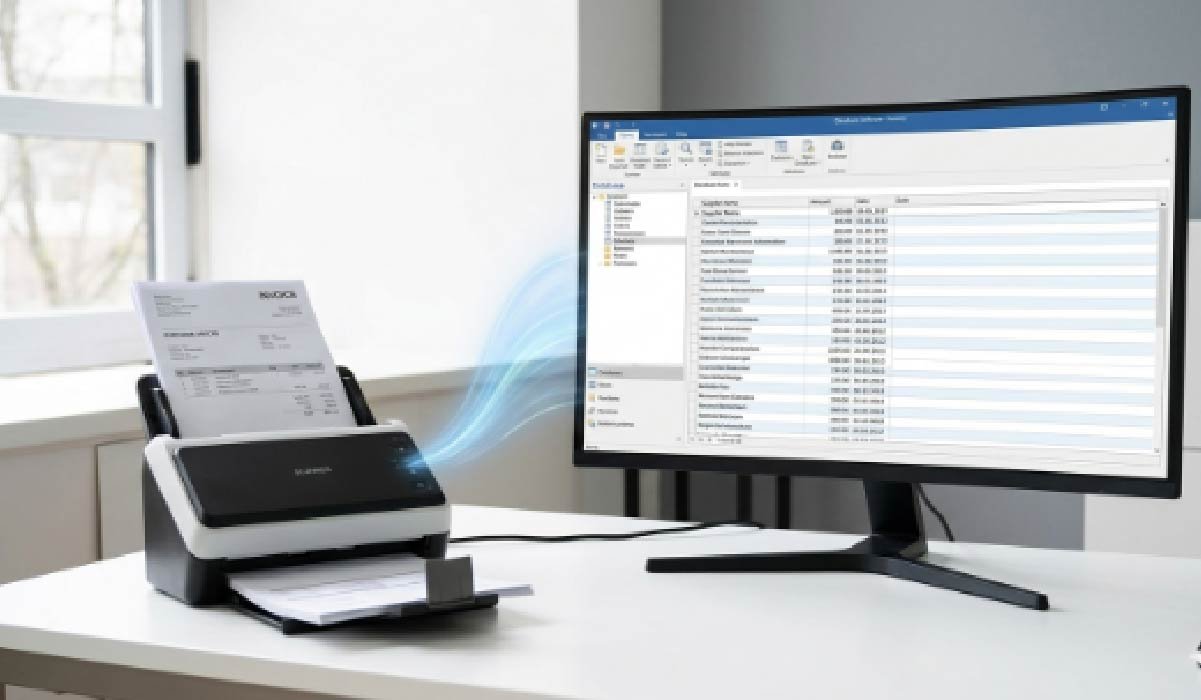
Manual data entry is a slow, expensive, and error-prone task that drains resources from modern businesses. Teams spend countless hours transcribing information from documents, receipts, and forms into digital systems. This tedious process not only slows down operations but also introduces the risk of human error, which can lead to costly mistakes. Fortunately, there’s a powerful solution that eliminates this bottleneck. By using AI for image to text conversion, companies can automate data extraction and unlock new levels of efficiency.
This technology isn’t just a minor upgrade; it’s a fundamental shift in how businesses handle information. It allows you to instantly pull data from any picture, turning a pile of paperwork into a structured, usable digital asset. Instead of paying employees to type, you can empower them to focus on analysis, strategy, and growth. This article explores the practical, real-world scenarios where businesses are using AI to get text from images and leave manual data entry behind for good.
Scenario 1: Streamlining Invoice and Receipt Processing
One of the most time-consuming tasks in any finance department is processing invoices and receipts. Each document contains critical data, such as vendor names, purchase dates, itemized lists, taxes, and total amounts. Manually typing this information into accounting software or expense reports is a repetitive job that is highly susceptible to errors. A single misplaced decimal or incorrect vendor code can cause significant accounting headaches, delay payments, and complicate financial audits.
How AI Transforms an Accounts Payable Workflow
With an AI-powered text extractor, the entire process becomes incredibly efficient. An employee can simply take a photo of a receipt with their phone or upload a PDF invoice to the system. The AI scans the document, identifies the relevant fields, and extracts the text in seconds. It can distinguish between a subtotal and a final total, recognize invoice numbers, and pull line-item details with high accuracy. This structured data can then be automatically populated into the correct fields in QuickBooks, Xero, or any other accounting platform.
Key Benefits for Finance Teams
* Massive Time Savings: What used to take minutes per document now takes seconds. This frees up the accounts payable team to handle more strategic responsibilities, such as vendor management, cash flow analysis, and budget forecasting. They can shift from being data entry clerks to valuable financial analysts.
* Enhanced Accuracy: AI algorithms are trained on millions of documents, making them far less likely to make typographical errors than a human operator. This improved accuracy prevents overpayments, ensures correct tax reporting, and maintains the integrity of financial records.
* Faster Reimbursements and Payments: Automating data entry speeds up the entire approval workflow. Employees get reimbursed for expenses faster, and vendors are paid on time, which can improve business relationships and even unlock early payment discounts. A smooth and quick process reflects a professionally managed organization.
Scenario 2: Digitizing Archives and Physical Documents
Organizations like law firms, libraries, universities, and government agencies often manage vast collections of physical documents. These archives contain invaluable information, but their physical nature makes them difficult to access and search. Finding a specific clause in an old legal contract or a particular reference in a historical manuscript can require hours of manual searching through dusty boxes. This makes research inefficient and puts delicate documents at risk of damage from frequent handling.
How AI Enables Searchable Digital Archives
AI text extraction is the key to unlocking the knowledge stored in these physical records. By using high-speed scanners to create digital images of each page, organizations can then run these images through an AI tool. The tool converts the printed or handwritten text on the page into a fully digital, machine-readable format. The result is a searchable database where a user can find any word or phrase across thousands of documents instantly.
Key Benefits for Information Management
* Instant Information Retrieval: Researchers and employees can use simple keyword searches to locate specific information in seconds, dramatically improving productivity. This accessibility makes archives more useful and valuable to the entire organization.
* Document Preservation: Once a document is digitized, the physical copy can be stored safely in a climate-controlled environment. All future access can happen through the digital version, protecting fragile paper from light, humidity, and wear and tear.
* Reduced Physical Storage Costs: Digitizing large volumes of paper can free up significant office or storage space. This space can be repurposed for more productive uses, and the costs associated with physical storage, such as rent and security, can be eliminated.
Scenario 3: Automating Customer Onboarding and Form Processing
For businesses in banking, insurance, healthcare, and logistics, customer onboarding is a critical first step. This process almost always involves collecting information from identification documents, application forms, or proof of address. Having an employee manually type a new customer’s name, address, date of birth, and ID number from a driver’s license or passport is a major bottleneck. It slows down the sign-up process, frustrates new customers, and increases the risk of recording sensitive information incorrectly.
How AI Creates a Seamless Onboarding Experience
AI-driven text extraction completely redesigns this workflow for the better. A new customer can simply upload a photo of their ID card or a completed application form through a secure portal. The AI technology instantly extracts all the required information and uses it to pre-populate the digital registration form. The customer just needs to review the information for accuracy and click submit. The entire data entry step is handled by the machine in the background.
Key Benefits for Customer-Facing Teams
* Improved Customer Experience: Onboarding becomes faster, easier, and more convenient. Reducing the friction in the sign-up process leads to higher conversion rates and greater customer satisfaction from the very first interaction.
* Reduced Data Entry Errors: Automating the transfer of information from a document to a digital field minimizes the chance of human error. This is especially important when dealing with sensitive and legally significant data like names, addresses, and identification numbers.
* Increased Operational Efficiency: Staff no longer have to spend their time on tedious transcription. Instead, they can focus on higher-value activities like verifying identities, answering customer questions, and providing personalized service. This shift allows businesses to scale their operations without proportionally increasing headcount.
A Practical Workflow for Implementation
Adopting AI for text extraction is a straightforward process that can be broken down into a few simple steps.
| Step | Action | Purpose |
| — | — | — |
| 1. Identify the Bottleneck | Pinpoint the business process most hindered by manual data entry. | Focus your efforts where automation will have the greatest impact, such as accounts payable or client intake. |
| 2. Choose the Right Tool | Select an AI solution that fits your needs. | Look for high accuracy, support for different file types (JPG, PNG, PDF), and easy integration with your existing software. |
| 3. Prepare Your Documents | Ensure your source images or scans are clear. | Good lighting, sharp focus, and a clean background will help the AI achieve the highest possible accuracy. |
| 4. Extract and Verify | Upload the file and let the AI extract the text. | The process is nearly instant. A quick human review ensures 100% accuracy before the data is finalized. |
| 5. Integrate the Data | Send the extracted data to its final destination. | Automatically populate fields in your CRM, ERP, or accounting software to complete the workflow without manual typing. |
Conclusion: Reclaim Your Most Valuable Resource
Moving away from manual data entry is no longer just an option, it’s a competitive necessity. AI-powered text extraction offers a proven and accessible way to boost efficiency, reduce errors, and lower operational costs. By automating the most tedious aspects of information management, you empower your team to focus on the strategic work that truly drives business growth. Whether you’re processing invoices, digitizing archives, or onboarding new customers, this technology provides a clear path to a smarter, faster, and more productive workflow. The time you save is your most valuable resource, and AI is here to help you reclaim it.