

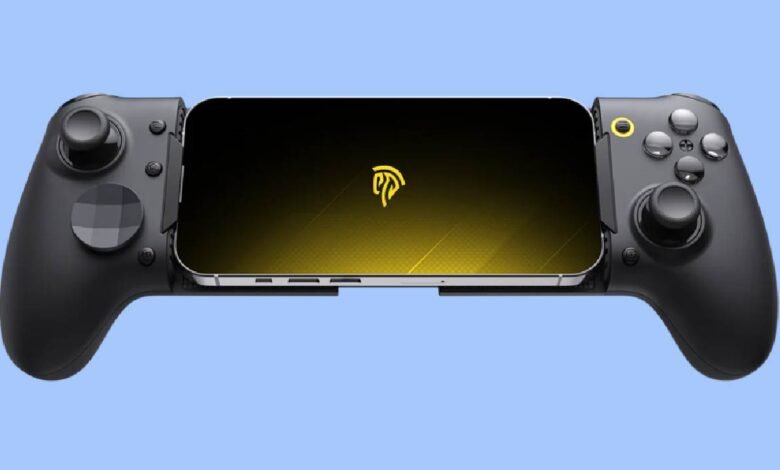
Picture this: you’re in the final circle of a battle royale, heart pounding, finger steady on the stick—and your character starts drifting left into the open. You didn’t move. You didn’t flinch. But your controller decided the match was over before you did. This maddening phenomenon, known as “stick drift,” has plagued gamers across every platform and skill level, turning clutch moments into helpless defeats and relaxing sessions into exercises in frustration.
Stick drift isn’t a niche complaint. It’s a systemic hardware failure that has sparked class-action lawsuits, flooded gaming forums with rage posts, and forced millions of players to repeatedly purchase replacement controllers. In an era where gaming peripherals boast RGB lighting, adaptive triggers, and haptic feedback, it’s remarkable that the fundamental reliability of an analog stick remains a weak point. Enter the anti-drift controller—a category of gamepad engineered from the ground up to eliminate this problem entirely. Far from being a luxury upgrade, it represents what every controller should have been all along. This article breaks down the technology behind anti-drift designs, reviews the top models available in 2024, and provides a comprehensive buying guide to help you make an informed decision.
Understanding Stick Drift: The Gamer’s Nemesis
Stick drift is exactly what it sounds like: your controller’s analog stick registers movement when you haven’t touched it. Your crosshair slowly creeps off-target, your character wanders into walls, or your racing line veers into a barrier—all without any input from you. It’s a ghost in the machine, and it gets progressively worse over time.
The root cause is almost always mechanical degradation inside the analog stick module. Most controllers use carbon-film potentiometers—small resistive sensors that translate physical stick movement into electrical signals. Every time you flick the stick, microscopic layers of carbon wear away. Dust and debris infiltrate the housing, contaminating the contact surfaces. The centering springs lose tension after thousands of return-to-neutral cycles. Eventually, the sensor misreads the stick’s resting position, and drift begins.
The impact varies by genre but is universally destructive. In first-person shooters, even a fraction of a degree of unwanted aim movement means missed headshots and lost gunfights. Racing game players find their vehicles pulling to one side, ruining lap times that demand millimeter precision. Action-adventure and RPG players deal with cameras that refuse to stay still, creating motion-sickness-inducing gameplay. Even menu navigation becomes an ordeal when a cursor won’t stop scrolling.
The scale of this problem is staggering. Major manufacturers have faced class-action lawsuits over drift defects, with one prominent suit alleging that controllers begin drifting after as few as 400 hours of use. Gaming subreddits and forums are saturated with posts from players who have gone through three or four controllers in a single console generation. A 2022 survey by a major gaming publication found that over 70% of respondents had experienced stick drift on at least one controller. This isn’t a matter of user error or rough handling—it’s an inherent design limitation baked into the standard potentiometer-based analog stick that the industry has relied on for over two decades.
What is an Anti-Drift Controller? The Technology Explained
An anti-drift controller is a gamepad specifically engineered to eliminate or dramatically delay the onset of stick drift through fundamental hardware redesign. Rather than relying on incremental improvements to the same flawed components, these controllers replace the failure-prone parts entirely with superior alternatives.
The most significant advancement is the adoption of Hall Effect sensors in place of traditional carbon-film potentiometers. Instead of physical contact between resistive surfaces, Hall Effect sticks use magnets and magnetic field detectors to determine stick position. Because nothing physically touches or wears down during use, the primary cause of drift—material degradation—is removed from the equation. The sensor reads changes in the magnetic field as you move the stick, translating position into input data with zero mechanical friction on the sensing components. This means the stick on day one performs identically to the stick after thousands of hours of play.
Beyond sensor technology, many anti-drift controllers incorporate modular stick assemblies that can be swapped out without soldering or disassembly. If any component ever does degrade, you replace a single module rather than the entire controller. Some manufacturers also reinforce their centering mechanisms with more durable spring systems and tighter housing tolerances to prevent dust ingress. Software-based deadzone calibration complements these hardware solutions by allowing users to fine-tune the stick’s neutral zone, but this remains a secondary measure—a bandage rather than a cure. The real breakthrough lives in the sensor itself.
Anti-Drift vs. Standard Controllers: A Head-to-Head Comparison
When you place an anti-drift controller next to a standard gamepad, the differences extend far beyond a single component swap. In terms of durability, standard controllers using potentiometer-based sticks typically begin showing drift symptoms between 400 and 800 hours of use. Hall Effect controllers, by contrast, have no theoretical wear limit on their sensors—the magnets don’t degrade through normal use, meaning the sensing mechanism should outlast every other component in the controller. Precision is another clear differentiator. Hall Effect sensors offer smoother, more consistent readings across the full range of stick motion, with no dead spots or inconsistencies that develop over time. Standard potentiometers gradually lose resolution as their carbon film erodes, meaning your controller literally becomes less accurate the more you use it.
The upfront cost difference is real. A quality anti-drift controller typically runs 30-50% more than a standard first-party gamepad. However, this comparison ignores the replacement cycle that standard controllers demand. Availability can also be a consideration—most anti-drift options come from third-party manufacturers, which means some platforms have more options than others. Xbox and PC players enjoy the widest selection, while PlayStation and Switch users have fewer but growing choices. Ergonomically, some third-party anti-drift controllers differ slightly from first-party designs, which may require a brief adjustment period for players deeply accustomed to a specific grip shape. That said, many manufacturers now closely mirror the ergonomics of mainstream controllers to minimize this transition.
Long-Term Cost Analysis: Investment vs. Replacement
Consider a typical console generation spanning five to six years. A standard controller costs roughly $60-70, and most players experiencing drift will purchase at least two or three replacements during that period—a total expenditure of $180-210 on controllers that each eventually fail. A premium anti-drift controller at $90-110 purchased once eliminates that replacement cycle entirely. Even if you factor in a replacement stick module every few years at $15-20, your total cost stays well under $130. The financial math clearly favors the anti-drift investment. Beyond dollars, there’s the intangible cost of playing weeks or months with a subtly drifting controller before finally acknowledging the problem, enduring compromised aim, missed inputs, and the creeping frustration that erodes your enjoyment of games you love. That wasted gameplay time and diminished experience carries real value that no receipt can quantify.
Top Anti-Drift Controller Reviews for 2024
The market for anti-drift controllers has matured significantly, with several manufacturers delivering polished products that rival or exceed first-party gamepads in overall quality. Here are the standout options available right now, each tested extensively across multiple game genres and platforms.
The GuliKit KingKong 2 Pro has earned its reputation as the pioneer that brought Hall Effect sticks to mainstream attention. Both analog sticks and triggers use electromagnetic sensing, meaning zero physical contact on any input axis. Build quality is substantial without feeling heavy—the shell uses a textured matte finish that resists fingerprints and provides confident grip during extended sessions. It connects to Switch, PC, and Android via Bluetooth or USB-C, with a dedicated mobile app for remapping and stick calibration. Button feel is crisp with minimal pre-travel, and the D-pad handles both fighting game inputs and menu navigation without issue. The controller’s NFC support for amiibo functionality makes it particularly versatile for Nintendo players. Best For: Best Overall Hall Effect Controller.
The GameSir G7 takes a different approach by combining Hall Effect analog sticks with a wired USB connection designed for Xbox and PC. The zero-latency wired design appeals to competitive players who refuse to introduce any wireless delay into their setup. What sets it apart is the inclusion of two swappable faceplates and a dedicated GameSir app that provides granular control over stick response curves, trigger deadzones, and button mapping. The sticks themselves feel smooth with well-tuned resistance, and the textured grips accommodate marathon sessions comfortably. Trigger locks allow you to switch between full-pull and hair-trigger modes mechanically. Best For: Best for Competitive Xbox and PC Players.
The 8BitDo Ultimate offers a compelling blend of Hall Effect sensors, a charging dock, and broad compatibility across Switch, PC, and mobile platforms. Its 2.4GHz wireless dongle provides low-latency connectivity that approaches wired performance, while Bluetooth mode extends its reach to additional devices. The companion software is among the most robust available, letting you create multiple profiles with custom stick curves, trigger sensitivity, and even macro assignments. Build quality feels premium with satisfying button clicks and well-dampened bumpers. The included dock keeps it charged and display-ready on your desk. Best For: Best Versatile Multi-Platform Option.
For budget-conscious gamers, the NYXI Wizard deserves attention. Designed primarily for Switch with a unique modular Joy-Con-style form factor, it uses Hall Effect sticks in a package that also functions as a traditional pro controller when docked in its included grip. While it lacks some premium touches of pricier options, the core anti-drift technology is identical in principle—magnet-based sensing with no contact wear. It’s an ideal entry point for players who want drift-free gaming without committing to a higher price tier. Best For: Best Budget Hall Effect Option.
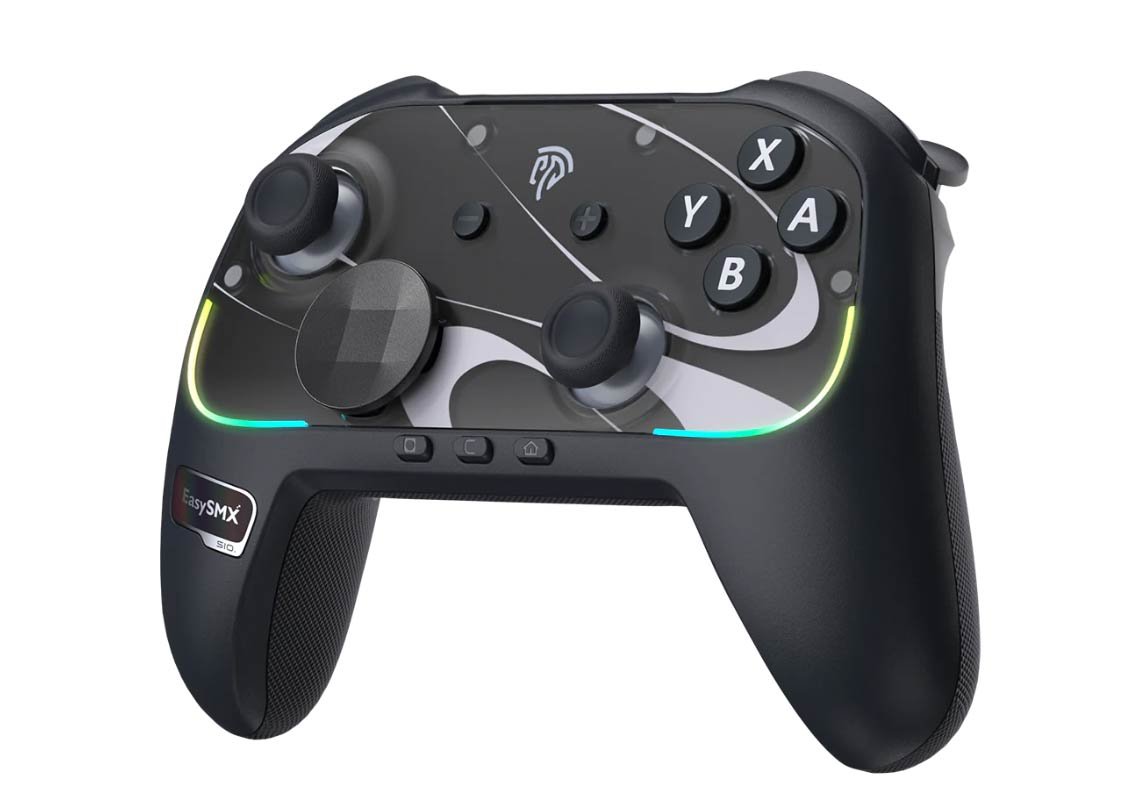
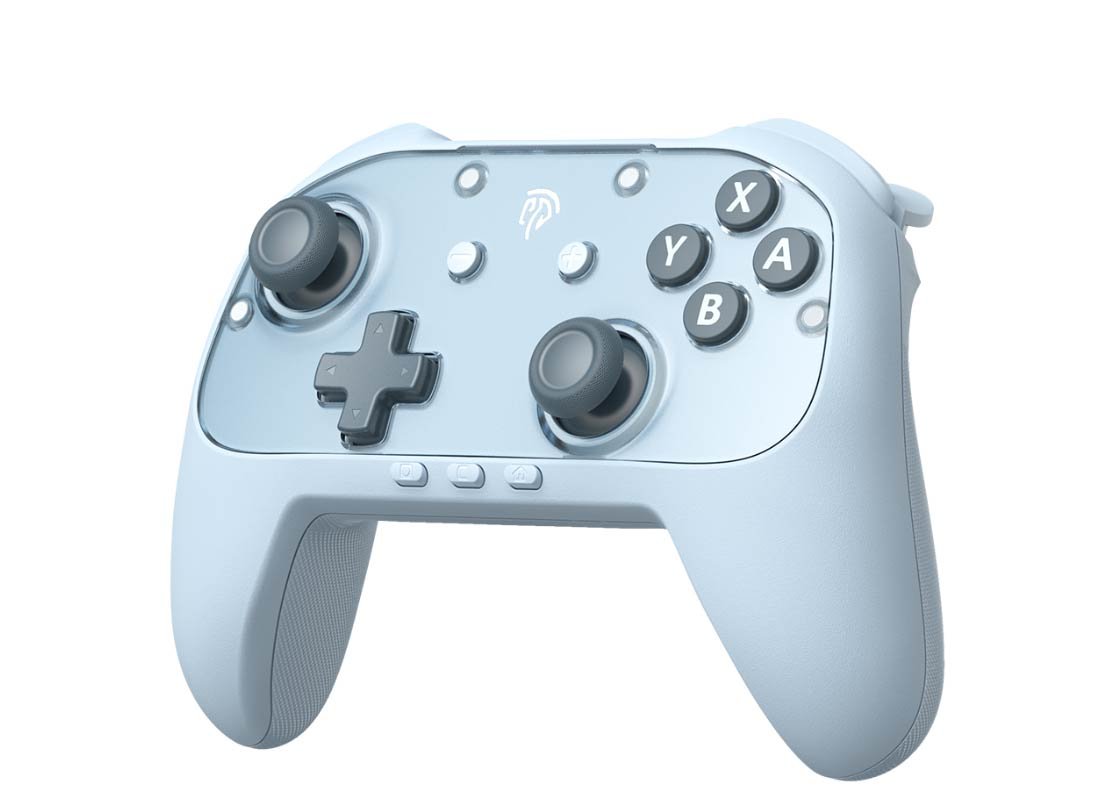
Also worth noting in this expanding space, brands like EasySMX have been incorporating Hall Effect sensing technology into their controller lineups, further demonstrating that drift-free gaming is becoming accessible across a wider range of price points and form factors.
Your Ultimate Controller Buying Guide: How to Choose
Now that you understand the technology and have seen what the market offers, the question becomes: which anti-drift controller is right for you specifically? The answer depends on a combination of platform requirements, gaming habits, and personal priorities that vary from player to player.
Start with platform compatibility. PC gamers have the most freedom—nearly every anti-drift controller on the market supports Windows through either direct USB or wireless dongle connections. Xbox players should look for controllers with official Xbox licensing or confirmed compatibility, as the GameSir G7 and similar wired options provide plug-and-play functionality without adapter workarounds. PlayStation users face a tighter market since Sony’s ecosystem is more restrictive, but options are emerging from manufacturers working within those constraints. Nintendo Switch owners benefit from strong support across GuliKit, 8BitDo, and NYXI product lines, making it one of the better-served platforms for third-party anti-drift solutions.
Your primary game genre should influence your decision significantly. Competitive FPS and fighting game players should prioritize wired connections and adjustable stick response curves that let you fine-tune sensitivity and deadzones to your exact preferences. Racing game enthusiasts benefit from controllers with Hall Effect triggers in addition to sticks, since analog trigger precision matters as much as stick accuracy when modulating throttle and brake inputs. Casual and multi-genre players can prioritize versatility and comfort—wireless connectivity, multi-platform support, and ergonomic design that sustains long sessions without fatigue.
Software support is an often-overlooked differentiator. Controllers with dedicated companion apps allow you to create game-specific profiles, adjust stick curves from linear to aggressive, set custom deadzones, and remap buttons without relying on third-party tools. This level of customization transforms a good controller into one that feels personally tailored to your hands and playstyle. Check whether the app is actively maintained and whether the community around it is producing shared profiles for popular games.
Finally, evaluate build quality indicators beyond the sensor technology itself. Look for USB-C connectivity rather than micro-USB, rubberized or textured grip surfaces, mechanical trigger locks for shooters, and a warranty that demonstrates manufacturer confidence. A controller is something you hold for hundreds of hours—materials and construction quality directly impact your long-term satisfaction.
Key Features Checklist for Your Next Purchase
When evaluating any anti-drift controller, run through these criteria to ensure you’re making a sound investment. Non-negotiable features include Hall Effect analog stick sensors confirmed by the manufacturer, compatibility with your primary gaming platform, USB-C wired connectivity or a low-latency wireless protocol, responsive buttons with minimal mushiness, and at minimum a one-year warranty against defects. Highly desirable features that elevate the experience include Hall Effect triggers for full analog input protection, a companion software app with profile and curve customization, modular or replaceable stick modules for future-proofing, swappable faceplates or cosmetic personalization options, and a charging dock or long battery life exceeding 20 hours. Nice-to-have extras that round out a premium package include motion controls or gyro aiming support, NFC functionality for amiibo or similar features, onboard profile switching without software, adjustable stick tension or interchangeable thumbstick caps, and audio pass-through with a 3.5mm headphone jack. If a controller checks every non-negotiable box and most of the desirable features, you’ve found a strong candidate worthy of your investment.
Maximizing Your Controller’s Lifespan: Care and Maintenance
Even with drift-proof sensor technology, treating your controller well ensures every component—buttons, triggers, bumpers, and housing—performs at its best for years. Store your controller in a clean, dry environment rather than leaving it on a couch where dust, crumbs, and pet hair can infiltrate gaps in the shell. A simple carrying case or dedicated drawer eliminates most environmental contamination. Clean your controller monthly using a dry microfiber cloth for the exterior and compressed air blown gently around the stick bases and trigger wells to dislodge particulate buildup before it migrates deeper into the housing.
How you handle the sticks matters more than most players realize. Avoid pressing sticks against their maximum range during idle moments or menu browsing—this stresses centering springs unnecessarily. When you finish playing, set the controller down gently rather than tossing it onto hard surfaces, as repeated impacts can loosen internal connections and shift component alignment over time. On the software side, periodically recalibrate your sticks through your platform’s settings menu or the controller’s companion app to ensure the neutral center point remains accurate. Adjust in-game deadzones to the smallest comfortable setting, which keeps inputs responsive without amplifying any microscopic sensor noise. These habits take minimal effort but compound over hundreds of sessions, keeping your anti-drift investment performing like new long after lesser controllers would have been retired to a junk drawer.
Why Drift-Free Gaming Is the New Standard
Stick drift isn’t a minor inconvenience—it’s a fundamental hardware failure that actively undermines the experience gaming is supposed to deliver. Every missed shot, every unintended movement, every controller tossed aside in frustration represents a failure of design that players have tolerated for far too long simply because no alternative existed. That era is ending.
Hall Effect sensor technology represents more than an incremental improvement; it’s a philosophical shift in how controllers are built. By eliminating physical contact from the sensing mechanism entirely, anti-drift controllers remove the root cause of degradation rather than merely delaying its symptoms. The result is a gamepad that maintains day-one precision indefinitely—something that should have always been the baseline expectation for a device we hold for thousands of hours across a console generation.
For tech enthusiasts and dedicated gamers, choosing an anti-drift controller is simultaneously an investment in competitive consistency, long-term financial savings, and the simple pleasure of playing without fighting your own hardware. As more manufacturers adopt this technology and prices continue to normalize, Hall Effect sensors will inevitably become the industry standard. The only question is whether you wait for that future or start benefiting from it today.