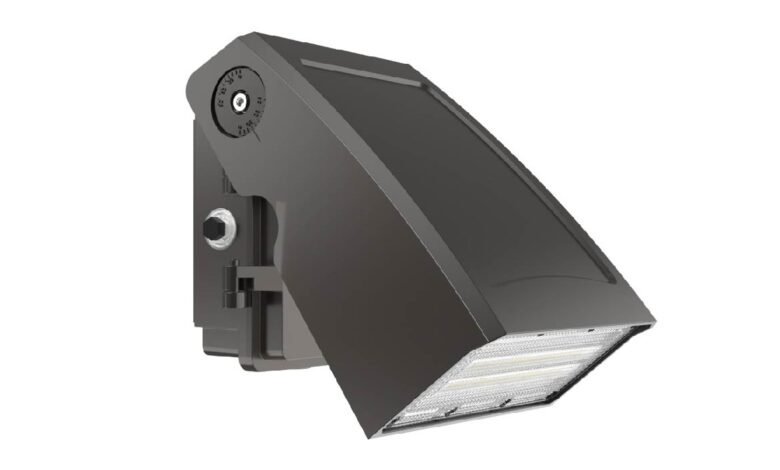
For property managers and business owners operating commercial spaces, the combination of soaring energy bills and inadequate outdoor illumination represents a persistent financial headache. Traditional lighting fixtures consume excessive power while delivering diminishing returns as they age, leaving parking areas, building perimeters, and entryways poorly lit and vulnerable. Waterproof LED Wall Pack Lights have emerged as the definitive modern solution to this dual challenge, offering contractors a reliable product that dramatically cuts energy consumption while delivering consistent, powerful illumination in any weather condition. These fixtures don’t just reduce electricity costs by substantial margins—they also withstand rain, snow, dust, and temperature extremes without performance degradation. For contractors seeking to deliver measurable value on every project, understanding how to specify, install, and present these energy-efficient fixtures is essential. This guide breaks down everything from product selection and IP ratings to installation best practices and client-facing cost analyses, giving you the knowledge to confidently recommend upgrades that pay for themselves.
The High Cost of Traditional Outdoor Lighting: Why an Upgrade is Essential
Traditional outdoor lighting technologies—High-Intensity Discharge (HID), High-Pressure Sodium (HPS), and Metal Halide fixtures—were once the industry standard, but their operational economics tell a punishing story. A typical 400-watt Metal Halide wall pack consumes roughly 458 watts when you factor in ballast losses, yet delivers light output that degrades by 30-40% within the first two years of operation. Compare that to a modern LED wall pack producing equivalent or superior illumination at 90-120 watts, and the disparity becomes impossible to ignore.
The financial drain extends well beyond the electric meter. HID lamps require replacement every 15,000 to 24,000 hours, meaning a facility running lights from dusk to dawn faces bulb changes every two to three years. Each replacement involves not just the cost of the lamp itself but labor, lift equipment rental, and potential liability during the service window when areas go dark. For a commercial property with 30 or more exterior fixtures, annual maintenance budgets balloon quickly into thousands of dollars that deliver zero improvement in performance.
Your clients feel this pain acutely. Property managers fielding tenant complaints about dim parking areas, warehouse operators dealing with safety citations near loading docks, and retail owners watching their utility bills climb quarter after quarter—these are the decision-makers looking for a better path. They need a solution that addresses both the recurring expense and the declining light quality simultaneously. This is precisely where the upgrade conversation becomes compelling: LED wall pack retrofits typically achieve full return on investment within 18 to 30 months through energy savings alone, before factoring in eliminated maintenance costs and potential insurance benefits from improved site illumination. For contractors, presenting this ROI timeline transforms a lighting project from a line-item expense into a strategic investment your clients can quantify.
Beyond Savings: Core Benefits of Energy-Efficient LED Wall Pack Lighting
Energy reduction stands as the headline benefit, and the numbers back it up convincingly. Wall pack LED lights consume 60-75% less electricity than their HID counterparts for equivalent light output. A facility replacing ten 400-watt Metal Halide fixtures with 100-watt LED units operating 12 hours nightly saves approximately 13,140 kWh annually—a figure that translates directly into hundreds or thousands of dollars depending on local utility rates. That reduction compounds across every fixture on a property, making large-scale retrofits particularly impactful.
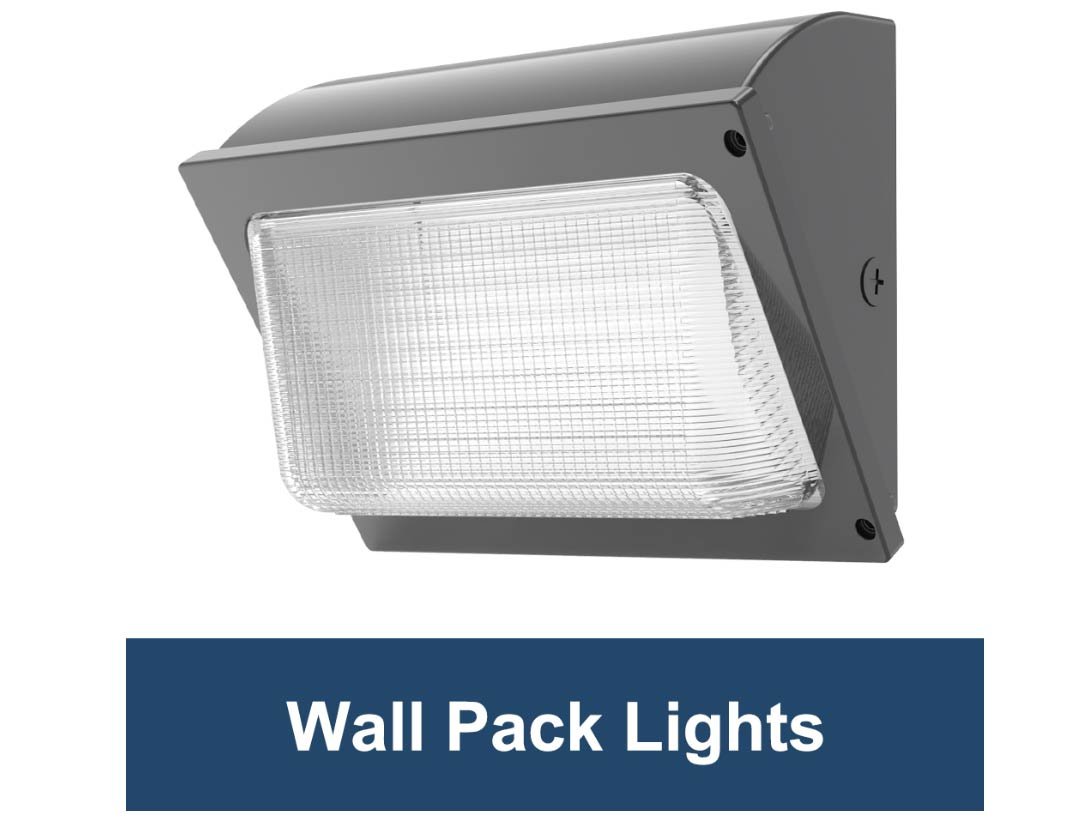
Lifespan represents the second major advantage that reshapes project economics. Quality LED wall packs from manufacturers like Hyperlite deliver 50,000 to 100,000 hours of rated life, meaning a fixture running dusk-to-dawn can operate for 12 to 20 years before requiring replacement. This virtually eliminates the recurring maintenance cycle that plagues traditional installations. For contractors, this translates into fewer callback requests and stronger client relationships built on dependable performance rather than repeated service visits.
Light quality deserves equal attention in client conversations. LED wall packs typically deliver Color Rendering Index values of 70 or higher, with many premium units reaching CRI 80+. This means colors appear more natural and details become easier to distinguish—critical for security camera effectiveness, employee safety near loading areas, and the overall aesthetic impression of a commercial property after dark. The instant-on capability eliminates the warm-up period common with HID technology, providing full brightness immediately when activated.
Advanced integrated features push efficiency even further. Many modern LED wall packs incorporate built-in photocells for automatic dusk-to-dawn operation, motion sensors that reduce output by 50-80% when areas are unoccupied, and programmable dimming schedules. These controls layer additional savings on top of the baseline LED efficiency gain, often reducing effective energy use by another 30-50% compared to running fixtures at full power throughout the night. For contractors, recommending fixtures with these capabilities demonstrates technical expertise and delivers measurable added value that distinguishes your proposals from competitors offering basic replacements.
Choosing the Right Waterproof LED Wall Pack Lights for Your Project
Understanding IP Ratings for Durable Outdoor Lighting Solutions
The IP (Ingress Protection) rating system provides a standardized way to communicate exactly how well a fixture resists environmental intrusion. The rating consists of two digits—the first indicates protection against solid particles like dust, while the second specifies resistance to water. An IP65-rated fixture, for example, is completely dust-tight (6) and protected against low-pressure water jets from any direction (5). An IP66 fixture steps up water resistance to withstand powerful jets, making it suitable for areas subject to direct hose-down or driving rain.
For most standard outdoor wall-mounted applications—building perimeters, stairwells, and covered entryways—IP65 represents the practical minimum. Properties located in coastal regions, facilities requiring regular pressure washing, or installations on exposed walls facing prevailing weather should specify IP66 or higher. When presenting options to clients, framing the IP rating as a longevity guarantee helps justify any premium: a properly rated fixture maintains its sealed integrity for its entire operational life, meaning the waterproof performance on day one persists through year fifteen without gasket degradation or moisture infiltration compromising internal electronics.
Light Output and Distribution: Matching Lumens and Beam Angles to the Space
Lumens measure total light output, while watts measure energy consumed—a distinction that matters when specifying replacements. A 100-watt LED wall pack typically produces 12,000 to 13,000 lumens, roughly equivalent to a 400-watt Metal Halide fixture. For parking areas and large open spaces, fixtures delivering 8,000 to 15,000 lumens mounted at 12-20 feet provide adequate coverage. Building perimeters and walkways generally require 3,000 to 6,000 lumens at lower mounting heights.
Beam distribution determines how that light spreads across the target area. Full-cutoff or forward-throw patterns direct illumination downward and outward from the mounting surface, minimizing light trespass onto neighboring properties and reducing sky glow—an increasingly important consideration for code compliance. Symmetric patterns work well for general area lighting where even coverage matters, while asymmetric distributions excel at illuminating specific zones like walkways running parallel to a building wall. Matching the beam pattern to the site geometry during the specification phase prevents costly repositioning after installation.
The Advantage of Adjustable Wall Pack Lights
Adjustable wall packs feature a tilting head mechanism—typically offering 0 to 90 degrees of vertical rotation—that allows precise aiming after the fixture is mounted. Some models also incorporate lateral rotation for additional directional control. This adjustability solves a common installation challenge: mounting heights, wall angles, and target illumination zones vary significantly between projects, and a fixed-position fixture that works perfectly at 10 feet may throw light ineffectively when mounted at 18 feet on a different building.
For contractors, adjustable models reduce specification risk and on-site problem-solving time. Rather than stocking multiple fixture types with different optical configurations, a single adjustable unit adapts to diverse conditions. Post-installation fine-tuning becomes straightforward—if a client later modifies their landscape or adds structures that change the illumination requirement, the fixture angle can be corrected in minutes without remounting. This versatility makes adjustable wall packs particularly valuable for retrofit projects where existing mounting locations may not align perfectly with ideal photometric coverage, giving contractors a reliable tool that accommodates real-world imperfections without compromising results.
A Professional’s Guide to Installing and Maintaining LED Wall Packs
Successful installation begins before the fixture leaves the truck. Verify the supply voltage matches the fixture’s driver input range—most commercial LED wall packs accept 120-277V universal input, but confirming this prevents costly damage on first power-up. Assess the mounting surface for structural integrity, ensuring it can support the fixture weight plus wind loading. For masonry walls, use appropriate anchors rated for the combined load; for metal surfaces, confirm that mounting holes align or plan for adapter plates. Always disconnect power at the breaker and verify with a non-contact voltage tester before beginning any wiring work.
During installation, route supply conductors through the fixture’s designated knockout using a weatherproof conduit fitting or cord grip rated to match the fixture’s IP classification. Make wire connections inside the junction compartment using listed wire nuts or lever connectors, then tuck conductors neatly to avoid pinching when closing the compartment cover. Secure the fixture to the wall with all provided hardware—skipping fasteners compromises the gasket seal and voids waterproof performance. Once mounted, restore power and confirm operation, then adjust the photocell or motion sensor sensitivity according to site conditions. If the unit features an adjustable head, aim it at the target zone and lock the tilt mechanism firmly.
Maintenance requirements for LED wall packs are minimal but not nonexistent. Schedule annual cleaning of the lens surface using a mild detergent and soft cloth to remove accumulated grime that reduces light transmission. During cleaning, visually inspect gaskets and seals for cracking or compression damage—catching a compromised seal early prevents moisture intrusion that could destroy the LED driver. Check mounting fasteners for looseness caused by thermal cycling or vibration from nearby HVAC equipment. These simple steps preserve both output quality and waterproof integrity across the fixture’s full rated lifespan, ensuring your installation continues performing as promised for a decade or more.
Cost-Benefit Analysis: Demonstrating Value to Your Clients
Winning a lighting retrofit bid often comes down to presenting a clear financial narrative that decision-makers can take to their stakeholders. Build your proposal around a simple side-by-side comparison: document the client’s current fixture count, individual wattage (including ballast draw), nightly operating hours, and local utility rate per kWh. Then calculate annual energy cost for the existing system versus the proposed LED replacement. For a typical 20-fixture property switching from 400-watt Metal Halide to 100-watt LED wall packs running 12 hours nightly at $0.12 per kWh, the annual electricity savings alone exceed $3,100. Layer in eliminated lamp replacements, reduced labor calls, and lower lift rental expenses, and total annual savings often reach $4,500 to $6,000.
Present the upfront investment against this savings timeline to establish a clear payback period—most projects land between 18 and 30 months, after which every dollar saved flows directly to the client’s bottom line. Strengthen your proposal further by researching available utility rebate programs, which many power companies offer specifically for commercial LED conversions. These rebates can offset 20-40% of material costs, compressing the payback window even further. Some municipalities also offer tax incentives or accelerated depreciation schedules for energy-efficient capital improvements. Including these financial tools in your bid demonstrates that you understand your client’s core need to reduce energy costs and positions you as a knowledgeable partner rather than simply a vendor submitting a quote.
Turning LED Wall Pack Upgrades Into Long-Term Operational Savings
Upgrading commercial outdoor lighting to waterproof, energy-efficient LED Wall Pack Lights represents one of the clearest strategic wins available to contractors and their clients today. The case is straightforward: these fixtures slash energy consumption by 60-75%, operate reliably for over a decade without lamp replacements, and maintain full performance through rain, snow, and temperature extremes that would compromise lesser technologies. The financial argument practically makes itself—with payback periods consistently landing under 30 months and annual savings compounding across every fixture on a property, the upgrade transforms a maintenance burden into a lasting operational advantage.
For contractors, mastering the specification process—from selecting appropriate IP ratings and lumen outputs to leveraging adjustable models that adapt to imperfect real-world conditions—builds credibility and differentiates your proposals in competitive bidding environments. Proper installation techniques preserve waterproof integrity and ensure the performance you promise actually delivers across the fixture’s full lifespan. When you combine technical competence with a compelling cost-benefit analysis that incorporates utility rebates and maintenance elimination, you position yourself as a trusted advisor who solves problems rather than simply installs hardware. Every LED wall pack project you complete becomes a visible, long-term testament to the value you bring—illuminating properties efficiently while keeping your clients’ operating costs firmly under control for years to come.