Introduction
In the picturesque coastal town of Kilkee, nestled along Ireland’s Wild Atlantic Way, a seemingly routine decision by local authorities has stirred a wave of public emotion and debate. The issue at the heart of this unexpected controversy? Benches. But not just any benches—these were Kilkee’s iconic blue-and-white wooden seats that for decades graced the town’s scenic promenade, bandstand, and walking trails. Beloved by locals and admired by tourists, they stood as both functional furniture and emotional anchors in the town’s daily rhythm. When they were quietly removed and replaced with brown recycled plastic benches, it sparked widespread community backlash. This wasn’t just about furniture—it was about identity, tradition, aesthetics, environmental responsibility, and civic engagement.
The story of how Kilkee benches replaced plastic is now a case study in balancing modernization with cultural preservation, showing how deeply rooted symbolism and small-town pride can clash with sustainability-driven changes when local voices feel unheard.
The Story of Kilkee’s Blue and White Benches
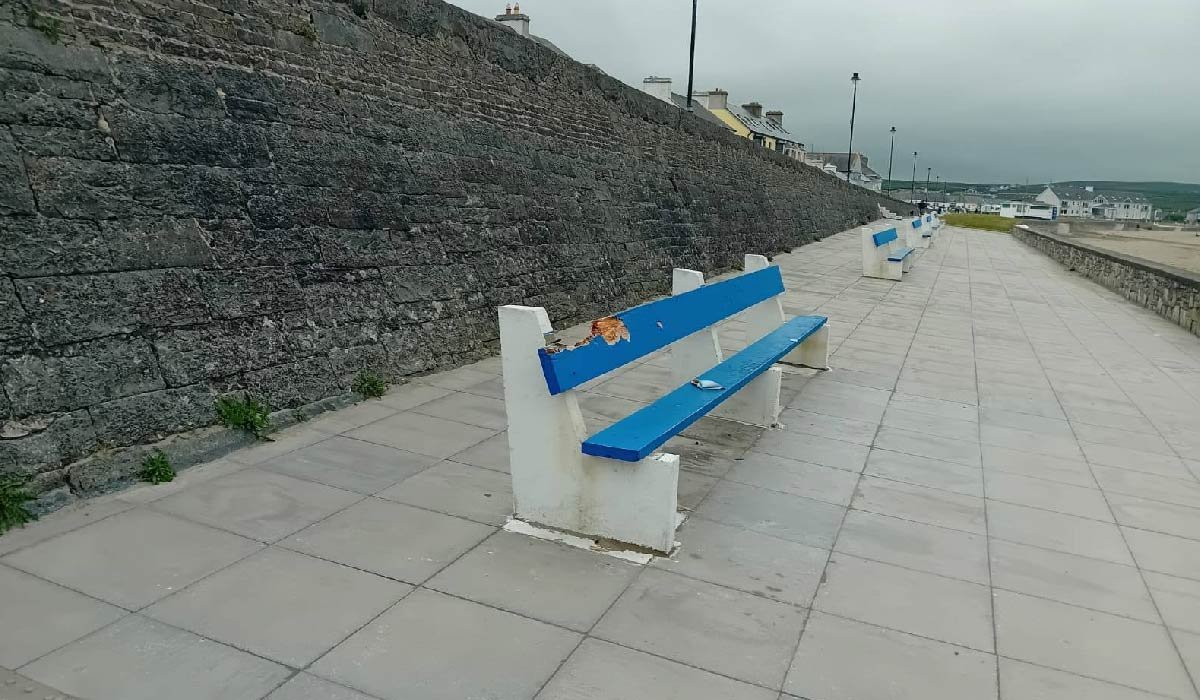
The original blue-and-white benches weren’t merely seating—they were symbols. Painted in the colors of the local GAA teams, these benches represented community pride, sports heritage, and a shared identity that transcended generations. Families would rest on them after sea swims, friends would gather to chat at sunset, and elderly residents would watch the waves roll in while recalling stories of old Kilkee. Strategically placed in some of the town’s most picturesque spots—like the Esplanade, George’s Head car park, and the historic bandstand—the benches became part of the town’s visual language.
To outsiders, they were charming; to locals, they were home. These benches bore witness to countless conversations, proposals, laughter, and quiet reflection. They were as much a part of the scenery as the cliffs and tides. Their blue-and-white design wasn’t just decoration—it was an homage to Kilkee’s identity. That’s why their sudden disappearance didn’t go unnoticed. In fact, for many, it felt like a piece of Kilkee’s soul had been quietly dismantled.
Why Were the Benches Replaced?
The Kilkee benches replaced plastic story didn’t begin as a scandal—it began as a maintenance issue. Over the years, the original wooden benches had weathered Ireland’s often harsh coastal conditions. Rain, wind, salt spray, and time had taken their toll, leading to rot, warping, and rusting of fixtures. From a public safety perspective, Clare County Council had a duty to act. Damaged public seating could pose a risk to users, and in a climate of accountability, ignoring such issues wasn’t an option. In addition, local authorities had to consider the long-term costs of upkeep.
Wooden benches, especially those exposed to maritime air, require constant repainting, repair, and potential full replacement. Amid rising environmental awareness, councils across Ireland have been encouraged to pursue “greener” public infrastructure choices—materials with lower maintenance requirements, longer lifespans, and reduced environmental impact. Recycled plastic seating, which resists decay and requires minimal upkeep, seemed like the ideal solution. What the council may not have anticipated, however, was that the decision—practical as it was—would be perceived as an erasure of cultural character.
The New Recycled Plastic Benches: Practical But Controversial
On paper, the replacement benches offered many benefits. Made from recycled high-density polyethylene (HDPE), they are waterproof, resistant to rot, immune to woodworm, and require no painting. They align with circular economy goals and support Kilkee’s existing status as a MyWaste.ie Green Business Hub. Over time, they may save the council thousands of euros in upkeep. But the reality on the ground painted a different picture. The new benches were brown, generic in design, and entirely devoid of the blue-and-white motif that had defined the originals.
To many, they looked industrial, out of place, and—most importantly—soulless. Instead of enhancing the natural beauty of Kilkee’s coast, some felt they disrupted it. The color clashed with the familiar town palette, and for residents who held emotional attachments to the old benches, the replacements felt impersonal and abrupt. The functionality was there—but the familiarity was gone. This is where practicality and community sentiment collided.
A Town Reacts: Community Division and Social Media Debate
Almost as soon as the new benches appeared, Kilkee’s community forums and social media pages lit up with discussion. Some praised the council for acting swiftly on public safety concerns and for embracing sustainability. But many others expressed anger and sadness. Posts described the brown benches as “awful,” “out of place,” and “lacking character.” The biggest point of contention was not the materials used, but the absence of public consultation. Residents said they were blindsided. “Was there a meeting? A vote? Did anyone even ask the people who actually sit on them every day?” was a common sentiment online.
Councillor Ian Lynch, a non-party local representative, defended the decision, noting that the original benches had become dangerous and that the replacements were a timely solution. He emphasized the benches’ eco-credentials and cost-effectiveness. But for many, the damage was already done—not just to wood and paint, but to trust. The debate became a reflection of something bigger: the right of a community to shape its own public spaces.
The Importance of Public Consultation in Civic Design
Public infrastructure decisions may seem mundane to officials, but in reality, they can carry emotional, cultural, and even economic weight for communities. In the case of Kilkee, what upset residents most wasn’t necessarily the plastic—it was the process. The community felt left out. No surveys, no meetings, no public display of options. This lack of inclusion magnified frustration and created an “us vs them” atmosphere.
Best practices in civic design emphasize transparency and collaboration. Had the council presented several options—perhaps plastic benches in Kilkee’s traditional colors, or hybrid models using both plastic and metal, or even refurbishing existing structures—the town could have participated in shaping the outcome. Public mockups, community voting, or even a pilot installation would have gone a long way toward building consensus. Civic spaces are shared by everyone—and in small towns like Kilkee, where traditions run deep, every design decision can leave a lasting cultural imprint.
Environmental Impact: Are Plastic Benches Really Greener?
At first glance, recycled plastic benches seem like a sustainability win. They reduce pressure on forests, minimize maintenance needs, and reuse waste. But a deeper look reveals trade-offs. Recycled plastic often comes with high embodied energy from processing and transportation. Over time, exposure to UV and coastal weather can lead to microplastic shedding—a subtle but growing concern in marine environments. While the new benches won’t rot, they might contribute to long-term plastic pollution if not properly recycled at the end of life.
Compared to timber—especially when sourced responsibly and treated for weather exposure—the green credentials of plastic can be mixed. In Kilkee’s context, using sustainably sourced wood with protective coatings might have preserved aesthetics and delivered reasonable durability. Ultimately, environmental sustainability isn’t just about materials—it’s about life cycle thinking, local impact, and cultural fit.
Design vs Function: Why Visual Identity Matters in Small Towns
Street furniture isn’t just utilitarian. In towns like Kilkee, it’s storytelling made physical. Every lamppost, bench, and planter box contributes to a town’s personality. The original benches told a story—of sport, solidarity, and seaside charm. The blue and white paint wasn’t just paint; it was a declaration of identity. When that was replaced with plain brown plastic, it wasn’t just a visual change—it was a cultural one.
Tourists often choose Kilkee for its unique character. Losing visual identifiers diminishes that allure. While function is vital, form carries emotional resonance. Towns that protect their aesthetic voice tend to cultivate stronger tourism brands and resident pride. The key lesson? Design choices in public spaces are not just about materials—they’re about meaning.
What Could Have Been Done Differently: Missed Design Opportunities
There were many ways the bench replacement could have satisfied both environmental and cultural goals. One option would have been to use recycled plastic slats colored in Kilkee’s traditional blue and white—combining durability with identity. Another would be hybrid benches: steel or aluminum frames paired with weather-resistant wood or painted composites. A refurbishment program could have salvaged existing bench structures by replacing only damaged parts, using treated wood or eco-composites while preserving original aesthetics.
Involving local artisans in redesigning the benches could have also created a sense of ownership and provided economic benefit to the community. Even simple changes—like adding community plaques, storytelling engravings, or cultural motifs—could have transformed utilitarian benches into cherished features. When aesthetics are viewed as constraints rather than afterthoughts, design becomes not just efficient—but meaningful.
Broader Implications: Lessons for Other Irish and UK Towns
Kilkee is far from alone in facing the sustainability vs heritage dilemma. Across Ireland and the UK, councils are upgrading infrastructure for cost and climate reasons. But Kilkee shows that how change is implemented matters just as much as what is changed. Councils should approach such updates with a mindset of co-creation. Include residents early. Provide options. Use pilot schemes. Consider aesthetics. And always ask: “What makes this place unique—and how can we preserve that while improving it?” Kilkee’s experience is a cautionary tale—but also a guide for more thoughtful community-led public design in the future.
Tourism, Branding, and Kilkee’s Global Image
Kilkee has long enjoyed a reputation as a charming seaside destination. But that charm is built on more than natural beauty—it’s also rooted in atmosphere, personality, and public space aesthetics. The bench change has now become part of Kilkee’s public story. Some media praised the sustainability shift, while others highlighted the backlash. This dual narrative affects how potential visitors perceive the town. Tourists increasingly seek destinations that are both eco-conscious and visually distinctive. If managed carefully, Kilkee can use this moment to reinforce both values: maintaining a strong local brand while embracing progressive infrastructure. But to do so, heritage must be seen not as a hindrance—but as a strength.
Kilkee’s Green Future: Will This Spark Broader Sustainable Projects?
Despite the controversy, Kilkee has an opportunity. This bench project could be the first chapter in a larger sustainability journey—one that includes community-driven initiatives like solar-powered lighting, eco-conscious waste management, plastic-free campaigns, and renewable energy pilot zones. The key will be pairing environmental responsibility with cultural sensitivity. Kilkee can position itself as a model Irish town: one that honors the past while embracing the future. But future projects must involve the community from the start. The goal isn’t just green upgrades—it’s building consensus, pride, and progress at the same time.
Fast Facts: Kilkee Bench Project At a Glance
| Item | Details |
|---|---|
| Location | Kilkee, County Clare, Ireland |
| Old Benches | Blue-and-white timber (GAA-inspired design) |
| New Material | Recycled plastic (brown color) |
| Trigger for Replacement | Structural rot, weather damage, safety concerns |
| Main Criticism | Lack of consultation; loss of cultural identity |
| Sustainability Rationale | Durability, low maintenance, recycled material use |
| Number Replaced | Approximately 20 (initial installation) |
| Public Opinion | Divided: sustainability praise vs heritage disappointment |
| Tourism Impact | Mixed: eco-tourism boost vs visual downgrade concerns |
Conclusion
The story of how Kilkee benches replaced plastic is far more than a tale of infrastructure upgrades—it’s a reflection of how modern sustainability efforts must also respect history, identity, and community voice. While the intention to use greener, safer, longer-lasting materials is valid and commendable, the process and execution left a gap between local pride and policy decisions. As Kilkee moves forward, it has a chance to rebuild that bridge—by listening, involving, and celebrating what makes it unique. With the right balance of design, durability, and dialogue, Kilkee can show Ireland—and the world—that it’s possible to modernize without losing what matters most.
FAQs About Kilkee Benches Replaced Plastic
Q1: Why were the Kilkee benches replaced with plastic ones?
A1: The Kilkee benches were replaced with plastic ones because the old blue‑and‑white wooden benches had become unsafe due to rot and weather damage. The council chose recycled plastic benches as a safer, low‑maintenance, and more durable option for the seaside environment.
Q2: Why are people upset about the new plastic benches in Kilkee?
A2: Many people are upset because the new brown plastic benches do not match Kilkee’s traditional blue‑and‑white style. Residents say the benches feel plain and do not reflect the town’s heritage, and they were not consulted before the changes were made.
Q3: Are the new recycled plastic benches better for the environment?
A3: Recycled plastic benches are better in some ways because they last longer, do not rot, and reuse waste materials. However, they can also release microplastics over time, and their plain design may not suit heritage areas like Kilkee.
Q4: Could Kilkee have kept the original blue‑and‑white look?
A4: Yes. The council could have used recycled plastic or composite materials made in blue and white, or refurbished the original wooden benches with stronger, treated materials. Many residents suggested these options to keep the traditional design while improving durability.
Q5: Did the Kilkee community get a say before the benches were replaced?
A5: No. Many residents say there was no public consultation before the benches were replaced. This lack of communication is one of the main reasons people are unhappy, as they wanted to help choose the style and design of the new benches.
You May Also Read: Myzaxbysfeedback Rewards: Unlock Powerful Free Deals Today
For More Information, Visit Dotmagazine