
BMW ownership outside the manufacturer’s warranty has always involved a calculation. The cars are engineered to a high standard, but that standard comes with a price tag, and nowhere is this felt more sharply than when something fails, and the only quote on the table is from a main dealer.
Second-hand BMW spares have become an increasingly mainstream solution to this problem. The market has matured considerably over the past decade, and finding the right used BMW car part online is now genuinely achievable, provided you know what to look for and what to avoid. This guide covers both.
Why Second-Hand BMW Parts Make Sense
The straightforward reason is cost. A new BMW part from a main dealer carries a premium that reflects the dealer’s margins, the manufacturer’s supply chain, and the general cost of buying anything new. A genuine used part removed from a low-mileage written-off car is the same component, same casting, same tolerances, same fitment, at a fraction of the price.
BMW parts in particular hold up well as second-hand items because the cars themselves are built to last. An engine removed from a four-year-old BMW written off after a front-end impact will typically have decades of life ahead of it. The part hasn’t failed; the car around it has. That distinction matters when you’re deciding whether a used part is worth buying.
The second reason is availability. Certain BMW parts are simply difficult to source as new, particularly anything discontinued for older models, or specialist trim and electronic components that dealers no longer hold in stock. The second-hand market fills this gap reliably, often with genuine OEM parts that can’t be purchased new at any price.
What to Check Before You Buy
The gap between a good experience and a bad one when buying second-hand BMW car parts almost always comes down to the information available before purchase. Here’s what to look for.
Donor mileage
Any reputable supplier of second-hand BMW parts will document the mileage of the car the part came from. This is the single most useful piece of information for mechanical components, engines, gearboxes, steering racks, shock absorbers, and the like. A part from a 30,000-mile donor car and one from a 130,000-mile donor car are not equivalent, regardless of how similar they look. If mileage isn’t listed, ask. If the supplier doesn’t know, look elsewhere.
Condition description and photographs
For body panels, interior parts, and lighting, the condition description should be specific rather than generic. Phrases like “good used condition” tell you very little. Look for listings that describe actual marks, minor scratches on a certain edge, a small crack in a specific corner, and back this up with multiple photographs from different angles. The more specific the listing, the more confident the supplier is in what they’re selling.
Return policy and warranty
A credible supplier of BMW second-hand parts will offer a minimum 30-day warranty and a clear return process. This isn’t a courtesy, it’s a signal. A business that backs its stock with a return policy has made a commercial decision to inspect what it sells. One that doesn’t is transferring all the risk to you.
Fitment confirmation
BMW fitment is more complicated than most cars. The same model, year, and engine combination can have different parts fitted depending on build date, country of manufacture, optional equipment, and whether the car went through a mid-cycle facelift. A supplier worth buying from will confirm fitment against your specific registration or VIN before dispatch, not just match a part to a model name.
Where to Buy Second-Hand BMW Spares Online
The market broadly divides into four types of sources, each with different strengths and risks.
Specialist BMW breakers yards
A specialist yard that works exclusively on BMWs is the most reliable source for second-hand BMW parts. Because they only handle one brand, their stock knowledge is deeper, their fitment advice is more accurate, and their ability to confirm a part against your specific car is considerably better than a general breaker’s dealing with hundreds of makes at once. Donor mileage tends to be documented, the range of available parts is broader, and there’s usually a warranty in place.
General breakers and dismantlers
General breakers stock BMW parts among dozens of other makes. The selection is often limited to whatever cars have come through recently, fitment knowledge is inconsistent, and mileage documentation is patchy. This doesn’t mean every part is a poor purchase, but the due diligence required before buying is considerably higher.
Online marketplaces
eBay and similar platforms host both specialist dealers and private sellers. The quality and reliability vary enormously. Private sellers in particular may not know the provenance of a part, whether it was from a faulty car, or whether it’s the correct fitment for your model. Buying from a verified business seller with a substantial feedback history on a marketplace offers more protection than buying privately, but less than buying directly from a specialist.
BMW forums and community groups
Parts sales sections on BMW owner forums can yield good results for trim and interior items where fitment is simpler, and the seller is often a BMW owner who knows exactly what they’re selling. The risk is the lack of any formal return policy or warranty. Forum parts work best for low-value items where the cost of a mistake is manageable.
Parts Where Second-Hand Buying Makes Particularly Good Sense
Not every BMW part is equally suited to the used market. These categories represent the best value.
- Complete engines and gearboxes. The cost difference between a new and a used unit is typically several thousand pounds, and a genuine used engine or gearbox from a low-mileage donor car will perform identically to new.
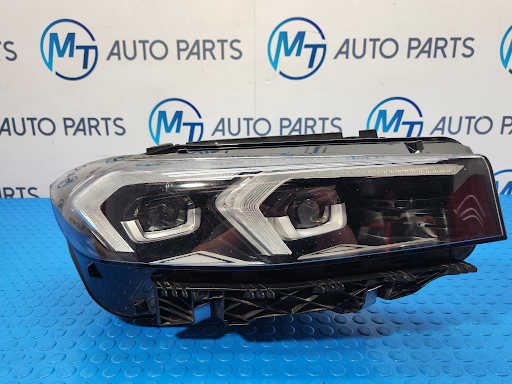
- Headlights and lighting. BMW Adaptive LED and Laserlight headlights in particular carry extraordinary new dealer prices. A genuine used unit is identical in specification and output.
- Alloy wheels. Original BMW alloys are heavy, expensive, new, and extensively faked in the aftermarket. Buying genuine second-hand from a breaker’s yard avoids all three problems.
- Steering racks and suspension components. These are structural rather than wear items. A genuine used steering rack from a 40,000-mile car performs the same as new.
- Interior parts and trim. Alcantara seats, M Sport steering wheels, and trim sets are difficult to source new and often discontinued for older models. The used market is the only realistic source for many of these.
Parts Where More Caution Is Needed
Some categories require additional diligence when buying second-hand BMW car parts.
Airbags and seat belts
Restraint system components must come from a car where they were never triggered. Ask the supplier specifically. A reputable BMW breakers yard will check this before listing; a general marketplace seller may not know. Do not buy airbags or seat belts without confirmation that the donor car’s restraint system was inactive at the time of dismantling.
ABS and brake components
Brake callipers and ABS pumps from a documented low-mileage donor car are a sound purchase, but buyers should confirm mileage and inspect condition photographs carefully. These are safety-critical components, and the savings need to be weighed against the consequences of a failure.
Electronic control units
BMW ECUs and modules are frequently tied to the car they came from and require coding before they’ll function on a different car. Factor the cost of coding into the total cost of the part before assuming the savings stack up. A specialist BMW shop with the correct software can usually carry this out at a reasonable cost.
Final Thought
The second-hand BMW parts market has grown into a genuinely reliable source for the majority of parts BMW owners need. The cases where it fails are almost always avoidable; they come down to buying without confirming mileage, accepting vague condition descriptions, or choosing the cheaphttps://mtautoparts.com/est listing over the most trustworthy one.
A specialist supplier who documents donor mileage, backs their stock with a warranty, and confirms fitment against your specific car before dispatch is the standard to hold the market to. That level of rigour exists in the market. The task is finding it, and knowing what questions to ask when you do.