

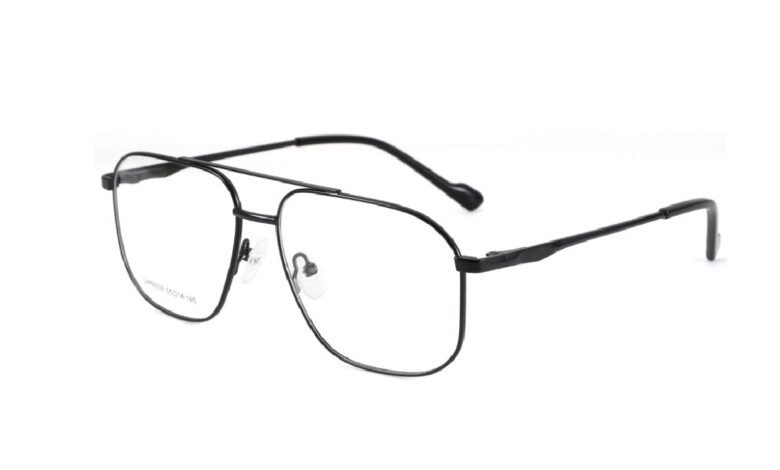
Watch a trained optician work and you notice something immediately: they rarely start with the frames on the wall. They start with the face in front of them, reading the width across the temples, the height of the cheekbones, the way the bridge of the nose sits relative to the pupils. Only then do they reach for a frame, and by that point the field has already narrowed considerably. That sequence is the clearest difference between how professionals approach eyewear and how most people shop for it. The gap it produces has little to do with budget. Men who choose carefully still end up with frames that slide down, pinch behind the ears, or visually flatten features that should read as strong, because the decision was made on appearance alone under retail lighting. The same face in a correctly proportioned frame simply looks sharper, without anything obviously changing. What follows is the working knowledge behind that result: how proportion actually gets measured, which materials suit which habits, where frame design is heading, and the small adjustments that separate a frame that fits from one that merely closes.
Face Structure Comes Before Style Preference
Every fitting decision traces back to one measurement: the distance across the face at the widest point of the cheekbones. A frame front that matches this measurement reads as intentional. A frame narrower than the face compresses the features and makes the head look larger than it is, which is why undersized frames tend to age a man rather than modernize him. A frame wider than the face creates visible gaps at the temples and shifts the optical center of the lens away from the pupil, degrading vision quality along with the look.
The second structural read is vertical. Faces with significant length between hairline and chin carry deeper frames comfortably, while shorter or rounder face shapes need shallower fronts to avoid crowding the space between brow and cheek. A useful working rule from the dispensing side: the top rim should track roughly along the brow line, neither hiding it nor sitting well below it. When the rim cuts across the middle of the eyebrow, the face loses one of its strongest expressive lines.
Angularity matters as much as size. Strong jawlines and defined cheekbones already supply contrast, so heavily angular frames can push the overall effect toward severity. Softer, less defined features benefit from the structure that a squared or keyhole-bridge frame introduces. This is the principle behind the counterbalance approach most opticians use by instinct, and it explains why two men with identical head measurements often look best in entirely different shapes. Browsing a well-organized range of Men’s Eyeglasses becomes far more efficient once these two or three structural facts about your own face are settled, because most of the catalogue can be dismissed at a glance.
Where Frame Proportion Actually Gets Decided
Beyond the overall width, three smaller dimensions determine whether a frame behaves well over a long day. The first is bridge width, the span between the two lenses. Too narrow and the frame perches high and pinches; too wide and it slides down the nose within minutes, no matter how often it gets pushed back up. Men with lower or flatter nose bridges frequently blame lens weight for slipping when the actual cause is a bridge cut for a different nasal profile entirely.
The second is temple length, the arm running from hinge to ear. It should reach the ear with a small amount of length to spare, then curve down behind it without pressing. Arms that are too short create pressure points at the temples and leave marks by afternoon. Arms that are too long allow the whole frame to rock forward. The third is pantoscopic tilt, the slight forward angle of the lens plane. A few degrees of tilt aligns the lens with the natural downward gaze used for reading and screen work, which is why a frame that sits perfectly flat against the face often feels subtly wrong even when nothing looks off in the mirror.
These three dimensions explain a common frustration: two frames listed with the same lens width can feel completely different on the same face. The overall size sets the visual impression, but bridge, temple, and tilt determine whether the frame stays where it was placed. Anyone ordering without a fitting should record what has worked before, since the numbers printed on the inside of a comfortable existing pair are the most reliable reference point available.
Material Choices and What They Signal
Acetate and metal solve different problems. Acetate is a cellulose-based plastic with real thickness to it, which allows for depth of color, layered patterns, and a substantial presence on the face. It holds its shape well, warms slightly to skin temperature, and suits men who want the frame itself to register as part of their appearance. It is also more forgiving on skin that reacts to metal alloys. The trade-off is bulk at the temples and a shape that can loosen gradually with heat exposure, which is easily corrected by an optician with a warm-air adjuster.
Metal frames work in the opposite direction. Titanium and stainless steel allow very thin profiles that recede visually, letting the face lead rather than the eyewear. Titanium in particular carries almost no perceptible weight, resists corrosion from sweat, and flexes rather than snapping under stress, which makes it the practical default for long wearing days and for anyone who tends to be rough with their glasses. Beta-titanium temples can be adjusted repeatedly without fatiguing. Brands working in this space, including ZENOTTIC, tend to build their thinner silhouettes around these alloys for precisely that reason.
Combination construction takes the middle path, pairing a metal core or brow bar with acetate rims or temple tips. The look borrows structure from one material and warmth from the other, and it has become the quiet default for men who need a single frame to move between a client meeting and a weekend without reading as either overly formal or overly casual.
The Quiet Shift Toward Softer Geometry
Frame design has been moving away from the hard rectangles that dominated men’s eyewear for well over a decade. The current direction favors softened corners, gentle panto shapes, and slightly rounded squares that keep structure without the sharpness. The reasoning is partly photographic. Wide-angle phone lenses exaggerate straight lines, so a frame with a rigid rectangular front can look harsher in images than it does in a mirror. Softened geometry photographs closer to how it actually reads in person.
Color has moved in the same direction. Flat black remains the safe choice, but translucent browns, smoke greys, olive tones, and matte gunmetal have taken over much of the middle ground because they interact with skin tone instead of sitting on top of it. A frame that borrows something from hair or eye color tends to look integrated rather than applied. Meanwhile, sizing has recalibrated: after several years of oversized fronts, the market has settled toward frames that respect the actual width of the face rather than exceeding it.
None of this obliges anyone to replace what already works. The value in tracking design direction is understanding why a frame bought several years ago suddenly looks dated even though nothing about it has changed. Usually it is the corner radius and the color saturation, not the shape category itself.
Fitting Adjustments That Change Everything
Almost every frame arrives needing adjustment, and this is the step most often skipped. Start with how it sits at rest: the front should be level, with equal space at both temples and the top rim tracking the brow. If one lens sits lower, the temple arms need bending, not the wearer’s tolerance. Next, tilt the head forward and shake gently. A properly fitted frame stays put through that test. Slipping means the temple curve behind the ear is too shallow or the bridge is oversized.
Then check for pressure. Remove the frame after twenty minutes and look for red marks. Indentations at the temples mean the arms are gripping too tightly at the hinge; soreness on the nose points to weight sitting on too small a contact area, correctable with wider pads or a bridge change. None of these are permanent conditions, and all of them can be resolved in a few minutes by anyone with the right tools. A frame that has never been adjusted is a frame performing at a fraction of its potential.
Building a Rotation Instead of Buying One Pair
Professionals who wear glasses full time almost never rely on a single frame, and the logic is practical rather than indulgent. Different contexts genuinely call for different behavior from eyewear. A thin metal frame disappears in formal settings and under photography. A substantial acetate frame holds up to weekend handling and reads as deliberate rather than corrective. Having two options also protects against the worst-case scenario of a broken hinge with no backup, and it distributes wear so both frames last considerably longer.
A workable approach is to establish one frame as the reliable default, chosen strictly on fit and neutrality, and treat the second as the one that carries more personality. Order the second only after the first has been worn long enough to confirm what actually works, since preferences shift once a frame has been lived in. Keeping the prescription current matters as well: an accurate lens in a well-fitted frame is what makes the whole exercise worthwhile, and a frame chosen for looks alone will never compensate for a measurement taken years ago.
Reading the Face Before Reading the Catalogue
The expertise behind a good fitting is less mysterious than it appears. It comes down to establishing the structural facts first, matching frame width to cheekbone width, keeping the top rim near the brow line, and countering or complementing the existing angularity of the face. Once those constraints are set, material becomes a question of wearing habits rather than taste alone, with acetate offering presence and titanium offering near invisibility and durability. Design direction is useful context but never the deciding factor, and the current move toward softer corners and skin-adjacent colors mostly explains why older rectangles now read as dated. What ties all of it together is adjustment. A frame that has been fitted properly sits level, stays put when the head moves, and leaves no marks after an hour of wear. That final step costs nothing and determines whether a well-chosen frame actually performs. Approached in this order, the process stops being guesswork and becomes a short sequence of decisions with a predictable result.
For more amazing stories, visit Zoe Yasemin Oz