
Compaction is one of those quiet steps on a construction site that decides whether a road, driveway, or foundation slab will last a decade or crack within a season. When the surface underneath is uneven or loose, everything built on top of it is living on borrowed time. That is why picking the correct road roller matters far more than most first-time buyers expect. The wrong drum width, the wrong weight class, or a vibration setting mismatched to the material can undo a full day of work.
This guide is written for contractors handling municipal repairs, landscape crews shaping paths, and rental fleet managers trying to match machines to job requests. Instead of chasing the biggest roller in the yard, the smarter route is to match compaction force to soil type, layer thickness, and access constraints. The sections below walk through how to read a job site, decode the specification sheet, and avoid the common mistakes that lead to callbacks and rework.
Reading the Job Before You Pick a Machine
Every compaction decision starts with the material, not the machine. Cohesive soils like clay respond to kneading pressure, while granular materials like sand and gravel need vibration to shift particles into place. Asphalt is a category of its own, sensitive to temperature windows and requiring smooth-drum rollers that will not tear the mat. Before you even look at a road roller catalog, walk the site with a moisture reading and a rough profile of what is going down.
Assessing Access and Working Width
A wide-drum machine may cover ground faster, but it becomes a liability on narrow shoulders, tight residential streets, or trench backfill runs. Measure the tightest turning point on the job and the narrowest passage the roller has to enter through. If the machine cannot reach a corner, that corner will be hand-tamped, and hand-tamped seams are where premature cracks appear. Match drum width to the tightest section, not the widest.
Estimating Lift Thickness and Passes
The depth of each compacted layer, or lift, drives your choice of static weight and vibration amplitude. Thin asphalt overlays need low amplitude to avoid crushing aggregate, while thick base courses respond to higher amplitude and heavier static loads. A useful field rule is to plan four to six passes per lift for granular base, and two to four passes for finish asphalt, adjusting after test strips confirm density.
Matching Roller Types to the Work
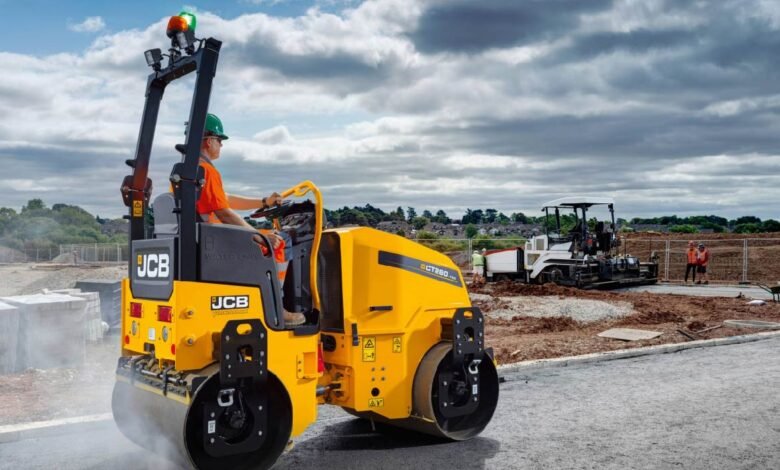
Rollers are not interchangeable. Single-drum vibratory rollers with padfoot drums shine on cohesive soils and deep fills, where the pads knead the material and drive out air pockets. Smooth double-drum machines dominate asphalt paving because they leave a clean, sealed surface. Pneumatic tire rollers add a kneading action for intermediate asphalt passes and for sealing surface cracks. Combination rollers, with one steel drum and one row of tires, split the difference for smaller crews who cannot afford two dedicated machines.
Vibratory vs. Static Compaction
Vibration multiplies compaction force without adding weight, which is why a compact vibratory roller can match the output of a much heavier static machine. The tradeoff is that vibration transmits into nearby structures. On projects near existing walls, utilities, or occupied buildings, switching to static mode or a lighter class of machine protects surroundings from cracked plaster and settled foundations. Many operators forget this and only remember after a complaint letter arrives.
Ride-On vs. Walk-Behind Options
Walk-behind rollers, sometimes called trench rollers or plate compactors on the smaller end, are indispensable in confined spaces such as utility trenches, sidewalks, and around fresh curbs. Ride-on machines take over once the working area is long enough to justify travel between passes. If a project mixes both scales of work, plan the day so the walk-behind handles edges and cutouts first, before the ride-on covers the bulk of the surface.
Reading the Spec Sheet Without Getting Lost
Manufacturer literature can bury the numbers that matter under marketing headers. Focus on operating weight, centrifugal force, amplitude, frequency, and drum width. Operating weight tells you the static contribution to compaction. Centrifugal force, combined with amplitude, indicates the dynamic force delivered per pass. Frequency, measured in vibrations per minute, affects how evenly the force is distributed at travel speed. A machine with high frequency and low amplitude finishes asphalt smoothly, while high amplitude and lower frequency drive density into deep lifts.
Serviceability and Uptime
A roller earns its keep by being available on the day work is scheduled. Check how easily filters, belts, and hydraulic components can be reached without pulling panels. Ask about parts availability in your region and whether the dealer keeps common wear items in stock. Suppliers such as MMS INDUSTRIAL publish component drawings and service intervals for their construction machinery lines, which shortens the diagnosis time when something goes wrong in the field.
Operator Comfort and Safety Features
A tired operator produces uneven coverage. Look for adjustable seats with vibration isolation, clear sightlines to both drum edges, and controls that do not require the operator to twist away from the direction of travel. ROPS structures, backup alarms, and clearly marked lockout points are baseline expectations, not premium options. When two machines look similar on paper, the one with better cab ergonomics almost always produces the tighter compaction result over an eight-hour shift.
Bringing the Right Compactor to Every Layer
The right roller is the one that matches the material, the access, and the density target for the specific job in front of you. There is no single machine that dominates every scenario, and treating rollers as interchangeable is the fastest way to leave weak spots in a finished surface. Read the site first, then read the spec sheet, and let those readings meet in the middle. When operators, machines, and materials are aligned, compaction stops being a bottleneck and starts being a quiet advantage that shows up years later, when the pavement is still smooth and the foundation is still level.