
Himalayan pink salt bricks and Himalayan salt tiles aren’t just blocks of salt; they are slices of ancient earth brought into modern rooms. Mined in the renowned Khewra mines in Pakistan, these pinkish slabs of mineral-infused salt are being used in spas from Miami to Montreal. Individuals are not merely purchasing them out of appearance, but are pursuing wellness, atmosphere, and, in some cases, pure bragging rights of possessing a wall that seems to breathe. It may be called a trend or a lifestyle, but it is certainly not boring decor.
What are Salt Bricks From the Himalaya?
Imagine Himalayan pink salt bricks in the form of building blocks with a history. They are made of solid, rectangular rock, which is more than 200 million years old. They change the shade of their color to pale blush or to rusty orange, according to the minerals trapped within.
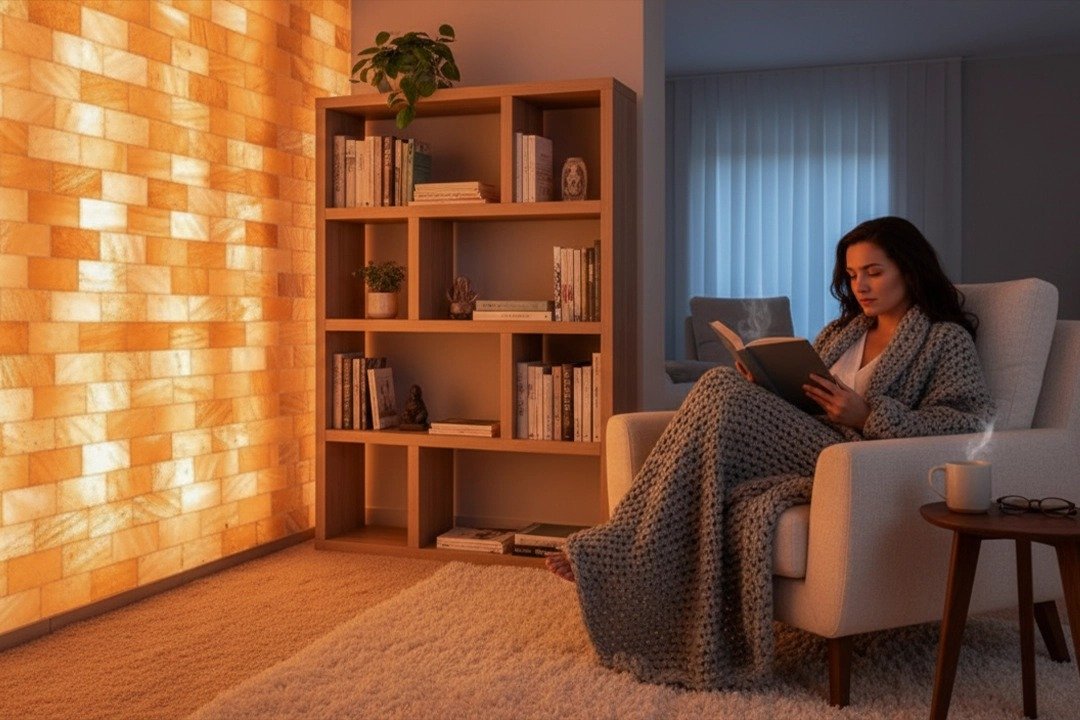
Unlike mass-produced decorative stones, these bricks keep their raw identity. Some even have visible veins or imperfections & details that designers in New York say clients now want more of, because it proves authenticity. Backlighting them turns any wall into a warm ember, something closer to firelight than electricity.
Himalayan Salt Tiles: A Close Look
Consider Himalayan pink salt bricks and Himalayan Salt Tiles as story building blocks. They are hard, rectangular, and carved of rock over 200 million years old. Their hues change to light blush and rusty orange depending on minerals trapped within. In kitchens, chefs sometimes place hot dishes on them to add a faint mineral edge to food.
What is the big difference? Himalayan pink salt bricks carry more weight, literally and visually & while tiles slip into designs where subtlety is key. Together, they cover the spectrum of heavy statement and light touch.
Health & Wellness Benefits Backed by Research
Why do so many wellness centers in the U.S. and Canada invest in Himalayan pink salt bricks and Himalayan salt tiles? Because people believe in their therapeutic pull. Salt therapy, or halotherapy, has gone from niche to mainstream. In Los Angeles alone, over a dozen spas have opened salt rooms in the past five years.
The American Lung Association has published notes suggesting that inhaling dry salt particles may ease breathing for people with mild asthma or seasonal allergies. Canadians have jumped on this, too: a 2022 survey in British Columbia found Himalayan pink salt bricks ranked among the top three “natural wellness experiences” requested by clients. People described feeling “lighter” after a 40-minute session, not a scientific unit of measurement, but certainly a powerful one.
No, these Himalayan Salt Tiles won’t cure chronic illness. But as one Chicago spa owner put it, “If people leave here calmer and breathing easier, the salt did its job.”
Himalayan Pink Salt Bricks in Architecture & Design
Himalayan pink salt bricks have slipped into more than just wellness spaces. In suburban homes outside Dallas, families are using them to frame fireplaces. In Vancouver condos, designers use thin Himalayan salt tiles behind mirrors to create a soft glow that beats harsh LEDs.
Commercial projects show the same creativity. Restaurants in Montreal are building Himalayan Salt Tiles; the wall is not just for ambience, but to keep indoor humidity balanced. A Toronto design studio reported that between 2021 and 2023, client requests for salt walls jumped by 35%. Clearly, these aren’t gimmicks; they’re shaping real design choices.
The Science: Air Quality, Ions & Comfort
The big debate: do Himalayan pink salt bricks actually release negative ions that clean the air? Studies in the U.S. suggest ion output is minimal. But here’s the kicker, comfort isn’t always about numbers. A room with a glowing Pink salt wall feels calmer, even if scientists can’t measure why.
Canadian wellness experts often point out that the placebo effect has value. If sitting in a glowing room makes you breathe deeper, who cares if ions are involved? Sometimes the brain is the best filter.
Sustainability & Authenticity
North American buyers have learned to be picky. Authentic Himalayan pink salt bricks come from Pakistan’s Khewra mines, nowhere else. Fake versions, often too pink or too perfect, pop up online, and customers end up disappointed. Real bricks have natural variation, even rough spots.
Sustainability matters too. Tiles are more polished than bricks. They are also slim, smoother, and can be utilized in areas that aren’t viable with bulk. Torontoans have now begun using Himalayan salt tiles as the flooring of their spas since they mimic a sandy feel when one walks on them with a bare foot.. It’s one of those rare cases where ancient geology lines up with modern sustainability goals.
Practical Guide: Choosing Bricks & Tiles
If you’re in the U.S. or Canada and thinking about buying, the golden rule is: check sourcing. Certified Khewra salt is the only safe bet. Avoid anything that looks neon pink or suspiciously uniform; it’s probably dyed.
Installation varies. Salt, in contrast to plastic decor, can be reused, recycled, or left to decompose naturally. Certain green building proponents in the United States have come to include Himalayan pink salt bricks as a material that promotes a sustainable design.
Market Trends in the USA & Canada
The wellness market has exploded. Minor projects, such as a tile backsplash, can be amateur. But full salt walls? Call the professionals. Such bricks are both bulky and brittle. As soon as they are there, it is easy to care about them: it does not need wet cloths; it is enough to dust them. They can be used for decades in good condition, and they shine just as much as on the day they were installed.
It’s not just spas. Private homeowners are driving up demand, too. Individuals desire their family rooms, yoga studios, and even their work areas to be converted to relaxing retreats. And Himalayan pink salt bricks and tiles are sliding into that niche.
Conclusion
The quintessence of the Himalayan pink salt bricks and of Himalayan salt tiles provides a blur between health and design. They heat cold rooms, provide spas with the natural advantage, and make houses their own exit. You can be in Chicago, or you can be in Vancouver, or you can be in some middle town between the two, but these mineral slabs serve to remind us that ancient earth still has a place in our contemporary life.
FAQs
Q1: Can you install Himalayan pink salt bricks in your home?
Yes, Himalayan pink salt bricks are safe. Only do not leave them where water always is, such as in the showers.
Q2: What is the use of Himalayan salt tiles in the wellness centers?
They’re laid into the walls and floors of salt rooms, giving clients a full-body sensory experience.
Q3: Where can you buy authentic salt bricks in the USA or Canada?
Stick with certified suppliers who mention Khewra mines. Online sellers with good reputations and reputable online stores are safer choices than simply random sellers.