
Dot Magazine Dot Magazine
Search
  • Home
  • Business
  • Fashion
  • Life Style
  • Celebrity
  • Technology
    • Tech
  • Travel
  • Crypto
    • Forex
      • Finance
        • Trading
  • Health
  • Contact Us
Reading: Exploring 3D Printing Materials: A Fresh Look at PLA Filament
Share
Aa
Dot MagazineDot Magazine
  • Home
  • Business
  • Fashion
  • Life Style
  • Celebrity
  • Technology
  • Travel
  • Crypto
  • Health
  • Contact Us
Search
  • Home
  • Business
  • Fashion
  • Life Style
  • Celebrity
  • Technology
    • Tech
  • Travel
  • Crypto
    • Forex
  • Health
  • Contact Us
Follow US
Made by ThemeRuby using the Foxiz theme. Powered by WordPress
Dot Magazine > Blog > Technology > Exploring 3D Printing Materials: A Fresh Look at PLA Filament
Technology

Exploring 3D Printing Materials: A Fresh Look at PLA Filament

By iQnewswire December 17, 2025 8 Min Read
Share

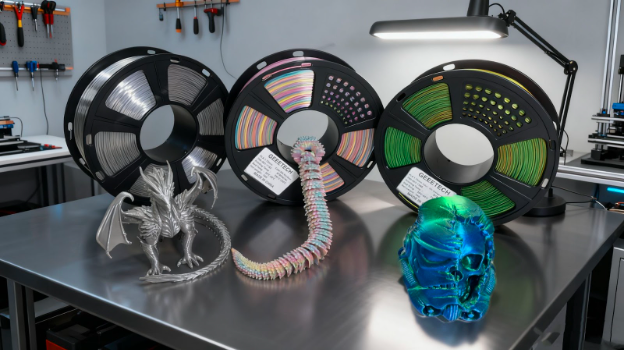
Exploring 3D printing filament is a discussion about the field of 3D printing, including the use of PLA, a common use and environmentally friendly material. Malleability PLA offers a smooth finish and is fluently usable, which is why it’s the stylish material to use to produce detailed, durable, and vibrant prints, which are easy to make and affordable to use by both professionals and newcomers.

Contents
What’s so Special About PLA Filament?User-Friendly and Simple to UseDiversity of 3D Printing ProjectsBright Colors and Artistic LibertyPLA Filament Has the Following Environmental AdvantagesKeys to Successful PLA PrintingConclusionFAQs:1. What is PLA filament made of? PLA (Polylactic Acid) is a biodegradable thermoplastic derived from renewable resources such as corn starch, sugarcane, or other plant-based materials.2. Is PLA good for beginners in 3D printing? Yes, PLA is widely considered the best material for beginners. It prints at a lower temperature, has minimal warping, and produces a smooth surface finish, making it very user-friendly and forgiving for those new to 3D printing.3. Can PLA filament be used to print more detailed and varied models? Absolutely. PLA is available in an extensive range of colors and specialty blends (like silk, metallic, or glow-in-the-dark). Its low shrinkage and good layer adhesion allow for high precision and fine detail, making it suitable for a wide variety of projects, from intricate models to functional prototypes. 

Put the power of 3D printing in the hands of PLA filament, the all-purpose, high-quality, and affordable material of sharp, various, and durable designs. It’s green and user-friendly and transforms your ideas into detailed, durable prints with minimum trouble. Excellent for creators who want perfection and creativity in all systems.

PLA filament is the most popular 3D printing material, favored for its ease of use, relatively smooth surface finish, and eco-friendly origin. It produces dimensionally accurate and highly detailed models that are durable for indoor applications, making it an excellent choice for both beginners and experienced users prototyping or creating decorative pieces.

What’s so Special About PLA Filament?

PLA, or polylactic acid, is a biodegradable thermoplastic that’s made out of renewable accoutrements similar to cornstarch or sugarcane.It is made up of a unique composition, making it very accessible to the beginners but still providing amazing results to the experienced users. This is the argument that supports the claim that PLA is the superior material compared to other options in the 3D printing industry.

  • It’s an environmentally friendly and sustainable material.
  • Also, high-quality prints with minimal material loss and little need for adjustment.
  • The finish of the surface is smooth and is ideal for detailed designs.
  • Extensive variety of colors, which provides flexibility of creativity.
  • It works with most 3D printers and is, therefore, very versatile.

These attributes make PLA filament a good and convenient solution in a number of 3D printing projects, whether minor and ornamental or functional prototypes.

User-Friendly and Simple to Use

A key benefit of PLA filament is that it is easy to use. PLA also prints at moderate temperatures as opposed to some other filaments, which require high temperatures for printing or a heated bed, making it a better choice among beginners in the 3D printing field. It has a low propensity to warp or curl, meaning that designs do not get lost in warping or curling, leading to frustration and wasted designs. PLA has a gentle learning curve for the novice, who can experiment and develop his or her skills without hesitation.

Diversity of 3D Printing Projects

The PLA filament is so diverse and could be applied to various applications. PLA will be a stable solution, regardless of whether you are making some decorative models, cosplay props, prototypes, or small household items. PLA’s surface is an ideal canvas for post-processing. Its layer adhesion and fine texture allow for easy painting, sanding, and finishing to achieve a professional-looking result. PLA also fits with most of the FDM printers.

Bright Colors and Artistic Liberty

The other strength of PLA filament is the range of colors and finishes. The extensive range of colors, including classic colors, glow-in-the-dark, or metallic colors, gives the makers a chance to be as creative as possible.This inflexibility introduces the possibility of knitter-made systems and graphic and aesthetic prints. PLA filament lets you have freedom when it comes to experimenting with colors and textures, whether you want to make intricate models or bold statement pieces. 

PLA Filament Has the Following Environmental Advantages

The use of PLA is a better substitute for the conventional petroleum-based filaments because of its sustainability. It is biodegradable in industrial composting conditions, as it is made out of renewable resources, thereby minimizing the impact on the environment. To environmentally conscious designers, this makes PLA an attractive choice that has creativity and environmental responsibility. Although it cannot fully solve the issue of plastic waste, it is one of the steps into greener 3D printing.

Keys to Successful PLA Printing

Although PLA is an easy-to-use material, beginners can significantly improve print quality by following these key tips:

  1. Maintain an Optimal Nozzle Temperature: Use the correct temperature range for your specific PLA to ensure smooth layer adhesion and prevent issues like stringing or under-extrusion.
  2. Ensure Good Bed Adhesion: Prevent warping and lifting by using a properly leveled bed, along with aids like a heated bed, adhesive glue, or painter’s tape.
  3. Adjust Print Speeds Appropriately: Slower print speeds are often better for achieving high detail and accuracy on complex or delicate models.
  4. Store Filament Properly: Keep PLA in a dry, sealed container or bag with desiccants to protect it from moisture, which can degrade print quality.
  5. Utilize Post-Processing: Techniques such as sanding, priming, painting, or polishing can greatly enhance the final appearance and feel of your prints.

By applying these methods, you will consistently achieve vibrant, dimensionally accurate, and professional-looking results in your projects.


Conclusion

Ultimately, PLA is more than just a filament—it’s an accessible, earth-friendly gateway that has captured the hearts of 3D printing enthusiasts everywhere. Praised for its forgiving nature, vibrant color spectrum, and pleasing finish, it reigns as the top pick for both casual makers and design professionals alike.

From intricate prototypes to bold artistic statements or everyday functional pieces, PLA delivers the dependable performance and creative versatility that creators desire. Choosing PLA is about embarking on a journey: one where imagination is unlocked, designs are fearlessly tested, and ideas take tangible form.

As a sustainable, practical, and deeply satisfying material, PLA represents a wise and rewarding choice for anyone beginning their 3D printing adventure or seeking a consistent and inspiring medium for their projects.

FAQs:

1. What is PLA filament made of?

PLA (Polylactic Acid) is a biodegradable thermoplastic derived from renewable resources such as corn starch, sugarcane, or other plant-based materials.

2. Is PLA good for beginners in 3D printing?

Yes, PLA is widely considered the best material for beginners. It prints at a lower temperature, has minimal warping, and produces a smooth surface finish, making it very user-friendly and forgiving for those new to 3D printing.

3. Can PLA filament be used to print more detailed and varied models?

Absolutely. PLA is available in an extensive range of colors and specialty blends (like silk, metallic, or glow-in-the-dark). Its low shrinkage and good layer adhesion allow for high precision and fine detail, making it suitable for a wide variety of projects, from intricate models to functional prototypes. 

Sign Up For Daily Newsletter

Be keep up! Get the latest breaking news delivered straight to your inbox.
By signing up, you agree to our Terms of Use and acknowledge the data practices in our Privacy Policy. You may unsubscribe at any time.
iQnewswire December 17, 2025 December 17, 2025
Share This Article
Facebook Twitter Email Copy Link Print
Leave a comment Leave a comment

Leave a Reply Cancel reply

Your email address will not be published. Required fields are marked *

Recent Post

How AudioConvert redefines an audio to text converter for subtitle-first creators
Technology
5 Ways to Leverage Market Research for Product Launch Success
Business
How To Prevent Overloading Your Flat Extension Cord
Tech
Seven Essential Sheet Metal Design Guidelines
Business
Smart Kids Bed With Storage Solutions for Modern Family Homes
Life Style

Categories

  • Accountant1
  • Art3
  • Biography17
  • Blog476
  • Business539
  • Celebration2
  • Celebrity82
  • Cleaning14
  • Construction6
  • Crypto15
  • Crypto News1
  • Digital Innovation4
  • Drink1
  • Driver2
  • E-Commerce1
  • E-SIM3
  • Education37
  • Electric Bike1
  • Entertainment24
  • Fashion101
  • Finance16
  • Fitness8
  • Food16
  • Games18
  • General6
  • Guide49
  • Hair2
  • Health190
  • Home Improvement121
  • Home Selling1
  • Illustration1
  • Insurance1
  • Law9
  • Life Style251
  • Loan1
  • Maintenance4
  • Natural1
  • Online Shopping5
  • Pet8
  • Real State19
  • Recipe1
  • Restoration1
  • Security Guards1
  • Skin Treatment2
  • Smart Investing1
  • Social Media14
  • Sports3
  • Tech300
  • Technology130
  • Topic1
  • Travel64
  • Treatment1
  • Trip2
  • Truck1
  • Uncategorized31
  • Vape2
  • Vehicle8
  • Vibrant Yard1
  • Wellness3

YOU MAY ALSO LIKE

How AudioConvert redefines an audio to text converter for subtitle-first creators

Subtitles used to be a courtesy. Something added after publishing, mainly for accessibility or international audiences. Today, they are closer…

Technology
January 17, 2026

Why Every Restaurant Needs Its Own Mobile App in 2026?

The restaurant industry has undergone a dramatic transformation over the past few years, with digital ordering, contactless payments, and mobile-first…

Technology
January 15, 2026

CES 2026 Signals a Shift Toward Socially Aware AI

CES 2026 highlighted a significant change in the development of AI technology. The focus is no longer just on making…

Technology
January 14, 2026

How Smart Plumbing Technology is Revolutionizing Home Water Systems

For decades, residential plumbing changed very little. Pipes ran behind walls, water flowed when valves were opened, and homeowners only…

Technology
January 14, 2026
Dot Magazine

Dot Magazine is your ultimate destination for fresh, insightful content across celebrity buzz, tech trends, business insights, lifestyle tips, and fashion flair.
We bring you a smart, stylish take on the stories shaping today’s world, all in one vibrant digital space.

Contact Us Via Email: contact.dotmagazine.co.uk@gmail.com

Recent Post

How AudioConvert redefines an audio to text converter for subtitle-first creators
Technology
5 Ways to Leverage Market Research for Product Launch Success
Business
  • Home
  • Business
  • Fashion
  • Life Style
  • Celebrity
  • Technology
    • Tech
  • Travel
  • Crypto
    • Forex
      • Finance
        • Trading
  • Health
  • Contact Us
Reading: Exploring 3D Printing Materials: A Fresh Look at PLA Filament
Share
  • Home
  • About Us
  • Privacy & Policy
  • Disclaimer
  • Contact Us
Reading: Exploring 3D Printing Materials: A Fresh Look at PLA Filament
Share

© 2025 Dot magazine All Rights Reserved | Developed By Digtalscoope

Welcome Back!

Sign in to your account

Lost your password?