

Bringing a new dog home is exciting. It can feel a bit stressful too. Even if you’ve had dogs before, the first days can be awkward and unpredictable.
That’s where the 3-3-3 rule for dogs comes in. It’s a simple timeline that helps you understand what many dogs go through after adoption, especially rescue dogs.
If you want more dog care tips written in the same simple style, check Pet Guides.
What the 3-3-3 rule for dogs means
The name is easy to remember:
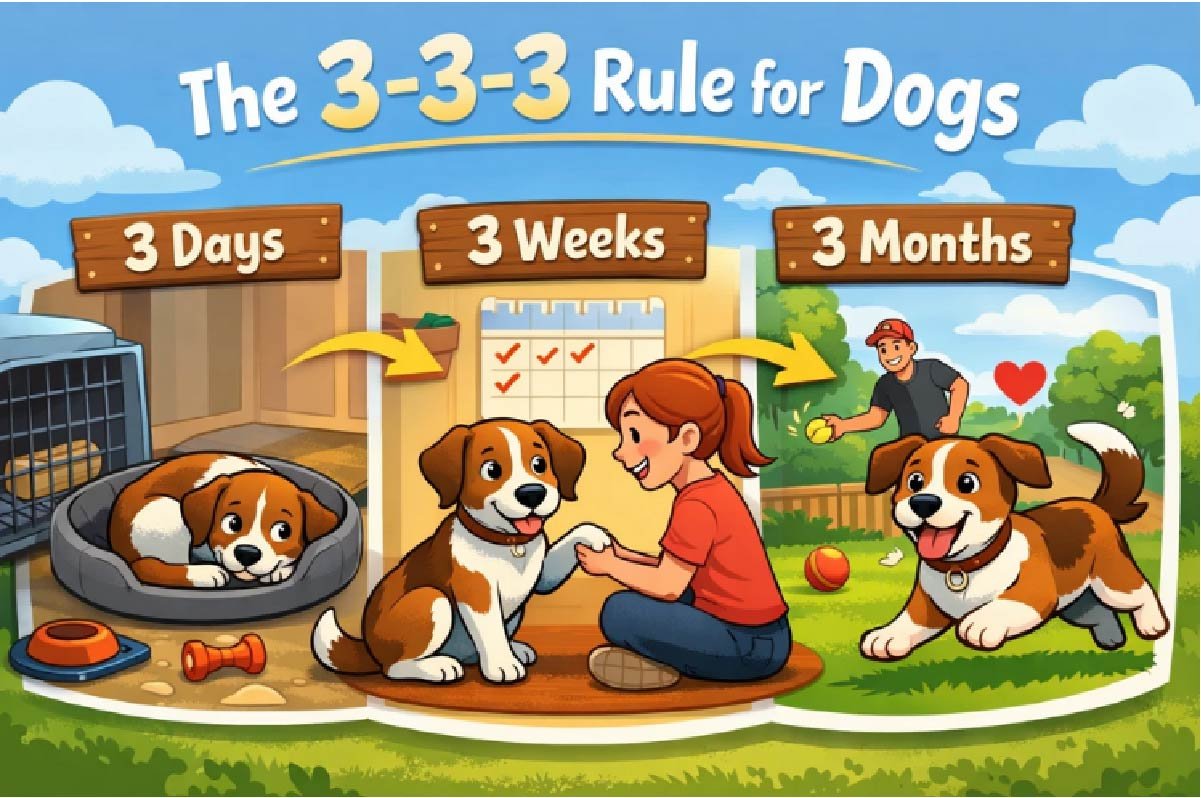
- 3 days to decompress
- 3 weeks to start learning your routine
- 3 months to feel at home and show their real personality
This isn’t a strict rule. Think of it as a helpful guide. Some dogs settle in fast. Other dogs take longer, and that’s normal.
Why this rule helps so much
Your home feels familiar to you. For a dog, it can feel like a totally new world.
New smells. New sounds. New people. New rules.
Even a friendly dog can act quiet, nervous, or “off” at first. A dog that seems super calm might not be relaxed yet. They might just be overwhelmed.
The 3-3-3 rule helps you set the right expectations. It stops you from pushing too much, too soon.
The first 3 days: your dog decompresses
The first few days can be strange. Your dog may act extra shy, or extra wild. Both can happen.
What you might notice in the first 3 days
- Hiding under a chair or behind furniture
- Eating very little
- Sleeping a lot
- Pacing, panting, or whining
- Following you everywhere
- Barking at small noises
- Having accidents indoors
It can look messy at first. That’s not a bad sign. It’s just your dog adjusting.
What to do in the first 3 days
Keep life calm and simple.
- Give your dog one safe space. A crate (door open), a bed in a quiet corner, or a calm room works well.
- Stick to a basic routine. Same feeding times. Same potty breaks. Same sleep spot.
- Take short walks. Let your dog sniff. Keep it low-pressure.
- Limit visitors. Skip the “meet everyone” phase for now.
- Speak softly and move slowly.
- Reward tiny wins. One step toward you counts.
What to avoid in the first 3 days
- Dog parks
- Busy places and crowded sidewalks
- Long trips in the car
- Lots of new guests coming over
- Heavy training sessions
- Dumping out every toy at once
Your main goal here is safety and calm.
The first 3 weeks: your dog starts learning your routine
After a couple of weeks, many dogs start to relax. They begin to understand how your day works.
This stage can surprise people. A dog that felt “easy” in week one might start acting out a little in week two. That can be part of the process.
What you might see in the first 3 weeks
- More energy and curiosity
- Play starting to show up
- Chewing things they shouldn’t
- Barking at doors or windows
- Pulling more on the leash
- Jumping up on people
- Guarding food or toys
Your dog isn’t trying to be difficult. They’re learning what’s allowed and what gets a reaction.
What to do in the first 3 weeks
This is a good time to add gentle structure.
- Keep the routine steady. Repetition helps dogs feel secure.
- Train in tiny sessions. 2 to 5 minutes is enough.
- Teach one simple cue. “Sit” or “Touch” is great.
- Reward calm moments. Treats for lying down, looking at you, or waiting.
- Set a few clear rules. No jumping. No biting hands. No stealing food.
- Manage your home setup. Use baby gates. Put shoes away. Close doors.
A simple daily routine that works for many dogs
- Morning potty break
- Breakfast
- Short walk with sniff time
- Nap or quiet time
- Midday potty break
- Short play session
- Dinner
- Evening walk
- Calm time, then sleep
Dogs settle faster when each day feels predictable.
The first 3 months: your dog starts to feel at home
Around the 3-month point, a lot of dogs seem more settled. They trust you more. They feel safer in the home. You start seeing more personality.
Some dogs become more social. Some stay cautious, but they look more stable and comfortable.
What you might notice by 3 months
- A stronger bond and more eye contact
- Better sleep
- Fewer accidents
- Clear likes and dislikes
- Better leash habits (with practice)
- More confidence at home
- Better response to your voice
This stage can bring challenges too. Separation stress, barking, reactivity, or guarding may show up more clearly. That’s not failure. It often means the dog finally feels safe enough to act like themselves.
If you want the deeper version of this guide, read 3-3-3 Method for Dogs.
How to support your dog through every stage
Give your dog choices
Choices lower stress. They build trust too.
- Let your dog walk away
- Let your dog sniff first
- Let your dog approach people at their own pace
Use calm rewards
Food rewards work well at the start. They are clear and consistent.
Reward the things you want to see:
- sitting
- checking in with you
- staying close
- walking calmly for two steps
Keep training simple
One cue at a time. One room at a time. Short sessions.
Small progress adds up fast.
Protect rest time
Sleep helps your dog regulate stress.
A tired dog often looks “hyper.” Good rest can change everything.
Use a long leash for safe freedom
A long leash gives your dog space to explore, without the risk of running off. It makes walks less tense too.
Common mistakes that slow the settling process
Introducing too many people too fast
It’s tempting to invite friends over right away. Some dogs shut down when they feel surrounded.
Give your dog time first. Add visitors later.
Changing rules every day
If your dog can jump on the couch one day, then gets scolded the next day, they get confused.
Pick a few rules and stick to them.
Giving too much freedom too soon
A full house can overwhelm a new dog.
Start small. Expand access slowly.
Correcting fear instead of lowering pressure
A scared dog needs space and calm.
If your dog barks, freezes, or hides, step back. Create more distance. Reward calm behavior.
Signs your dog may need extra help
Some stress is expected. Some signs mean you should get support.
Watch for:
- growling that escalates
- snapping or biting
- panic when left alone
- nonstop pacing for hours
- repeated escape attempts
- refusing food for an extended time
- vomiting, weakness, or severe diarrhea
For health concerns, contact a vet. For behavior concerns, contact a qualified trainer.
Quick recap: the 3-3-3 rule in one view
3 days: decompress
- calm home
- low pressure
- basic routine
3 weeks: learn the routine
- gentle structure
- short training
- clear rules
3 months: feel at home
- trust builds
- confidence grows
- real personality shows
That’s the heart of the 3-3-3 rule for dogs. It keeps your expectations realistic, and it gives your dog time to settle in at a healthy pace.