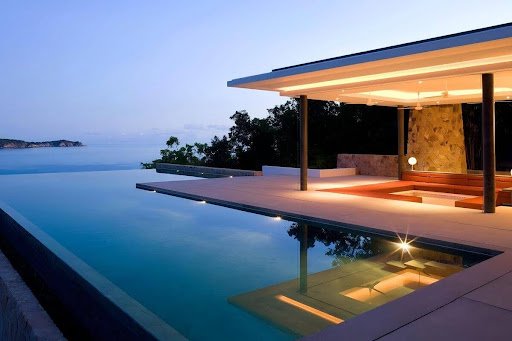
Living near the ocean is a dream for many, offering breathtaking views and the soothing sound of the surf. However, for a home’s exterior components, the coast is a relentless battleground. The combination of high humidity, intense UV exposure, and—most significantly—salt-laden air creates an environment that can destroy standard outdoor lighting in a matter of months.
If you’ve ever noticed white, crusty deposits on your outdoor fixtures or seen metal components “pitting” and turning green, you’ve witnessed the power of salt corrosion. When it comes to linear lighting, finding the best LED lights for outside that are specifically engineered for the coast is not just a luxury; it is a necessity for survival. In this guide, we will dive into the science of salt air and how marine-grade LED strips are designed to withstand the rigors of the shore.
The Chemistry of Destruction: Understanding Salt-Induced Electrolysis
Salt (Sodium Chloride) is not just a mineral; in the presence of moisture, it becomes a powerful electrolyte. This chemical property is the primary driver of rapid equipment failure in coastal zones.
The Mechanism of Galvanic Corrosion
When two dissimilar metals (such as the copper in an LED circuit and the tin in solder) are connected in the presence of an electrolyte (saltwater), a natural battery is formed. Electrons begin to flow between the metals, causing the “anodic” metal to dissolve. In standard LED strips, this often means the delicate copper traces on the PCB are literally eaten away at a molecular level.
The “Aerosol” Effect and Inland Penetration
Coastal salt doesn’t stay at the beach. Through a process of wave breaking and wind, saltwater is turned into a fine aerosol mist. This mist can travel several miles inland depending on wind patterns. This is why even homes that are not “oceanfront” but are within a 5-mile radius of the coast still experience accelerated corrosion. For these properties, standard “weatherproof” ratings like IP65 are insufficient because they protect against splashes but not against the pervasive, microscopic infiltration of salt ions.
Marine-Grade Protection: Why Silicone is the Non-Negotiable Standard
When searching for the best LED lights for outside in coastal zones, the material of the encapsulation is your primary barrier against the environment.
The Failure of Polyurethane and PVC
Many entry-level waterproof strips are encased in PU (Polyurethane) or PVC. While these materials look clear initially, they are semi-permeable. Over a period of 6 to 12 months, salt ions can actually migrate through these plastics. Once the salt is trapped inside the casing, it draws in moisture through osmotic pressure, creating a permanent “brine bath” around the LED chips. This leads to the “yellowing” and internal browning often seen in cheap coastal installs.
The Superiority of High-Density Silicone
Marine-grade LED strips utilize high-purity, non-porous silicone. Silicone is chemically inert, meaning it refuses to react with the sodium chloride in sea spray. More importantly, professional-grade silicone is hydrophobic—it repels water on a molecular level. This prevents the salt mist from “wetting” the surface and forming the films that lead to deep penetration.
Vulnerability Points: End Caps, Connections, and “Wicking”
Even the best silicone jacket is useless if the ends of the strip are exposed. In coastal environments, the connection points are almost always where the failure begins.
The Capillary Action (Wicking) Problem
Saltwater has a high surface tension and exhibits incredible capillary action. If a wire leading into your LED strip has even a microscopic gap in its insulation, saltwater can be “wicked” up through the internal copper strands. It travels like a straw, delivering corrosive brine directly into the heart of the waterproof housing.
Professional Coastal Sealing Protocols
For the best LED lights for outside in high-salinity areas, a three-tier sealing approach is required:
- Adhesive-Lined Heat Shrink: This is not standard heat shrink. It contains a “marine glue” that melts and creates a physical bond with the wire jacket, preventing water from traveling between the wire and the shrink tube.
- RTV Silicone Injection: Room Temperature Vulcanizing (RTV) silicone should be injected into the end-caps before they are crimped or glued.
- Dielectric Grease: Applying a layer of non-conductive dielectric grease to the connection pins acts as an additional hydrophobic barrier that prevents salt ions from settling on the conductive surfaces.
Hardware and Extrusions: Managing “Crevice Corrosion”
The LED strip isn’t the only thing that rusts. The mounting channels and screws are equally vulnerable, and their failure can lead to the strip falling or the circuit being shorted by external rust.
The Mystery of Crevice Corrosion
In coastal areas, corrosion often happens in the “crevice” between the LED strip and the aluminum channel. Saltwater gets trapped in this tight space where oxygen cannot reach it, creating a highly acidic environment that eats through metal faster than open-air exposure.
Material Selection: 316 Stainless vs. Anodized Aluminum
Standard 304-grade stainless steel—common in hardware stores—will develop “tea staining” (surface rust) within months of salt exposure. For the best LED lights for outside near the ocean, only 316-grade (Marine Grade) stainless steel should be used for clips and screws.
If using aluminum extrusions, they must be Hard-Anodized. Anodization is an electrochemical process that converts the metal surface into a decorative, durable, corrosion-resistant, anodic oxide finish. Raw or “mill finish” aluminum will quickly turn to a white powder in coastal air.
Protecting the “Brain”: Drivers and Controllers in Salt Air
The power supply (driver) is often the most expensive part of the system and, unfortunately, the most sensitive to salt.
Heat vs. Sealing
A power supply needs to stay cool, which usually requires vents for airflow. However, vents allow salt air to enter and coat the internal capacitors and transformers. This is the ultimate catch-22 of coastal engineering.
The Solution: Potted Power Supplies
For the best LED lights for outside in marine zones, use “Potted” or “Encapsulated” drivers. These units have their entire internal circuitry submerged in a heat-conductive epoxy or silicone resin. This protects the electronics from salt air while still allowing heat to move to the outer metal casing. Ensure your driver is housed in a NEMA 4X enclosure—the “X” denotes additional protection against corrosion.
Maintenance Schedule for Coastal Longevity
A “set it and forget it” mentality is the fastest way to a failed system on the coast. Even marine-grade LED strips require a proactive maintenance protocol to reach their full 50,000-hour potential.
The Quarterly Freshwater Rinse
Every three months, use a garden hose (low pressure) to rinse your LED installations. This simple act washes away the accumulated salt crust before it has a chance to chemically bond with the materials or find a path into the seals.
The Annual Inspection Checklist
- Check for “Tea Staining”: Look for brown spots on mounting clips; clean with a stainless-steel cleaner if found.
- Verify End-Cap Integrity: Ensure the silicone sealant hasn’t pulled away from the casing due to UV-induced contraction.
- Inspect Wire Jackets: Check for “whitening” or brittleness in the power cables, which suggests UV and salt damage.
Environmental Impact: Turtle-Friendly Coastal Lighting
Coastal homeowners have a unique responsibility. Artificial light can be deadly to sea turtles, as hatchlings use the reflection of the moon on the water to find the ocean. Bright white lights can disorient them, leading them away from the sea.
Amber and Red Wavelengths
Many coastal municipalities have strict “Turtle Lighting” ordinances. These usually require lights to be “Long Wavelength” (560nm or longer). By using marine-grade LED strips with RGBW capabilities, you can program your system to emit a soft amber or red glow during nesting season, complying with local laws while still providing safe passage for your guests. When nesting season ends, you can return to your preferred architectural white tones.
Conclusion: Investing in Marine-Grade Excellence
The ocean is the ultimate test of human engineering. It is beautiful, but it is also a powerful solvent. When you choose to light a coastal home, you are making a choice between a temporary display and a permanent architectural feature.
By insisting on the best LED lights for outside and ensuring every component—from the silicone to the screws—is of marine-grade LED strips quality, you are protecting your home’s value and beauty. Don’t let the salt air dim your vision. Invest in the science of durability, and let your seaside retreat shine as a brilliant beacon of light, year after year.